22 Fall Throw Blanket Layering Ideas That Look Designer (Not Cluttered)
Fall Throw Blanket Layering Ideas: There’s a very specific look the kind you screenshot from a Pinterest board and then try to recreate at home, only to end up with a sofa that looks like laundry day instead of a design magazine. The difference between “cozy chaos” and “intentionally layered” rarely comes down to how many blankets you own. It comes down to how you pair texture, weight, and fold. A single chunky knit thrown on top of a slippery velvet throw will always look accidental. Fall throw blanket layering ideas that look designer are one of the most transformative home decorating ideas for an autumn living room, the way a throw is draped, folded, or casually placed on a sofa or armchair signals whether a room has been styled or merely furnished, and the difference between a throw that looks like an accident and one that looks intentional is a handful of very specific techniques.
This post contains affiliate links. As an Amazon Associate, I earn from qualifying purchases. If you buy through these links, I may earn a small commission at no extra cost to you.
The Thinking Behind This
Most throw blanket “fails” aren’t a color problem; they’re a texture problem. When every blanket in the stack has a similar weight and finish, your eye can’t tell where one ends and the next begins, and the whole pile reads as flat and messy. Designers build contrast on purpose: one substantial, textural anchor piece (a chunky knit or a boucle), one lightweight drape piece (a lighter wool or cotton gauze), and occasionally a third accent piece with shine or fringe. A throw blanket and a styled fireplace are the two living room elements that most completely evoke the feeling of autumn. These fireside styling ideas show how to position a draped throw in relation to the fireplace seating so the two elements create a composed domestic scene rather than two separate styling decisions that happen to share the same room.
Warm Up with Throw Blankets
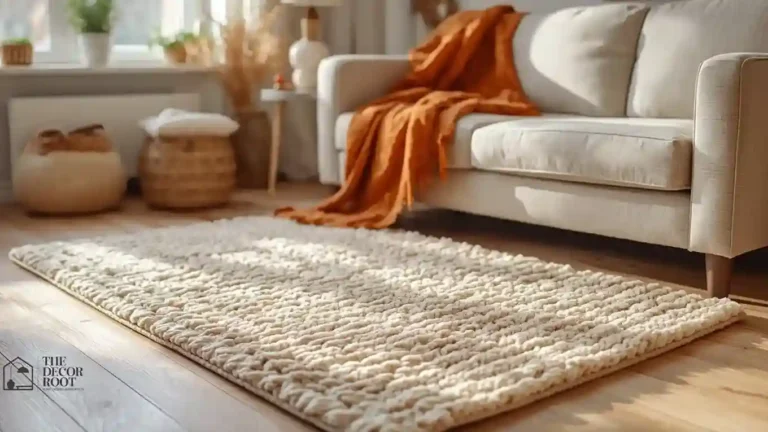
A throw blanket is one of the most versatile and immediately impactful seasonal tools in a living room. Browse all our living room decorating ideas to see how throws connect to rugs, A fall throw and a wool rug are the two textile additions that do the most work in an autumn living room, these textural warmth ideas show how layering a chunky knit or cashmere throw over a sofa and anchoring the seating zone with a wool rug creates a room that feels physically and visually warm simultaneously, and how coordinating the two textiles produces a more resolved result than either alone. Coffee table styling, candle arrangements, and the overall fall palette for a living room that feels completely transformed for autumn.
1. Start With One Neutral Anchor Throw
Before you add a single accent piece, choose one substantial neutral throw oatmeal, bone, or warm gray and drape it loosely over one arm or the back corner of the sofa. This becomes your visual “base,” and everything else you add should relate to it in either color or texture. Skip the temptation to fold it perfectly; a slightly rumpled drape looks lived-in and intentional, while a stiff, symmetrical fold reads more like a hotel display than a home. Look for a mid-weight cotton or acrylic blend so it holds a loose shape without looking limp. This single move does more to unify a sofa full of pillows and throws than any other step on this list, so don’t skip it even if you’re tempted to jump straight to the fun textured pieces.
2. Add a Contrasting Texture, Not a Contrasting Color
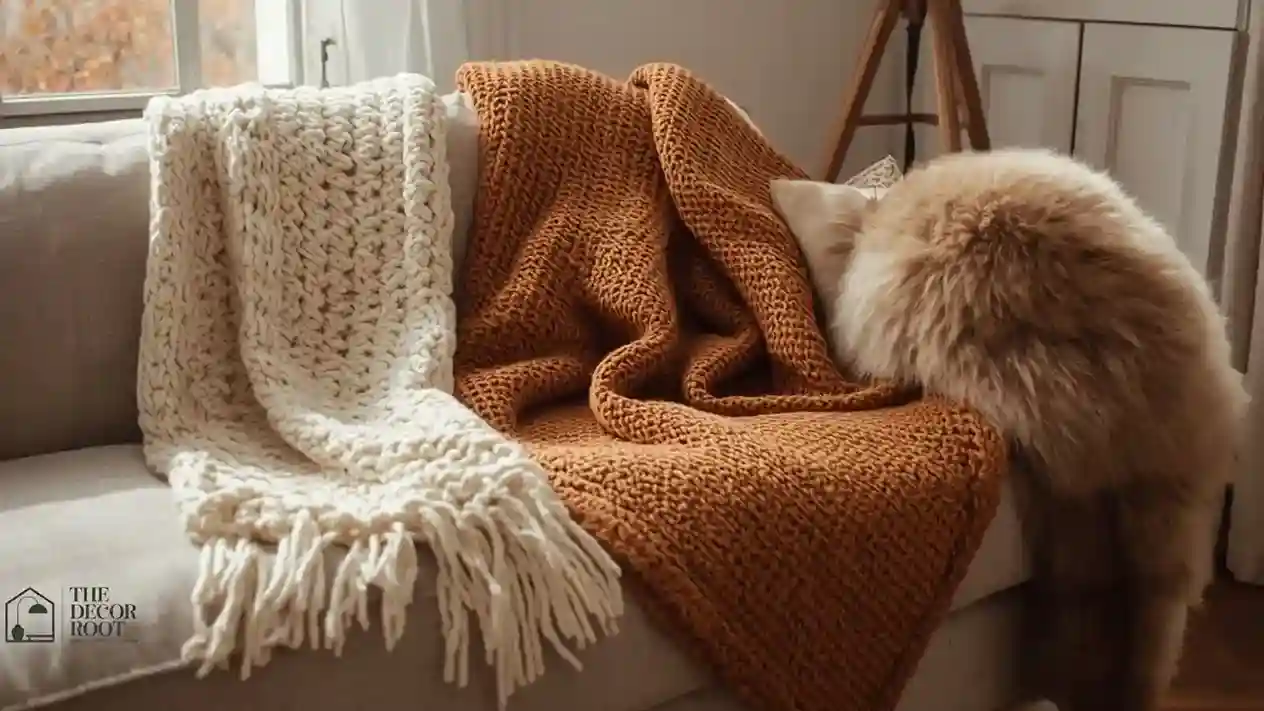
Once your neutral anchor is in place, resist reaching for a bold color next; reach for a bold texture instead. If your anchor throw is smooth cotton, layer a chunky cable-knit or boucle throw partially over it. If your anchor is already textural, layer something flatter and woven on top, like a herringbone or plaid. This texture-first approach is the single biggest trick professional stylists use, because texture reads as intentional even in a fully neutral palette, while mismatched colors read as accidental almost immediately. Save your color statement piece for step three or later, once the texture foundation is doing the visual heavy lifting for the whole arrangement.
3. Bring In a Chunky Knit Throw as Your Focal Piece
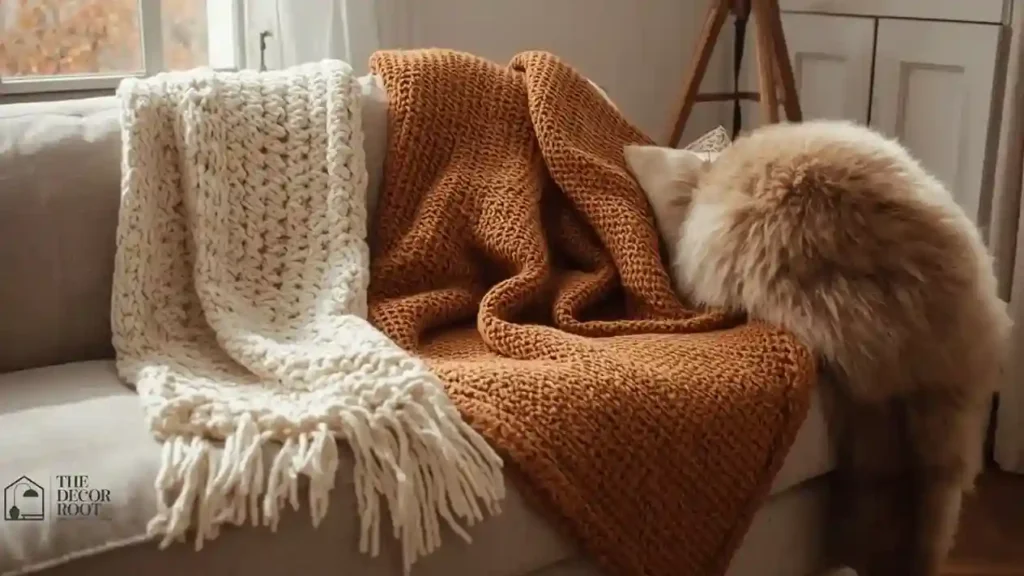
A genuinely oversized, chunky knit throw is worth the investment because it single-handedly signals “fall” and “designer” at the same time; nothing else on this list does double duty quite as well. This chunky knit throw blanket in a deep cream or camel works with almost any existing palette and holds its shape well enough to drape dramatically rather than flopping flat. Drape it so at least a third of it pools onto the floor or cushion below; a fully tucked, symmetrical fold undersells the texture you paid for. This is typically the most expensive throw in a layered stack, so let it be seen; don’t bury it under two other blankets where its texture gets lost. The art of textile layering in an autumn living room and in an autumn bedroom follows the same principles of weight, texture, and colour graduation. These textile layering ideas for autumn show how the same technique that makes a fall bed look designer-level applies to a sofa throw arrangement, and how mastering the discipline in one room makes it immediately transferable to every other.
EDITOR’S PICK
🛒Chunky Knit Throw Blanket, Cream Or Camel, Oversized
An oversized chunky knit throw in cream or camel signals fall and designer style at once, best draped with a third pooling onto the floor and not buried under other blankets.
(paid link)
4. Use the “Diagonal Drape” Fold Over a Single Arm
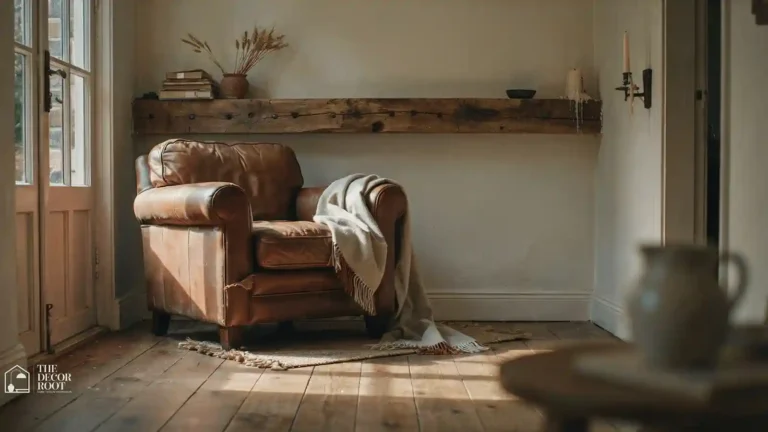
Instead of folding a throw into a neat rectangle, drape it diagonally so one corner touches the floor, and the opposite corner sits high on the sofa back. This single fold technique instantly reads as more expensive and more intentional than a stacked, squared-off fold, because it mimics how a throw naturally falls when someone was actually using it. It also solves a real problem: throws that are folded too perfectly often look like they’re for display only, which can make a living room feel unlived-in and stiff. The diagonal drape works on any throw weight, but it looks especially good with mid-weight wool blends that hold a soft, sculptural fold without stiffening into an awkward shape.
5. Layer a Waffle-Weave Throw for Textural “Breathing Room”
Waffle-weave cotton throws are the unsung hero of layering because their texture is subtle enough to sit next to a chunky knit without competing for attention, giving your eye a visual pause between busier pieces. Use one in a soft rust, sage, or oatmeal tone folded in thirds and draped over the seat cushion rather than the arm, which keeps the layering from feeling top-heavy on one side of the sofa. This throw also does practical double duty in early fall, when it’s still warm enough that a heavier wool throw feels like overkill but you still want that textured, seasonal look on the furniture. Think of it as the “neutral ground” your bolder pieces get to stand out against.
6. Add a Small Pop of Color With a Folded Plaid Scarf-Style Throw
A slim plaid or tartan throw, folded into a narrow strip and draped over the center of the sofa back like a scarf, introduces color and pattern without overwhelming the neutral base you’ve already built. This works especially well in burgundy, forest green, or mustard, which read as classic fall without tipping into “pumpkin spice cliché” territory. Keep this piece narrower and more restrained than your other throws; its job is to be a color accent, not another texture statement, so resist the urge to drape it as loosely or dramatically as the chunky knit. This is also the easiest piece to swap out seasonally if you want to refresh the sofa’s palette without buying new blankets.
7. Introduce a Faux Fur Throw for Instant Luxury
A faux fur throw is the fastest way to make a sofa look higher-end than it is, because the texture reads as expensive even in budget-friendly versions. A faux fur throw blanket in cream, taupe, or chocolate brown pairs beautifully against a knit or waffle-weave piece, since the smoothness of the fur contrasts against nubbier textures nearby. Drape it asymmetrically across one seat cushion rather than folding it flat, and let a portion hang naturally so the texture catches the light. One faux fur piece is usually enough for an entire sofa; two starts to feel more like a costume shop than a living room, so keep this one as a single statement layer.
EDITOR’S PICK
🛒Faux Fur Throw Blanket, Cream Or Chocolate Brown
A single cream, taupe, or brown faux fur throw draped asymmetrically across one sofa cushion instantly elevates the look and contrasts beautifully with knit textures.
(paid link)
8. Match Throw Tones to Your Existing Pillow Palette
Before buying anything new, pull your existing throw pillow colors and use them as a guide for which throw tones to add; this keeps a layered sofa feeling curated rather than like separate purchases from different years. If your pillows lean warm (rust, gold, cinnamon), choose throws in the same warm family even if the exact shades differ slightly, since tonal cohesion matters more than exact color matching. This is one of the fastest ways to make a sofa look professionally styled using pieces you may already own, and it’s the step most people skip because they’re focused on buying new blankets instead of coordinating what’s already there.
9. Use the “Half-Fold Over the Arm” for a Tailored Look
Fold a mid-weight throw in half lengthwise, then drape it over one sofa arm so the fold line sits along the top of the arm and both halves hang evenly on either side. This tailored fold looks more polished than an open drape and works especially well for throws with a visible pattern or border detail, since the fold showcases the design symmetrically. It’s a good technique to use on your most “formal” throw often a wool or wool-blend piece while saving looser, messier drapes for your chunkier, more casual textures elsewhere on the sofa. This contrast between a tailored fold and a loose drape adds another layer of intentional variation to the overall arrangement.
10. Add a Blanket Basket as a Backup “Layer” Off the Sofa
Not every throw needs to live on the sofa at once. A woven basket or ladder nearby holding one or two additional folded throws extends the layered look into the room without overcrowding the seating itself. This also solves a real functional problem, since rotating throws in and out based on who’s actually using them keeps the sofa from looking overstuffed by week three of the season. Choose a basket in a natural material like seagrass or rattan, which echoes the warm, textural theme of the throws themselves, and fold the backup blankets loosely rather than tightly rolled so they still read as soft and inviting rather than storage-bin stiff.
11. Try a Blanket Ladder for Vertical Layering
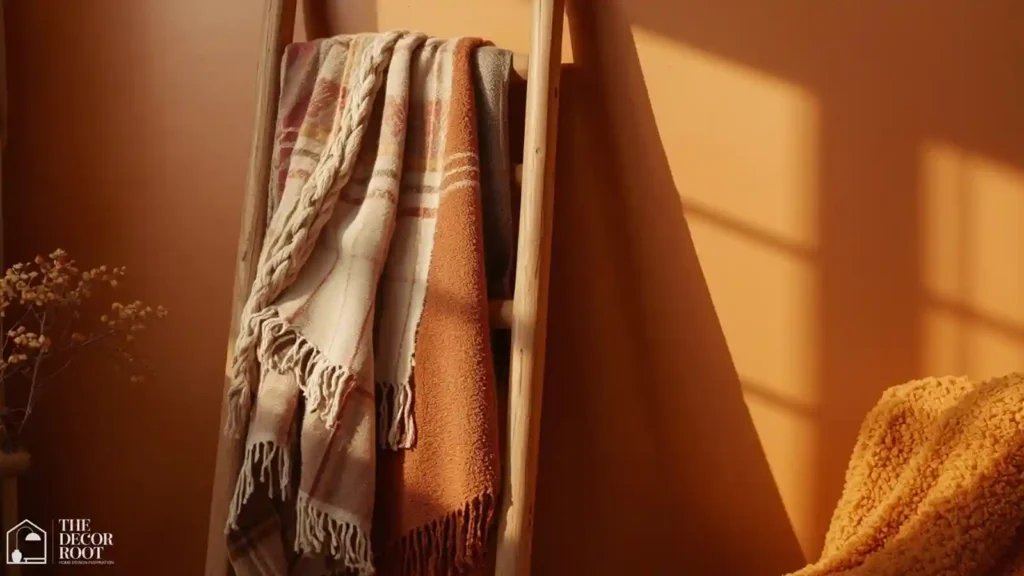
A wooden blanket ladder leaned against the wall near the sofa turns your throw collection into part of the room’s actual decor instead of clutter waiting to be dealt with. A wooden blanket ladder holds three to four throws draped at slightly different heights, which creates a natural visual rhythm that a flat stack in a basket can’t replicate. This is especially useful if your sofa is already fully layered and you want an overflow spot for seasonal rotation pieces, like a lighter throw you’ll swap in once the weather turns colder. Position the ladder within easy reach of the sofa so the throws stay functional, not just decorative, since a beautiful throw nobody actually uses defeats the point of a cozy fall living room.
EDITOR’S PICK
🛒Wooden Blanket Ladder, Three To Four Rungs
A wooden blanket ladder beside the sofa displays three to four throws at varied heights, offering functional overflow storage and a natural visual rhythm within arm’s reach.
(paid link)
12. Balance Heavy Textures With One Lightweight Cotton Throw
If your layered stack is starting to feel visually heavy, lots of chunky knits and faux fur in one area add a single lightweight cotton throw folded thin and draped loosely to break up the density. This works as a kind of visual palate cleanser, giving the eye somewhere lighter to rest between richer textures. A cotton throw in a soft cream or dove gray does this job well without introducing a whole new color story, and it’s also genuinely useful on warmer early-fall evenings when a heavier wool throw would be too warm to actually use, keeping the whole arrangement functional as well as good-looking.
13. Layer by Weight, Not Just by Color
A common mistake is arranging throws purely by how their colors look together while ignoring how their physical weights interact once draped. A heavy wool throw folded on top of a delicate cotton gauze throw will usually crush the lighter piece flat, erasing any texture it had. Instead, place your heaviest throw at the base of a drape and let lighter pieces layer loosely on top or beside it, never directly underneath something heavier. This small adjustment in physical order, not color order, is often the real reason a layered sofa in a magazine photo looks effortlessly dimensional while a DIY attempt at home looks oddly flat despite using similar blankets.
14. Use an Ottoman or Bench as a Second Layering Surface
Your sofa doesn’t have to hold every throw in the room; an ottoman, bench, or accent chair nearby gives you a second surface to continue the layered look without crowding the main seating area. Drape one folded throw loosely over the corner of an ottoman, letting it trail slightly onto the floor, which echoes the diagonal drape technique from earlier in a smaller, secondary spot. This spreads the cozy, textured feeling across more of the room rather than concentrating it all in one spot, and it also gives guests an easy throw to grab if they’re sitting somewhere other than the main sofa.
15. Add a Herringbone or Houndstooth Wool Throw for Structure
Patterned wool throws in herringbone or houndstooth bring a more tailored, structured texture into the mix, which balances out looser knit and faux fur pieces elsewhere in your layering. A herringbone wool-blend throw in charcoal or camel adds a menswear-inspired texture that reads as classic and slightly more formal than a casual knit. Fold this one more precisely than your other pieces: a crisp tri-fold rather than a loose drape, since its visual appeal comes partly from the clean geometric pattern, which gets lost if it’s bunched up too loosely. Use it as a grounding piece near the base of a taller, looser stack.
EDITOR’S PICK
🛒Herringbone Wool-Blend Throw, Charcoal Or Camel
A herringbone wool throw in charcoal or camel adds tailored, menswear-inspired texture to balance looser knits, best folded crisply and used as a grounding base beneath softer layers.
(paid link)
16. Rotate in a Chenille Throw for Softness Without Bulk
Chenille throws offer a soft, slightly nubby texture that’s less bulky than a chunky knit but still reads as considerably more textured than plain cotton, making them a useful middle-ground piece when your stack is starting to feel either too heavy or too flat. A chenille throw in a warm terracotta or muted olive works especially well layered halfway over a neutral base throw, letting both textures and both colors show. This is also one of the more budget-friendly throw materials, so it’s a good option if you’re building out a full layered look gradually and don’t want every piece to be a significant investment.
17. Coordinate (Don’t Match) Throws Across Multiple Seating Pieces
If your living room has a sofa and a separate accent chair, resist the urge to use identical throws on both; instead, choose pieces from the same color family or texture family that clearly relate without being duplicates. This coordinated-not-matched approach reads as more thoughtfully styled, since exact matching sets can look more like a furniture showroom display than an actual home. For instance, if your sofa has a rust waffle-weave throw, the chair might get a rust-toned chenille or plaid piece instead of the identical waffle weave, keeping the room’s overall palette connected while each piece still feels individually chosen.
18. Use the “Corner Puddle” Technique for a Relaxed Finish
Instead of draping a throw so it hangs evenly, let one corner of a folded throw pool loosely on the floor or cushion below, creating what stylists sometimes call a “puddle.” This technique adds a soft, relaxed dimension to an otherwise structured layered arrangement and works particularly well with your loosest, most casual textures, like a chunky knit or faux fur. It’s a small detail, but it’s one of the specific things that separates a photo-ready layered sofa from one that just looks like blankets were tossed there. The puddle looks intentional precisely because it looks slightly imperfect, rather than folded into a stiff rectangle.
19. Add a Tasseled or Fringed Throw as a Final Accent
A throw with fringe or tassel detailing along the edges introduces movement and a slightly more elevated finish to a layered stack, especially when draped so the fringe is visible and not tucked underneath other pieces. A fringed cotton or wool-blend throw in a warm neutral tone works as a finishing accent layered on top of your other pieces, rather than as a base layer, since its detail is easiest to appreciate when it’s not competing with bulkier textures underneath. This is usually the last piece you add to a stack, once your foundation throws are already arranged, functioning similarly to how a scarf or jewelry finishes an outfit rather than anchoring it.
EDITOR’S PICK
🛒Fringed Cotton Or Wool-Blend Throw, Neutral Tone
A fringed throw in a warm neutral adds movement and polish as the final finishing layer on top of your stack, best when the fringe remains visible and not competing with bulkier textures.
(paid link)
20. Keep Your Total Throw Count Between Three and Five Per Sofa
It’s tempting to keep adding “just one more” throw, but most designer-looking sofas actually use somewhere between three and five throws total, not seven or eight. Beyond five pieces, even well-chosen textures start to visually compete rather than complement each other, and the sofa starts looking overstuffed rather than intentionally layered. If you find yourself wanting to add a sixth or seventh throw, that’s usually a sign it belongs on a nearby chair, ottoman, or blanket ladder instead of piling onto the same sofa cushion, which keeps the main seating area from crossing the line into cluttered.
21. Refresh the Arrangement Weekly, Not Just Once
A layered throw arrangement isn’t a “set it and forget it” decor choice; the more it gets used, sat on, and pulled around, the more it naturally falls out of its original shape, which is honestly part of what makes it look lived-in rather than staged. That said, a quick five-minute refresh once a week, re-draping pieces and re-fluffing the chunky knit throw, keeps the arrangement from sliding into genuinely messy territory. Think of it the same way you’d fluff pillows periodically; it’s routine maintenance, not a full redo, and it’s the difference between “cozy” and “someone needs to clean up in here.”
22. Photograph Your Arrangement to Fine-Tune the Balance
Before committing to a final layered look, take a quick photo of the sofa on your phone. Photos flatten a space and make texture and color imbalances much easier to spot than they are in person. If one side of the sofa looks noticeably heavier or more colorful than the other in the photo, that’s your cue to redistribute a piece or two. This is a trick professional stylists use constantly, since a room can feel balanced while you’re standing in it but read as lopsided the moment it’s flattened into a single frame, which is exactly how most people will actually see your living room online if you share it.
For more ways to carry this same layered, textural approach into the rest of your fall living room, check out our guide on 20 Fall Coffee Table Styling Ideas Beyond Pumpkins and 25 Fireplace Mantel Ideas for Early Fall Warmth, both of which use the same texture-first approach to keep the whole room feeling cohesive rather than themed.
Quick Action Plan
- If you only have twenty minutes this weekend, start with one neutral anchor throw draped diagonally over the sofa arm, add one chunky knit throw as your focal texture, and finish with a single smaller accent piece, a plaid scarf-style throw or a fringed throw layered on top.
- That three-piece combination alone covers the anchor, drape, and accent structure this whole list is built around, and it will visibly upgrade the sofa faster than any other single change in the living room.
- Once that base feels right, you can slowly add a blanket ladder or basket for overflow pieces as your collection grows.
Frequently Asked Questions
Conclusion
A designer-looking sofa really does come down to a formula you can repeat: one anchor, one textural focal point, and a smaller accent, layered by weight rather than color alone. Once you see it this way, you’ll notice it in every styled photo you scroll past, and you’ll have the tools to recreate it with blankets you may already own.
💾 Save this to your Fall Living Room board, so you have it on hand when you’re ready to restyle the sofa.