22 Umbrella Stand Ideas for Rainy Fall Entryways
Umbrella Stand Ideas for Fall Entryways because Fall doesn’t warn you before it starts raining. One minute it’s a clear October afternoon; the next you’re walking in with a dripping umbrella and nowhere obvious to put it, so it ends up leaning against the wall, pooling water onto the floor or a rug that really didn’t need to deal with that. It’s a small problem, but it’s a daily one for a solid two to three months a year, and most entryways simply don’t have a real answer for it.
Umbrella stand ideas for rainy fall entryways are one of the most overlooked home decorating ideas of the season. An umbrella stand is a small object with an outsized effect on an entryway’s organisation and aesthetic, and the difference between a dripping umbrella left against the wall and one placed in a well-chosen stand is the difference between an entryway that looks managed and one that looks abandoned.
This post contains affiliate links. As an Amazon Associate, I earn from qualifying purchases. If you buy through these links, I may earn a small commission at no extra cost to you.
The Real Reason This Works
An umbrella leaning in a corner isn’t really “stored”; it’s just balanced somewhere out of the way, which is why it keeps falling over and why the water underneath it keeps spreading. A real umbrella stand does two specific things a corner can’t: it holds the umbrella upright and contained, and it catches the water that drips off as it dries, instead of letting that water find its way onto flooring, baseboards, or a nearby rug. That second part is the detail most people don’t think about until they’ve dealt with a water-stained hardwood floor or a moldy rug edge. An umbrella stand and a coat hook system are the two entryway elements that handle the full autumn arrival moment, these fall entryway arrival system ideas show how positioning both in the right relationship to the door creates a choreographed sequence where the umbrella goes in the stand, the coat goes on the hook, and the scarf goes in the basket before a single wet item reaches the rest of the house.
Elevate Entryway with Umbrella Stand
An umbrella stand is the detail that completes a fall entryway. Browse all our spaces decorating ideas to see how wet weather storage connects to coat hooks, benches, small entryway solutions, and the full autumn organisation system for an entry that handles everything the season delivers. An umbrella stand is the mudroom’s threshold guardian. These wet-weather mudroom storage ideas show how positioning a drip-friendly umbrella stand at the point of entry, alongside a boot tray and coat hooks, creates a complete wet-weather arrival system that contains every damp item before it moves deeper into the home.
1. Use a Tall Ceramic Umbrella Stand
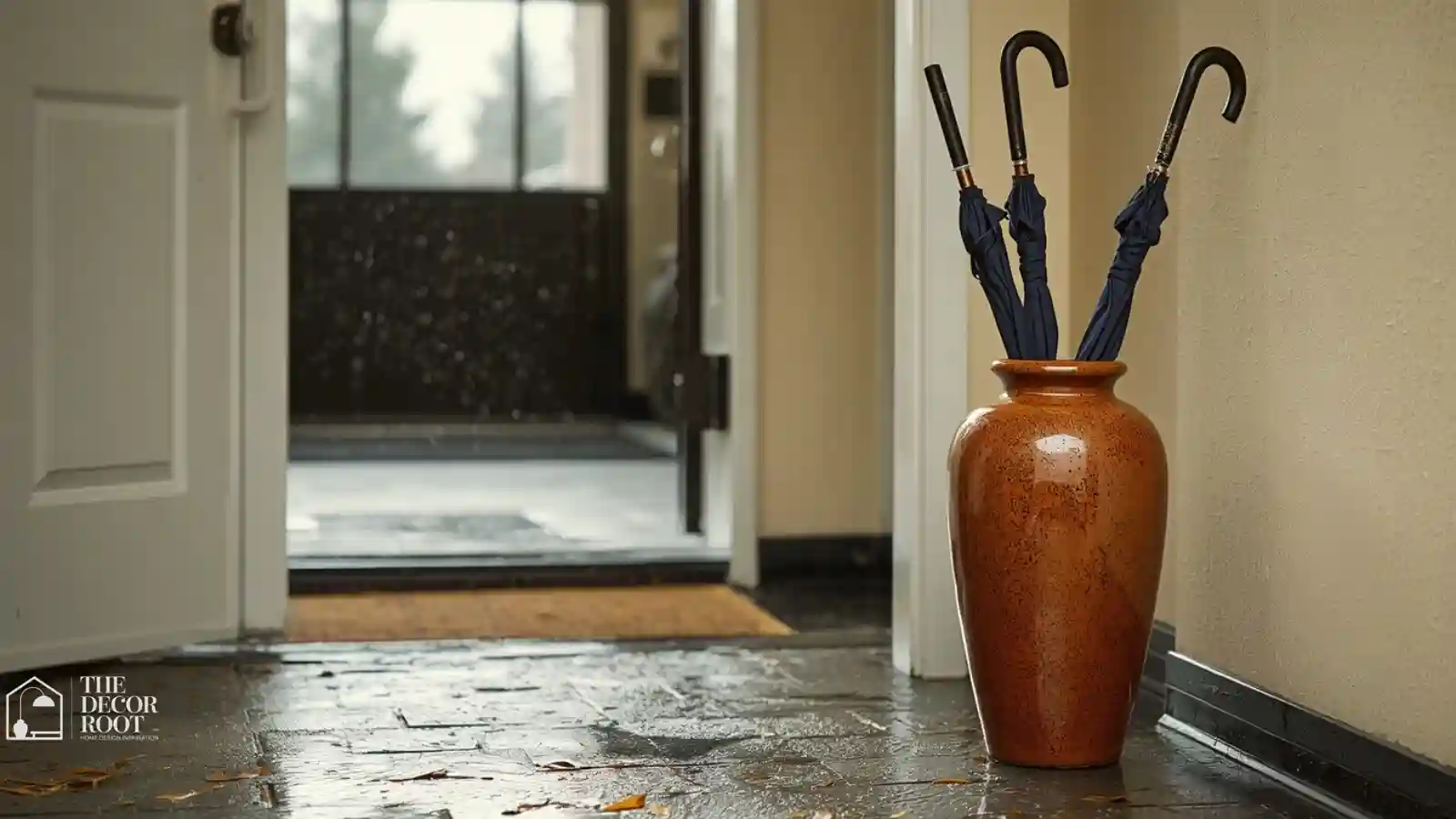
The classic option for a reason: a tall, narrow ceramic stand holds umbrellas upright without them sliding around, and ceramic itself is naturally water-resistant, so it won’t warp or stain the way some wood options can over a full rainy season. Look for one at least 18 inches tall so longer umbrellas don’t tip the stand over when leaned in. A glazed terracotta or deep brown finish tends to suit a warm fall palette better than plain white or black, and doubles as a decor piece even on dry days.
2. Choose a Woven Basket as an Umbrella Holder
A sturdy woven basket seagrass, rattan, or a similar natural fiber makes a genuinely good umbrella stand as long as it’s tightly woven enough to hold water briefly without seeping through immediately. This works best if you’re drying umbrellas relatively quickly rather than leaving them fully wet for hours, since natural fiber baskets aren’t as inherently water-resistant as ceramic or metal. It’s a strong choice if you want the stand to blend into a boho or coastal-leaning entryway rather than reading as purely functional.
3. Add a Galvanized Metal Bucket
A simple galvanized metal bucket, the kind often sold for firewood or planters, works surprisingly well as an umbrella stand because metal handles water exposure without any risk of staining or warping. It’s also one of the most budget-friendly options on this list, often available for under $20, and the industrial-farmhouse look suits a rustic fall entryway aesthetic well. Add a few smooth river rocks or marbles in the bottom for extra weight so it doesn’t tip when umbrellas are added or removed.
4. Use a Ceramic Stand With a Built-In Drip Tray
For the most functional version of a classic stand, a ceramic umbrella stand with a built-in removable drip tray at the base catches runoff without it ever touching your actual floor. The tray lifts out for easy emptying and cleaning, which matters more than it sounds once you’re using it daily through a wet fall season. This is the single most practical upgrade over a basic stand and worth the slightly higher price if floor protection is your main concern.
EDITOR’S PICK
🛒Ceramic Umbrella Stand With Removable Drip Tray
A ceramic umbrella stand with a removable drip tray offers easy‑to‑clean floor protection, the most practical upgrade over a basic stand.
(paid link)
5. Repurpose a Vintage Milk Can
An old galvanized or enamel milk can, sourced from an antique shop or flea market, makes a genuinely charming umbrella stand with real fall farmhouse character. The narrow opening naturally keeps umbrellas upright and gathered together rather than splaying out, and the vintage patina adds visual interest that a brand-new stand simply can’t replicate. Check for any rust holes at the base before using one for wet storage; a small tray or liner inside solves this if the can isn’t fully watertight anymore.
6. Use a Tall Wicker or Rattan Vase-Style Holder
A tall, narrow wicker vase often sold for dried florals repurposes easily into an umbrella stand, especially for households with only one or two umbrellas rather than a full family’s worth. The narrow shape works in tight entryway corners where a wider ceramic stand wouldn’t fit, and the natural texture pairs well with a warm, layered fall entryway look. Line the interior with a small plastic liner if you’re using it for consistently wet umbrellas, since most woven vase-style pieces aren’t designed with water resistance in mind.
7. Add a Freestanding Metal Umbrella Stand With Multiple Slots
A metal stand with individual slots or a divided interior keeps multiple umbrellas from tangling together, which matters more in households where everyone has their own umbrella rather than sharing one or two. Look for a stand with a solid, weighted base; top-heavy umbrella stands with several umbrellas loaded in tip over easily, especially with kids grabbing and replacing umbrellas quickly on their way out the door.
8. Use a Decorative Ginger Jar or Large Vase
A large ceramic ginger jar or decorative vase, the kind sometimes used purely for style, works as a genuinely functional umbrella stand while adding a more elevated design element to the entryway. This option leans more toward decor-first households who want the stand to double as a statement piece even when it’s empty. Choose one with a wide enough opening (at least 4 inches) to comfortably fit two or three umbrella handles without them jamming together.
9. Choose a Metal Mesh Umbrella Stand for Fast Drying
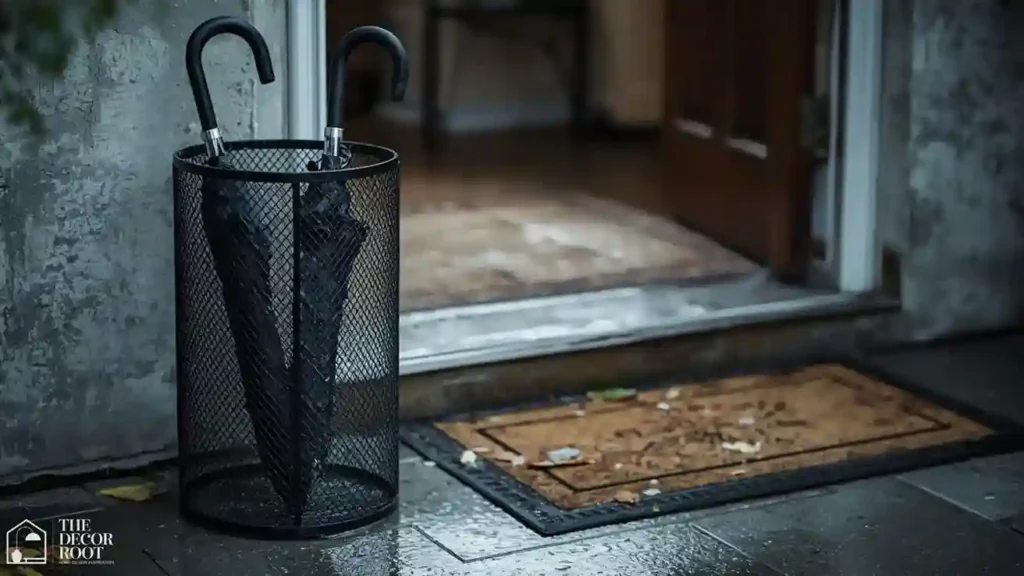
A metal mesh or wire umbrella stand allows more airflow around the umbrella as it dries than a solid ceramic or wood stand, which noticeably cuts down on the musty smell that develops when a wet umbrella sits closed in an enclosed space for too long. This style tends to suit a more modern or industrial-leaning entryway and is typically lighter and easier to move than ceramic alternatives, which is useful if you’re regularly repositioning it.
EDITOR’S PICK
🛒Metal Mesh Umbrella Stand With Drainage
A metal mesh umbrella stand promotes airflow to prevent musty smells, suits modern entryways, and is lighter and easier to move than ceramic.
(paid link)
10. Add a Small Corner Shelf With a Built-In Umbrella Slot
For entryways with almost no floor space to spare, a small corner shelf unit with a cut-out slot specifically for an umbrella base combines vertical storage with umbrella holding in one compact footprint. This is a more custom or DIY-leaning option, but it solves the space problem directly rather than trying to squeeze a traditional stand into a tight corner where it doesn’t quite fit.
11. Use a Wine Barrel-Style Umbrella Stand
A wood barrel-style stand, either an actual repurposed wine barrel section or a smaller barrel-shaped ceramic version, brings warm, rustic texture that suits a fall entryway particularly well. The wide, heavy base makes it one of the more stable options on this list, resistant to tipping even with several umbrellas loaded in. If using an actual reclaimed barrel, seal the interior or add a liner, since untreated wood and standing water don’t mix well over a full rainy season.
12. Choose a Slim Ceramic Stand for Narrow Entryways
Not every umbrella stand needs to be wide; a slim, cylindrical ceramic stand as narrow as 6 inches in diameter still holds two or three umbrellas comfortably and fits into entryway gaps that a traditional wider stand simply can’t. This is one of the better options for apartment entries or narrow hallway-style entryways where every inch of floor space is doing double duty.
13. Add a Freestanding Boot and Umbrella Stand Combo
A combined stand designed to hold both boots and umbrellas in one piece, usually with a boot rack section and a separate umbrella slot, consolidates two of the most common fall entryway wet-gear problems into a single footprint. This works particularly well for smaller entryways that don’t have room for multiple separate storage pieces but still need to handle both wet boots and wet umbrellas regularly through the season.
14. Use an Umbrella Stand and Boot Tray Set
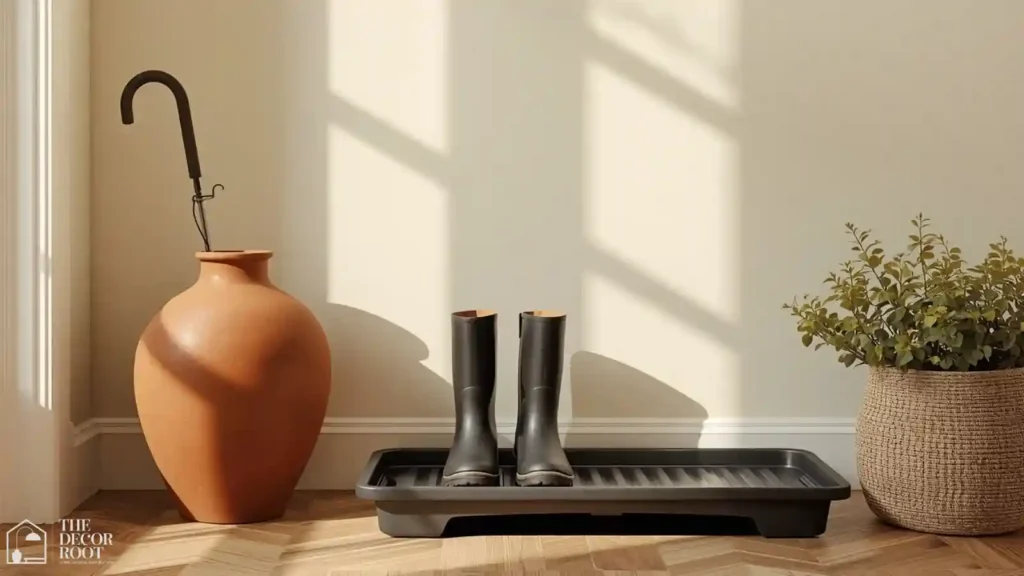
Rather than a combined single piece, an umbrella stand sold or styled together with a matching rubber boot tray keeps both wet-gear zones visually cohesive and positioned right next to each other by the door, the most logical layout for a household dealing with rain regularly. The boot tray catches runoff from boots the same way the umbrella stand catches drips from umbrellas, so your entryway floor stays protected on both fronts.
EDITOR’S PICK
🛒Umbrella Stand And Matching Boot Tray Set
A matching umbrella stand and boot tray placed by the door catch drips and runoff for a cohesive, floor-protecting rain gear station.
(paid link)
13. Choose a Stand With a Non-Slip Weighted Base
For households with kids or pets moving through the entryway quickly, a stand with a genuinely heavy, non-slip base matters more than the material or style. Ceramic and cast metal tend to be naturally heavier than wicker or thin metal options, but you can also add weight sand, gravel, or smooth stones to the base of a lighter stand if tipping has been an ongoing issue.
16. Use a Copper or Brass Umbrella Stand for a Warmer Finish
A copper or brass-finished stand adds a warm metallic tone that pairs especially well with a terracotta-and-gold fall color palette, standing out as a design element rather than blending into the background the way a plain black or white stand might. These finishes do develop a natural patina over time with water exposure, which some households like for the character it adds and others prefer to avoid with a sealed or lacquered finish.
17. Add a Freestanding Umbrella Stand With a Removable Liner
Look specifically for stands designed with a removable plastic or metal liner inside a decorative outer shell, often ceramic or wood on the outside, functional plastic on the inside. This combination gives you the look of a nicer material without worrying about water damage to that material directly, since the liner is doing the actual water-holding work and can be pulled out and emptied or cleaned separately.
18. Use a Tall Woven Seagrass Basket With a Plastic Liner Insert
Building on the woven basket idea, adding a simple plastic liner or bucket insert inside a seagrass or rattan basket solves the water-resistance limitation of natural fiber while keeping the decorative woven exterior visible. This is a low-cost DIY fix if you already own a basket you like the look of but have noticed water starting to seep through the base after regular fall use.
19. Add a Wall-Mounted Umbrella Holder for Zero Floor Space
When floor space genuinely isn’t available, a wall-mounted umbrella holder with a small drip catch beneath it lets umbrellas hang or slot in vertically against the wall instead of taking up any floor footprint at all. This is one of the better solutions for very small entryways, apartment hallways, or entries where a traditional stand would block foot traffic.
EDITOR’S PICK
🛒Wall-Mounted Umbrella Holder With Drip Catch
A wall-mounted umbrella holder with a drip catch stores umbrellas vertically without floor space, ideal for compact entryways and narrow hallways.
(paid link)
20. Use a Decorative Vintage Cane or Umbrella Stand
Antique cane stands, originally designed to hold walking canes and umbrellas together, show up regularly at estate sales and antique shops and bring genuine vintage character that a new stand can’t replicate. These often come with a metal liner already built in, since they were designed with wet umbrella storage in mind from the start, making them more functional than their age might suggest.
21. Add a Two-Tone Ceramic Stand That Matches Your Entryway Palette
Choosing a stand in a color that intentionally matches your entryway’s existing palette terracotta, cream, deep brown turns a purely functional item into an actual styling choice rather than something that looks tacked on. This is less about function and more about making sure the umbrella stand doesn’t visually clash with everything else you’ve already set up in the space.
22. Finish With a DIY Umbrella Stand From a Repurposed Planter
A large ceramic or concrete outdoor planter, the kind typically used for patio plants, repurposes easily into a budget-friendly umbrella stand. Most are already designed with drainage in mind, which doubles as a way for excess water to escape rather than pooling at the base. This is one of the most affordable options on the list if you already have an extra planter sitting unused in a garage or storage area.
Related Reading: Once wet umbrellas are handled, tackle the rest of your rainy-day gear with our guide to 24 Fall Entryway Bench Ideas With Hidden Storage for boot and coat storage that pairs naturally with an umbrella stand.
Quick Action Plan
- If you’re dealing with wet umbrellas dripping onto your floor right now, the fastest fix is a stand with a built-in or removable drip tray (Idea 4); it solves the actual water problem, not just the “where do I lean this” problem. If floor space is your bigger constraint, skip a traditional stand entirely and go with a wall-mounted holder (Idea 19).
- And if you want the stand to also look intentional rather than purely functional, choose a material and finish ceramic, copper, vintage that matches your entryway’s existing palette (Idea 21) so it reads as decor on the dry days too.
A Japandi entryway and a fall entryway share the same design instinct: that an arrival space should be organised with enough intention that it handles the chaos of daily life without showing it. These considered entryway design ideas show how the Japandi approach of a single beautiful object in exactly the right position, including an umbrella stand chosen for its material quality as much as its function, creates an arrival experience that feels calm regardless of what the weather outside is doing.
Frequently Asked Questions
Conclusion
A wet umbrella doesn’t have to mean a wet floor. The right stand, sized to your entryway, matched to your household’s umbrella count, and built to actually catch water instead of just holding umbrellas upright- turns a small daily annoyance into a non-issue for the whole rainy season. This post contains affiliate links. If you purchase through them, I may earn a small commission at no extra cost to you.
💾 Save this to your Rainy Day & Fall Entryway board on Pinterest so it’s ready the next time you’re shopping for one.