23 Fall Mudroom Ideas That Handle Wet Boots
Fall Mudroom Ideas. Somewhere between the first real rainstorm and the first morning frost, your entryway stops being a place you walk through and starts being a genuine battle zone: muddy boots, dripping umbrellas, a dog that just ran through wet grass, and kids who somehow track leaves in on every single surface. A mudroom that actually works isn’t about looking like a magazine spread; it’s about function that holds up to real fall chaos on a Tuesday afternoon when three people are coming through the door at once, soaked and in a hurry. Fall mudroom ideas that handle wet boots are one of the most practically transformative home decorating ideas for the autumn season. A mudroom designed specifically for the boot-dropping, coat-hanging, umbrella-dripping chaos of a wet autumn day eliminates the entropy that spreads from the front door through the whole house when there is no organised place for it to stop.
This post contains affiliate links. As an Amazon Associate, I earn from qualifying purchases. If you buy through these links, I may earn a small commission at no extra cost to you.
The Thinking Behind This
The mistake most mudroom setups make is designing for how the space looks empty rather than how it performs under actual use, which is why so many pretty mudroom photos fall apart within the first month of real weather. The thinking that actually holds up is building around containment first, storage second, and style third. You need a defined spot where water, mud, and wet fabric stop spreading before they hit your hallway floor, and only after that’s solved does it matter whether the baskets match. Wet boots are one half of the autumn mudroom challenge; wet umbrellas are the other. These mudroom wet weather storage ideas show how positioning a drip-friendly umbrella stand at the threshold between the outside and the mudroom zone, alongside a boot tray and a drying rack, creates a complete wet weather arrival system that contains all the moisture before it reaches the house.
Mudroom Ready for Autumn
A fall mudroom is the hardest-working interior space of the autumn season. Browse all our spaces decorating ideas to see how the storage, flooring, and organisational systems of a mudroom connect to entryway benches, coat storage, “A mudroom without dedicated coat and scarf storage is an incomplete solution, these mudroom coat and outerwear storage ideas show how labelled hooks, a deep bench cubby, and a dedicated scarf basket within the mudroom zone create a system where every family member’s outerwear has a specific home that is used reliably rather than approximately. And the wider autumn home for a first room that handles everything the season throws at it.
1. Boot Tray with Drainage Grid

A boot tray with a raised drainage grid sits above standing water rather than letting boots soak in a puddle, which matters far more than a flat rubber tray once real fall rain and slush start showing up daily. The elevated grid lets water drip through and pool underneath rather than around the boots themselves, keeping the actual footwear drier between wears and preventing the tray from becoming a stagnant, musty puddle. Choose a size that fits your actual household’s boot count rather than guessing, since an undersized tray just means overflow boots sitting directly on the floor anyway. This is the foundational, cheapest fix on this entire list, and it should be the very first thing you set up before anything else.
2. Slatted Wood Boot Rack
A slatted wood rack elevates boots off the floor entirely, letting air circulate underneath and around each pair, which dries them faster and prevents the musty smell that builds up when wet boots sit flat against a hard surface for days. This works especially well for taller rain boots and snow boots that don’t sit well in a shallow tray, since the slats give the boot shaft room to lean without tipping. Choose a two-tier design if floor space is tight, doubling your capacity in the same footprint. Untreated cedar naturally resists moisture and odor better than standard pine, making it worth the modest price difference for a mudroom that sees heavy daily use throughout fall and winter.
3. Waterproof Rubber Flooring
If your mudroom currently has the same flooring as the rest of your house, switching to a waterproof rubber or commercial-grade vinyl surface in just that zone solves the underlying problem rather than just managing the symptoms with trays and mats on top of vulnerable flooring. Rubber tile specifically handles standing water, salt, and mud without staining or warping the way wood or standard vinyl can over a full season of hard use. This is a bigger weekend project, typically involving removing existing flooring and installing new tile or sheet product, but it pays off in a mudroom that can be hosed down or mopped aggressively without any worry about damage underneath. This is the fix for anyone whose current mudroom floor already shows visible water damage from past seasons.
4. Built-In Bench with Storage Cubbies
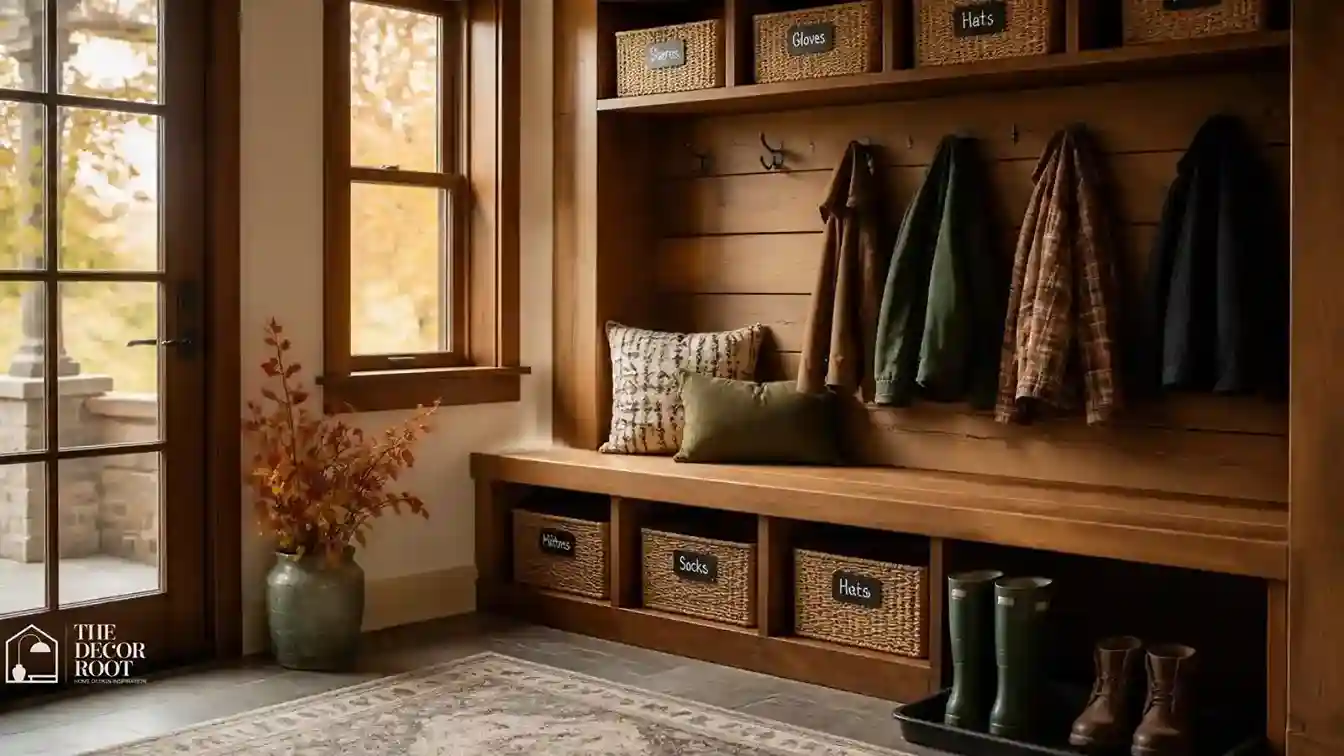
A built-in bench with open cubbies underneath solves the two biggest mudroom problems at once: somewhere to sit while pulling off wet boots, and immediate, obvious storage for those boots right where you’re already sitting. This entryway storage bench with cubbies typically spans one wall and includes individual open sections sized for one to two pairs of boots each, ideal for assigning a cubby per family member so nobody’s boots end up in a single chaotic pile. Choose a bench height around 18 inches for comfortable sitting, and a water-resistant finish on the wood or laminate given the moisture this zone sees daily throughout fall. This is genuinely the highest-impact single furniture piece you can add to a mudroom.
EDITOR’S PICK
🛒Entryway Storage Bench With Individual Cubbies
An entry bench with open cubbies and 18-inch height offers seated boot removal and family storage, with a water-resistant finish.
(paid link)
5. Cubbies with Labeled Bins per Family Member
Assigning a labeled bin or basket to each family member within your cubby system takes the general chaos of a shared mudroom and turns it into something everyone can actually navigate without a daily argument over whose gloves are whose. This works especially well for kids, who respond better to “your bin” than a vague instruction to “put your stuff away,” and it makes morning departures noticeably faster once everyone knows exactly where their gear lives. Use a consistent color or simple name tag system rather than relying on memory alone, especially with younger kids still learning the routine. This is a low-cost organizational layer on top of whatever storage furniture you already have, and it’s one of the fastest ways to actually reduce daily mudroom friction.
6. Coat Hooks at Kid Height
Standard coat hooks mounted at adult height are functionally useless to a six-year-old, which is exactly why kids’ coats end up on the floor instead of hung up during the busiest, wettest months of the year. Installing a second, lower row of hooks specifically at kid height gives them a genuinely reachable spot for jackets, backpacks, and hats, which meaningfully increases the odds they’ll actually use it instead of dropping everything the second they’re inside. This is a five-minute install per hook and one of the cheapest fixes on this entire list. Position the lower row directly below the adult row so the whole hook wall reads as one cohesive system rather than a mismatched addition. This is the fix for the coat pile that reappears every single afternoon no matter how many times you clear it.
7. Heated Boot Dryer Rack
A heated boot dryer, typically a small stand with vertical prongs that fit inside each boot, actively dries wet boots overnight rather than leaving them to air-dry slowly over a day or two, which matters enormously during a stretch of consecutive rainy fall days when boots never fully dry between wears. Most units run on standard household current and are safe to leave running overnight, using gentle, low heat that won’t damage rubber or leather. This is a genuinely underused mudroom upgrade that solves a very specific, very real fall problem: putting your feet into boots that are still damp from yesterday. Look for a model with multiple ports if your household has more than one or two pairs of boots in regular daily rotation.
8. Layered Weatherproof Entry Mat System
A single doormat rarely handles real fall mud and rain on its own, but layering two mats a coarse, aggressive scraper mat right at the threshold and a softer, more absorbent mat just inside catches mud on the first pass and remaining moisture on the second. This heavy-duty weatherproof entry mat set genuinely stops the majority of debris before it ever reaches your actual flooring, rather than relying on one mat to do a job it was never designed to do alone. Choose mats sized to fully span your entry width, since gaps on either side simply give mud and water a path around rather than through the mat system. This two-mat layering approach is one of the single most effective, least expensive fixes on this entire list.
EDITOR’S PICK
🛒Heavy-Duty Two-Piece Weatherproof Entry Mat Set
Two layered mats (coarse outside, absorbent inside) spanning full entry width stop mud and moisture better than one.
(paid link)
9. Umbrella Stand
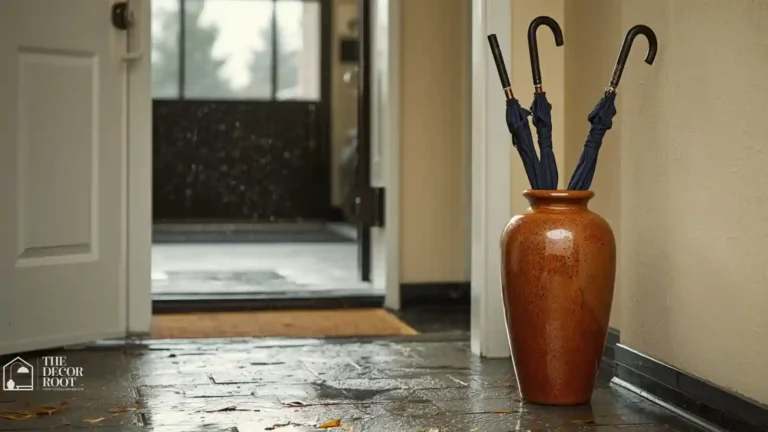
A dedicated umbrella stand solves a genuinely specific problem: wet umbrellas leaning against a wall or dripping on the floor because there’s nowhere designated for them to actually go. Choose a stand with a removable drip tray insert so you can empty accumulated water rather than letting it sit and eventually damage flooring underneath. Metal or ceramic stands hold up better than woven baskets in this specific application, since they’re built to handle standing water rather than absorb it. Position it directly beside the door so grabbing an umbrella on the way out, or dropping one off on the way in, becomes a single automatic motion rather than something you have to think about. This is a small, often-overlooked fix for a genuinely daily fall annoyance.
10. Wall-Mounted Drying Rack for Wet Gear
A fold-down wall-mounted drying rack gives wet rain jackets, scarves, and gloves somewhere to actually dry flat or hanging rather than being draped over a chair or doorknob elsewhere in the house. These typically fold flush against the wall when not in use, taking up almost no permanent space, and unfold into a full multi-arm rack when you need it after a genuinely soaking day. This is especially useful for families with kids in fall sports or outdoor activities, where wet gear needs a dedicated drying spot on a near-daily basis throughout the season. Mount it at a height where dripping water lands on your waterproof flooring rather than carpet or wood. This is the fix for the wet-coat-on-a-chair problem that shows up in almost every household come October.
11. Command Center with Mail and Keys
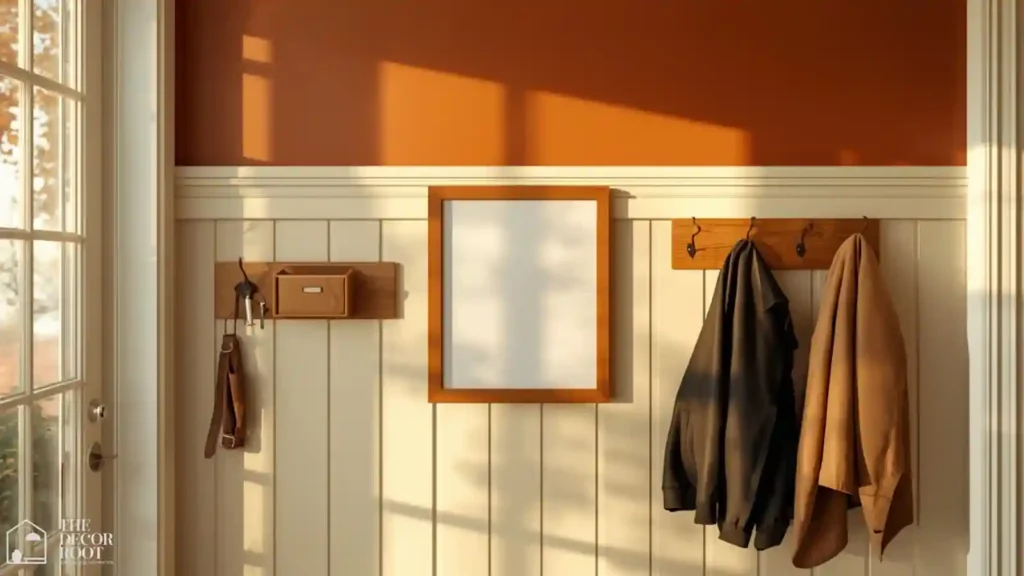
A small wall-mounted command center combining a key hook, a mail slot or tray, and a small notepad or calendar consolidates the loose paperwork and daily-departure items that otherwise pile up on whatever surface is closest to the door. This matters more in fall specifically because permission slips, school notices, and holiday planning paperwork all ramp up at once, and a mudroom without a defined catch-all spot means all of it ends up scattered across the kitchen counter instead. Position it at eye level near the door so it’s genuinely used daily rather than becoming another surface that gets ignored. This is a small addition, but it solves a real organizational gap that most mudroom setups completely ignore in favor of just boot and coat storage.
12. Dog Leash and Towel Station
For households with dogs, a dedicated station near the door with a leash hook, a stack of towels, and a small basket for treats turns the genuinely chaotic post-walk moment muddy paws, wet fur, an excited dog into something manageable instead of a race to grab a towel from somewhere else in the house. This dog leash and towel wall organizer typically mounts directly beside the main door and includes a designated towel bar specifically for wiping down paws before your dog gets further into the house. This is one of the most practically useful additions on this entire list for dog owners specifically, since fall’s wet leaves and mud make the after-walk cleanup routine a near-daily event rather than an occasional one.
EDITOR’S PICK
🛒Dog Leash And Towel Wall Organizer Station
A wall-mounted dog station with a leash hook, towel bar, and treat basket beside the door keeps post-walk mud and wet paws contained, a practical fall addition for daily cleanup.
(paid link)
13. Shoe Cabinet with Ventilated Doors
A closed shoe cabinet with ventilated slat doors gives you the visual tidiness of hidden storage while still allowing enough airflow to actually dry out shoes and boots stored inside, unlike a solid closed cabinet that traps moisture and encourages odor and mildew. This is a strong option for households that want a cleaner, less cluttered look than open cubbies provide, particularly in a mudroom that’s visible from a main living area rather than tucked into a separate back entry. Choose adjustable interior shelving so you can fit both low shoes and taller boots within the same unit. This is the higher-style pick for anyone treating their mudroom as a genuine extension of their home’s overall design rather than a purely utilitarian back room.
14. Chalkboard or Whiteboard Family Message Board
A wall-mounted chalkboard or whiteboard near the door gives your household a fast, visible spot for reminders: “bring umbrella,” “practice moved to 4 pm,” “don’t forget the field trip form” that everyone actually sees on their way out, rather than a text message someone might not check in time. This is a particularly useful fall addition given how much scheduling shifts with the start of the school year and shorter daylight hours changing everyone’s routines. Choose a size proportional to your entry space, and mount it at a height visible to both adults and kids. This is a low-cost, genuinely functional addition that turns your mudroom into a real communication hub for the household, not just a storage zone.
15. Vertical Boot Storage Rack
A vertical rack designed specifically for tall boots, using individual slots or clips to keep each boot upright rather than flopping over, solves both a storage and a shape-preservation problem at once, since boots that fall over and sit bent for months can develop permanent creases. This works particularly well for households with several pairs of rain or snow boots in regular fall rotation, giving each pair its own defined slot rather than a jumbled pile at the bottom of a closet. Choose a freestanding or wall-mounted version depending on your available floor space. This is a smart, specific fix for a storage problem that’s easy to overlook until you’re staring at a closet floor covered in fallen-over boots every single morning.
16. Waterproof Bench Cushion
If your mudroom bench is currently bare wood or metal, adding a waterproof cushion makes it genuinely comfortable to sit on while pulling off wet boots, without worrying about the cushion itself absorbing moisture and staying damp for days. This waterproof, outdoor-rated bench cushion uses the same weather-resistant fabric typically found on outdoor furniture, which holds up far better in a mudroom’s damp conditions than standard indoor upholstery would. Choose a neutral or terracotta tone that fits your existing palette rather than a pattern that will show dirt and wear quickly in this high-traffic zone. This is a small comfort upgrade that makes the bench you already built or bought actually pleasant to use every single day.
EDITOR’S PICK
🛒Waterproof Outdoor-Rated Bench Cushion For Mudroom Seating
A waterproof outdoor-rated bench cushion in a neutral or terracotta tone makes your mudroom bench comfortable and moisture-resistant without absorbing dampness.
(paid link)
17. Baskets for Hats and Gloves
A row of open baskets, either on a shelf or built into your bench system, gives hats, gloves, and scarves a defined home instead of letting them scatter across every flat surface near the door once cold fall mornings actually arrive. Choose woven baskets in a warm natural material to keep the overall look cohesive with the rest of your fall styling, or opt for canvas bins if you want something machine-washable given how much moisture these accessories track in. Label baskets by category (hats, gloves, scarves) rather than by person if your household shares gear rather than owning individually assigned items. This is a simple, low-cost organizational layer that meaningfully reduces the “has anyone seen my gloves” scramble that happens on every genuinely cold morning.
18. Sliding Barn Door to Separate the Mudroom
If your mudroom is open to the rest of your main living space, a sliding barn door lets you visually and functionally close it off when it’s at its messiest, which is a genuinely useful option during the wettest stretches of fall when the space simply isn’t going to look tidy no matter how organized your systems are. This is a bigger project involving a door, track hardware, and typically a full day of installation, but it solves a real problem for anyone whose mudroom sits in direct sightline of a kitchen or living room. Choose a door style and finish that complements your existing interior rather than a purely rustic farmhouse look if that’s not already your home’s aesthetic. This is the fix for anyone who loves their mudroom’s function but hates that guests can see straight into it.
19. Built-In Bench Seat with Lift-Top Storage
A bench with a hinged, lift-up seat adds a second layer of enclosed storage beneath the sitting surface, ideal for out-of-season gear, extra boot trays, or cleaning supplies you want accessible but out of sight. This differs from open cubby storage by keeping less frequently used items fully hidden, which helps a smaller mudroom avoid looking cluttered even when it’s storing a genuinely large amount of gear. Choose sturdy hinges rated for the lid’s weight and a support arm that holds the lid open safely while you’re loading or unloading items. This is a smart space-maximizing option for anyone working with a compact mudroom footprint who still needs meaningful storage capacity beyond what open shelving alone can provide.
20. Absorbent Microfiber Door Mat Runner
For homes with a longer entry hallway rather than a single small mudroom nook, an extended microfiber runner mat catches moisture and debris across the full length of the walkway rather than just the first few feet by the door. This absorbent microfiber entry runner mat uses a dense fiber weave specifically designed to trap water and mud on contact rather than letting it smear further into the house with each subsequent step. Choose a non-slip backing given how wet this mat will regularly become throughout fall and winter. This is the right pick for anyone whose actual “mudroom” is really just a hallway, where a single small mat clearly isn’t covering enough ground to do the job.
EDITOR’S PICK
🛒Absorbent Microfiber Entry Runner Mat With Non-Slip Backing
An extended microfiber runner with a dense trap weave and non-slip backing catches moisture across the full hallway, ideal for homes where a single small mat won’t cover the walkway.
(paid link)
21. Wall-Mounted Charging Station
A small wall-mounted charging station near the door, with a power strip and a shallow shelf, gives phones, tablets, and other devices a consistent spot to charge overnight without cluttering kitchen counters, and it doubles as a natural reminder to grab your phone on the way out. This is a genuinely practical modern addition to a mudroom that traditional designs from a decade ago simply didn’t account for. Choose a station with surge protection and enough ports for your household’s actual device count, rather than a single-outlet solution that immediately becomes a bottleneck. This is a small but meaningfully convenient upgrade for households where “wait, where’s my phone” is a recurring part of every morning departure.
22. Overhead Storage Shelf for Seasonal Gear
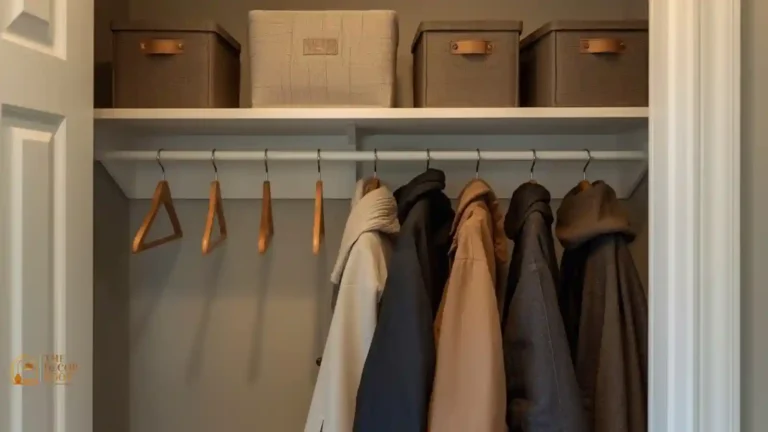
A shelf running above your coat hooks and cubbies, high enough to stay out of daily reach, gives you a spot for seasonal items beach gear in fall, holiday decorations, out-of-rotation coats that you don’t need accessible every day but still want conveniently located near the entry rather than in a separate attic or garage. This is a smart way to maximize a mudroom’s total storage capacity without cluttering the zones you actually interact with daily. Choose baskets or labeled bins for the overhead shelf rather than loose items, since anything stored up high should still be easy to identify without pulling everything down to check. This is the overflow solution for households whose mudroom needs to handle far more than just daily boots and coats.
23. Small Utility Sink for Rinsing Boots
For households dealing with genuinely heavy mud think rural properties, active kids in fall sports, or multiple dogs a small utility sink installed directly in the mudroom lets you rinse boots, paws, and gear right at the source instead of tracking mud further into the house to reach a bathroom or kitchen sink. This is a bigger plumbing project requiring a water line and drain, realistically only worth pursuing if you’re already renovating the space or dealing with mud on a near-daily basis throughout fall. A deep basin utility sink with a pull-down sprayer handles boots and gear far better than a standard shallow sink would. This is the ultimate high-effort, high-payoff fix for anyone whose mudroom needs to handle genuinely serious daily mess, not just occasional light rain.
For more fall home organization ideas, see our Fall Bathroom Storage Ideas Before Guests Arrive and 22 Heated Towel Rack Ideas for Fall Mornings.
Quick Action Plan
- Start with containment this week: set up a boot tray or layered mat system at the door, since this single step stops the majority of mud and water before it spreads any further into your home.
- Add a bench or seating option next, even a simple stool, since it changes how boots actually come off rather than being kicked off haphazardly at the threshold.
- Round out the system with hooks, cubbies, and a labeled bin per family member over the following weekend, and treat any bigger project- flooring, a built-in bench, a utility sink- as a longer-term upgrade rather than something to rush before the first frost.
A fall mudroom and a mudroom laundry combo represent two scales of the same organisational brief, these mudroom design and storage ideas show how the hooks, benches, baskets, and durable flooring that make a dedicated mudroom handle autumn’s wet boots and coats translate directly into a combined mudroom laundry zone that solves both challenges within the same footprint.
Frequently Asked Questions
Conclusion
A mudroom that actually holds up to fall weather isn’t built around Pinterest-perfect styling; it’s built around containment, storage, and a system your whole household will actually use without thinking about it. Start with the basics, layer in organization as you go, and by the time winter’s first real storm hits, your entryway will be handling it instead of tracking it through the rest of your house.
💾 Save this list to your Fall Mudroom Ideas board on Pinterest so it’s ready before the next muddy day.