
Winter Lighting Ideas: How to Light a Home When It Gets Dark at 5
winter lighting ideas start with one fact, not one lamp. At 5 PM in winter the daylight is gone, and the house has to make its own evening. Most winter lighting lists skip that fact and show a fairy light, then call the room done. A home earns its winter evening from the order you fix it in, and the order is bulbs, layers, dimmer, bedside, task, then accent.
This article promises a home that stays warm and bright from 5 PM to bedtime. You get a room by room Kelvin and lumens plan, a cheat sheet table, six problems solved in order, two named evening scenes, six mistakes to skip, and 12 researched picks mapped to the rooms where they work. Nothing here asks you to buy everything at once, and nothing here asks one lamp to light a whole room.
This article is research based curation, not hands on testing. Where a detail could not be verified, it is left out rather than guessed, and you should check size, color, and contents on the live listing before ordering. The numbers quoted from other sites, the 2700K to 3000K warm white range, the 1,500 to 3,000 lumen living room range, and the 450 to 800 lumen task range, are their figures, not tested claims.
How these picks were chosen: each pick was researched from listing and source pages and checked at the publish date. No star rating is claimed for any pick. Check size, color, and contents on the listing before ordering, because listings and variants change. Where a detail cannot be verified, it is left out rather than guessed.
Affiliate disclosure: This article contains affiliate links to products on Amazon. As an Amazon Associate I earn from qualifying purchases. The price you pay stays the same, and the commission helps keep The Decor Root running.

The Winter Lighting Plan: Kelvin and Lumens by Room
First, run the bulb check. Walk the house at 5 PM and name the Kelvin of every bulb you can see. If the living room glows warm and the hallway glows cold, the house has a bulb problem, not a lamp problem, and one swap of every evening bulb to the same warm white fixes it before a single lamp is bought.
Second, run the layer check. Count the light sources in the living room at three heights: one bounced off the ceiling, one at seating height, and one low accent. A room with one overhead has one layer, and one layer flattens every face and leaves every corner dark, so the fix is a second and third source, not a brighter overhead.
Third, run the dimmer check. Sit in the living room at 5 PM and ask whether the light suits both reading and relaxing. If the room is either too bright to relax or too dark to read, it has no dimmer, and a dimmer lets the same 2700K bulbs run bright for tasks and low for wind down, without changing a bulb.
Fourth, run the bedside check. Stand in the bedroom at bedtime and ask what lights the last hour. If the only light is a bright ceiling light, the bedroom has no wind down light, and a warm bedside lamp at 200 to 400 lumens each is the fix, at the same 2700K to 3000K as the living room.
Fifth, run the task check. Stand at the kitchen counter and the desk at 5 PM and look at the work surface, not the room. If the room looks lit and the counter stays dark, the task zone has no light of its own, and 450 to 800 lumens aimed at the task is the fix, with under cabinet fill in the kitchen.
Sixth, run the accent check. Sit in the living room after dinner and ask whether the evening feels flat. If the room has its layers and still feels flat, it has no accent light, and fairy lights or a flameless candle at a candle like glow add the warmth that the main layers cannot give on their own.
winter lighting ideas are about fixing the house in order, bulbs first and accent last. A house with one warm temperature, three layers in the living room, a dimmer, a warm bedside, a lit task zone, and one accent reads as warm from the doorway, while a house with a new fairy light on mixed cold bulbs reads as a shop shelf. The bedroom end of this plan, how warm light carries a room from evening to sleep, is shown in winter bedroom ideas.
Kelvin and Lumens Cheat Sheet by Room
| Room | Kelvin | Lumens |
|---|---|---|
| Living room | 2700K to 3000K | 1,500 to 3,000 |
| Bedroom | 2700K to 3000K | 1,000 to 2,000 |
| Dining room | 2700K to 3000K | 1,000 to 2,000 (planning range) |
| Kitchen task zone | 3500K to 4000K for tasks, 2700K to 3000K for evening meals | 450 to 800 focused on the task, plus under-cabinet fill |
| Desk and reading | 3000K to 4000K for focus, 2700K for evening reading | 450 to 800 |
| Hallway and entry | 2700K to 3000K | 400 to 800 |
| Bedside lamp, each | 2700K | 200 to 400 |
| Table lamp for a corner | 2700K to 3000K | 400 to 600 |
The living room and bedroom rows come from the CHAL lumens guide and the Plush Fjord guide, with the evening Kelvin ranges backed by Hayden Homes and Chester Hills Raleigh. The dining room lumens row is a planning range tied to the sourced living room and bedroom ranges, not a figure quoted from a source, so treat it as a planning number and check it against the room before you buy.
Start With the Bulbs: 2700K to 3000K for Evenings
The house has one bulb problem before it has any lamp problem, and the problem is mixed colour. One bulb glows warm at 2700K, the next glows cold at 5000K, and the hallway glows blue, so the evening looks uneven from room to room even when every lamp is on. The fix costs the least of anything in this article, because a bulb swap changes the whole house in one evening.
Kelvin is the colour of the light, and lower means warmer. A bulb at 2700K reads as warm white, the colour of late evening sun and candlelight, and it suits every room after 5 PM. A bulb at 3000K reads a touch clearer while staying warm, and it suits rooms where you still need to see detail, like a kitchen at dinner time. Nothing above 3000K belongs in an evening room, because cool white reads grey on wood and fabric and keeps the room feeling cold.
Check the box before you buy, because the Kelvin figure is printed on the box and on the bulb base. Buy one temperature for the whole house and stick to it, with 2700K as the default and 3000K only where you want a touch more clarity. A house with every evening bulb at the same warm temperature reads as one plan, and a house with three temperatures reads as three plans fighting each other.

The warm white base bulb for the whole plan is the smart bulb below, and one 4-pack covers a living room layer. At 810 lumens and 2700K it fits the living room and bedroom rows in the table, and it dims, so the same bulb runs bright for tasks and low for wind down.
The tunable bulb below is the 5 PM switch. Set it to 2700K for evenings and to daylight for dark winter mornings, at 800 lumens per bulb, and the same bulb covers both ends of the day without a second purchase.
Also solves this: the bulb that must switch from daylight mornings to warm evenings, not the bulb that stays one colour
Kasa Smart Light Bulbs KL125P2, Full Color Changing Dimmable Smart WiFi Bulbs, 2-Pack
800 lumens, 2500K to 6500K warm to cool whites, 9W, E26 A19 base, 16 million colors, 2.4GHz WiFi only, no hub required, 2-pack, model KL125P2, as printed. Set it to 2700K for evenings and to daylight for dark winter mornings, at 800 lumens per bulb. Not for: A reader who wants a fixed warm white bulb with no app or WiFi setup.
(paid link)
One plain warm white bulb type for every lamp in the house fixes mixed colour temperatures in a single swap, and the bulb below is that one type. At 800 lumens and 2700K it suits every lamp from the living room to the bedroom, and it dims down to 2200K for the last hour of the evening.
Also solves this: the mixed bulbs across every lamp, not the lamps that need replacing
Philips LED A19 Ultra Definition Soft White Light Bulbs, 4-pack
A19 shape, E26 base, 800 lumens, 8W, 60W equivalent, colour temperature 2700K, dims to 2200K, dimmable, flicker-free, CRI 95, frosted glass, lifespan up to 15,000 hours, as printed. One plain warm white dimmable bulb type for every lamp in the house, so mixed colour temperatures get fixed in a single swap. Not for: Buyers who want daylight colour or colour changing control.
(paid link)
Bulbs decide the evening before any lamp does, because the wrong temperature makes the best lamp look cold. Swap every evening bulb to 2700K to 3000K first, then buy the lamps, and the house reads as one warm plan from the first evening.
Living Room: 1,500 to 3,000 Lumens in Layers
One overhead light flattens the living room at 5 PM, with dark corners and glare in the middle. The ceiling light throws light down from one point, so faces sit in shadow, the corners go dark, and the room reads as a workroom, not an evening room. The fix is layers at three heights, not a brighter overhead, because brightness from one point only makes the glare worse.
Layer one is the ambient base, light bounced off the ceiling, and a torchiere does it in one lamp. The Brightech Sky torchiere below gives 2,190 lumens at 3000K aimed upward, which covers most of the 1,500 to 3,000 lumen living room target on its own, and the ceiling bounce spreads the light without glare. Layer two is a floor lamp at seating height, which adds a warm pool where people actually sit, and the addlon lamp below gives that pool at its warmest printed setting of 3000K.
Add the layers and check the total. The torchiere at 2,190 lumens plus one table lamp at 400 to 600 lumens plus one low accent clears the 1,500 lumen floor of the range and stays inside the 3,000 lumen ceiling, so the room reads as bright enough to read in and calm enough to relax in. A room with three sources at three heights reads as warm from the doorway, and a room with one overhead reads as flat from the first minute.

The ambient base for the living room row is the torchiere below, and its 2,190 lumens bounced off the ceiling cover most of the 1,500 to 3,000 lumen target in one lamp. It dims, so the same lamp runs bright for tasks at 5 PM and low for wind down later.
The second living room layer beside the torchiere is the floor lamp below, and its warmest printed setting is 3000K, not 2700K, so use the 3000K setting for winter evenings to add a warm pool of light at seating height. Keep the cooler settings for daytime tasks, and check the live listing before ordering, because one mirror listing for this variant showed it out of stock at research time.
Layers are the difference between a lit living room and a warm living room, and the count matters more than the spend. One torchiere for the ceiling bounce, one floor lamp at seating height, one low accent, and the 1,500 to 3,000 lumen target is met without a single new fixture. The festive version of the same three layer rule, with tree lights and tapers on timers, is shown in christmas living room decor ideas.
Bedroom: 1,000 to 2,000 Lumens for Wind Down
The bedroom has no warm bedside light for wind down, only a bright ceiling light, and that one light decides the whole evening badly. A ceiling light at full brightness keeps the room alert at 10 PM, and switching it off leaves the room dark, so the bedroom has two settings and neither one suits the last hour. The fix is a bedside lamp at 200 to 400 lumens each, at 2700K, so the room steps down in stages instead of switching off in one jump.
Bedroom lamps should match the living room Kelvin, at 2700K to 3000K, so the house reads as one plan from room to room. A bedroom at 2700K beside a living room at 3000K reads as one gentle step down, which is exactly what wind down wants, while a bedroom at cool white beside a warm living room reads as a different house. Keep the bedroom total at 1,000 to 2,000 lumens across at least two sources, so one lamp never has to do the whole job alone.
Wall lamps suit a bedside with no table space, because the light sits at eye level beside the bed and the swing arm aims it where it is needed. A rotary knob dims it without an app, and a plug in fitting means no wiring, so the lamp goes up in minutes. Put one on each side of the bed, and the bedroom has its wind down layer without a single new table.

Warm light at eye level beside the bed is the wall lamp below, and the swing arm aims it where the light is needed, at the book or at the wall. The listing prints warm white with no Kelvin figure, so no 2700K figure is claimed for it, and the pair covers both sides of the bed in one box.
Also solves this: the bedside with no table space, not the bedside that needs a floor lamp
Royal Designs, Inc. Set of 2 Scalloped Swing-Arm Dimmable Wall Lamp, Oil Rubbed Bronze Lamp with Linen Eggshell Scallop Hardback Lampshade
Set of 2, number of light sources 2, swing arm, dimmable, with a rotary turn knob switch, dual installation plug in or hardwired, light color warm white, wattage 15 watts, brightness 1600 lumen, shade material linen, shade color linen eggshell, included components bulb and shade, material metal, finish oil rubbed, model WL-2001-ORB-HB-648-13LNEG-2, indoor use, room type living room, bedroom, kitchen, as printed. No Kelvin figure is printed in the sources checked, so no 2700K figure is claimed here. Not for: Anyone who wants a printed Kelvin figure or a cool white look, since the listing prints warm white only with no Kelvin figure.
(paid link)
The bedroom earns its wind down from the bedside, not from the ceiling, and the rule is simple: warm, low, and close. Two bedside sources at 2700K, each at 200 to 400 lumens, beat one bright ceiling light every night of the week. The festive bedroom version of the same rule, warm white only with a timer on every strand, is shown in christmas bedroom decor ideas for cozy evening lighting that still lets you sleep.
Dining Room: Warm Light Over the Table
The dining room needs warm light over the table, not glare from above, because dinner is eaten face to face and the light should flatter faces, not flatten them. A cool overhead makes food look pale and faces look tired, while a warm pool at 2700K to 3000K over the table makes the same meal look generous. Hang the light low enough to pool on the table and high enough to clear every head, and dim it once the plates land.
Use 1,000 to 2,000 lumens as a planning range for the dining room, tied to the sourced living room and bedroom ranges in the table, and check it against the room before you buy. One pendant over a four seat table sits at the low end of the range, while a long table with two pendants and a sideboard lamp sits at the high end, so count the sources before you count the lumens.
Candlelight is the third layer at the table, and it costs the least. A flameless candle with a moving flame gives the 1800K to 2200K feel of real candlelight with no flame near the table, and a 5-hour timer means it comes on at 5 PM and turns itself off after dinner, so the glow is set once and left alone.

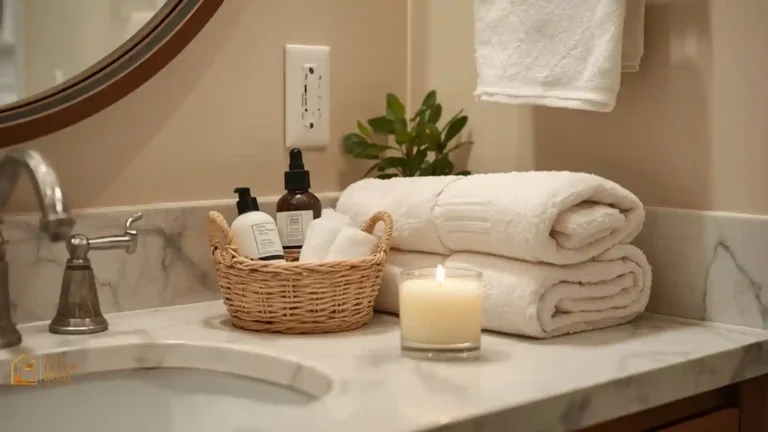
Candle-like accent at a candle glow, for the dining table and bedroom wind down, is the flameless candle below, with a timer so it comes on at 5 PM and turns off on its own. It is 7 inches high with a vanilla scent and a moving flame effect, and the remote sets the 5-hour timer without a walk to the table.
The dining room earns its evening from one warm pool over the table and one low glow beside it, and the overhead stays off once the candles are lit. A table lit at 2700K to 3000K with a flameless glow at the ends reads as an invitation, and a table lit from above reads as a kitchen at noon. The festive table version of the same warm light rule, with the overhead left off and the light at more than one level, is shown in christmas dining room ideas for dining room lighting that seats every guest.
Kitchen: Task Light Where You Cook and Clean
The kitchen counter and the desk are dark for winter tasks, even when the room looks lit, because one ceiling light throws light down from above and the cook stands in their own shadow. The counter is where the knives and the chopping board live, so a dark counter is not a mood problem, it is a work problem, and the fix is light aimed at the task, not more light aimed at the room.
Task light in the kitchen runs cooler than evening light, at 3500K to 4000K, because prep work needs to see colour truly, and a tomato should look red, not orange. Switch the same zone to 2700K to 3000K for evening meals, so the kitchen steps down with the rest of the house once cooking ends. Aim 450 to 800 lumens at the task itself, on the counter where the work happens, and add under-cabinet fill so the back of the counter is lit as well as the front.
Under-cabinet bars are the cheapest task fix in the kitchen, because they sit where the shadow falls and they need no wiring. Four bars under the cabinets light the whole run of counter, and a warm white kit at 2700K suits the evening meal, while a cooler task bar suits daytime prep, so choose the temperature by the hour you cook most.

Kitchen task light for winter cooking is the under-cabinet kit below, and 1,200 lumens at 2700K under the cabinets fills the dark counter zone that one ceiling light leaves in shadow. Four flexible bars cover the run, with 300 lumens per bar, so the light lands on the work surface, not on the ceiling.
Also solves this: the counter left in shadow, not the kitchen that needs a new ceiling light
WOBANE Under Cabinet Lighting Kit, 6.6 Feet Flexible LED Strip Lights Bar, Warm White
1200 lumens total, 2700 Kelvin, 4 flexible 20 inch LED bars, 30 LEDs per bar, 300 lumens per bar, 2.5W per bar, model CL02-2700, as printed. Kitchen task light for winter cooking; 1,200 lumens at 2700K under the cabinets fills the dark counter zone that one ceiling light leaves in shadow. Not for: A reader who wants cool white task light for daytime prep; this kit is printed as 2700K warm white only.
(paid link)
The kitchen earns its evening from two temperatures, not one, and the switch is the plan. Cook at 3500K to 4000K with 450 to 800 lumens on the task, eat at 2700K to 3000K with the under-cabinet glow low, and the same room works for both jobs. The festive kitchen version of the same warm light rule, warm white around 2700K with battery lights on a timer, is shown in warm christmas kitchen decor ideas for winter decor lighting that still lets you cook dinner.
Desk and Reading Corners: 450 to 800 Lumens on the Task
The desk is dark at 5 PM in winter, and a dark desk makes an hour of reading feel like three. The room light sits behind the reader, so the page sits in shadow while the room looks lit, and the fix is a lamp aimed at the task, not a brighter room. Put 450 to 800 lumens on the page itself, and the desk works at 5 PM the way it works at noon.
Task light for focus runs at 3000K to 4000K, because cooler light keeps the eyes alert for work that needs attention. Switch the same lamp to 2700K for evening reading, because warm light lets the eyes rest and the body wind down, and a lamp with five colour temperatures covers both jobs in one purchase. Aim the light at the page or the keyboard, never at the eyes, and keep the lamp on the opposite side from the writing hand, so no shadow falls on the work.
A desk lamp with ten brightness levels and a touch panel suits a shared desk, because each reader sets their own level without moving the lamp. Check the lux figure on the listing before ordering, because lumens tell you the total light and lux tells you how much of it lands on the page, and a lamp that throws light wide can read bright in the room and dim on the desk.

The desk and reading task light is the lamp below, and 800 lumens covers the 450 to 800 lumen task range, while the 2700K setting keeps evening desk work warm and cooler settings suit daytime focus. Ten brightness levels and a touch panel set the level without moving the lamp.
Also solves this: the desk that stays dark at 5 PM, not the desk that needs a ceiling light
LEPOWER LED Desk Lamp DL-13, 800LM for Home Office
800 lumens, 12W, 2700K to 6000K, 5 color temperatures, 10 brightness levels, 50 lighting modes, 1400 lux, CRI 90, model DL-13, as printed. The desk and reading task light; 800 lumens covers the 450 to 800 lumen task range, and the 2700K setting keeps evening desk work warm while cooler settings suit daytime focus. Not for: A reader who wants a lamp with app control; control is by touch panel as printed, with no app stated.
(paid link)
The desk earns its evening from one lamp aimed at the task, and the temperature is the choice that matters. Focus at 3000K to 4000K, read at 2700K, and the desk works for both jobs without a second lamp. The same 2700K to 3000K plan covers a dining table that doubles as a desk, as shown in elegant dining room ideas for home office lighting in a room that must also work as an office.
Hallway and Entry: Light the Path at 5 PM
The hallway is the first room you meet at 5 PM and the last one you leave, and a dark hallway makes the whole house feel dark, even when the living room glows. Guests step in from the cold and the dark, and the entry should answer with warm light at once, not after a hunt for the switch. Light the path at 400 to 800 lumens, at 2700K to 3000K, so the entry reads as a welcome, not a corridor.
Wall light suits a hallway because it sits at eye level and throws light along the wall, not down at the floor. One wall lamp halfway down a long hall lights the walk, and a second at the far end lights the turn, so the path is lit in stages instead of one bright pool by the door. Keep the entry lamp on a timer or a sensor, so it is already on when the door opens and nobody walks into a dark house.
A strip run along a hallway shelf or under a console gives the same guide light at ankle height, and it doubles as the accent layer for the entry. Keep it warm white for winter evenings, and keep it as a guide, not as the main light, because a hallway lit only from below reads as a runway, not a welcome.

The hallway earns its evening from light at eye level, lit before the door opens. One wall lamp at 2700K to 3000K, 400 to 800 lumens, turns the walk from the door into a welcome, and a second lamp at the far end finishes the path. The festive entry version of the same rule, warm white only with a timer on every lantern, is shown in christmas entryway ideas for entryway lighting that greets guests in three seconds.
Dimmers: Turn One Room From Bright to Calm
The living room has no dimmer, so it is either too bright to relax or too dark to read, and the switch offers two settings that suit neither job. A dimmer ends that choice, because the same 2700K bulbs run bright for tasks at 5 PM and low for wind down later, without changing a bulb. One dimmer does more for an evening than one new lamp, because it changes every bulb in the room at once.
Fit the dimmer to the bulbs you own, not the other way round. The dimmer below controls up to 150W of LED and 600W of incandescent, and it needs no neutral wire, so it fits older wiring without a new cable. Check the load before ordering, because a dimmer loaded past its limit flickers, and a dimmer loaded far under its limit can buzz, so count the watts on the circuit first.
Smart control needs the hub, and that limit belongs in the plan, not in a surprise after the purchase. The dimmer below needs the Lutron Smart Bridge for app and voice control, sold separately, so a reader who buys the dimmer alone gets a wall dimmer that works by hand, and a reader who wants app control buys the bridge with it. Buy the pair together if the routine in the last section is the goal, because scenes and timers live in the app, not on the wall.
The dimmer below is the one that makes the whole Kelvin plan work, because it lets the same 2700K bulbs run bright for tasks and low for wind down, without changing bulbs. Set it bright at 5 PM for cooking and homework, then slide it low for the last hour, and the room follows the evening instead of fighting it.
Also solves this: the room that is either too bright or too dark, not the room that needs new bulbs
Lutron Caseta Smart Dimmer Switch PD-6WCL-BL, Black
Controls up to 150W LED and 600W incandescent, no neutral wire required, Smart Hub required for app and voice control, model PD-6WCL-BL, dimmer switch, 3-way circuit type, as printed. The dimmer that makes the whole Kelvin plan work; it lets the same 2700K bulbs run bright for tasks and low for wind down, without changing bulbs. Not for: A reader who wants smart control with no hub; app and voice control need the Lutron Smart Bridge, sold separately.
(paid link)
Dimmers are the cheapest whole room fix in this article, because one switch changes every bulb it controls. Fit one in the living room first, then the dining room, and the house gains an evening setting it never had, with no new lamp in sight.
Accent Light: Fairy Lights and Flameless Candles
Evenings feel flat with no accent light, so fairy lights and flameless candles add the warm glow that the main layers cannot give. The main layers do the work, and the accent does the feeling, and a room with work light only reads as a room that is lit, not a room that is warm. Accent light sits low, glows warm, and asks for no attention, which is why it works.
Keep accent light at a candle like glow, in the 1800K to 2200K feel, and keep it low in the room. A strip run along a shelf, behind a television, or down a hallway gives a warm line of light that lifts the wall without lighting the ceiling, and a curtain of warm white lights across a bare window gives the room a second sunset after the real one is gone. Use accent as fill, never as the main light, because a room lit only by strips reads as a display, not a home.
Fairy lights belong on a timer, because an accent that stays on all night stops being an accent and starts being a habit. Set the curtain lights to come on at 5 PM and off at bedtime, and set the strip to warm white for winter evenings, so the accent is there when the evening starts and gone when the house sleeps.

Accent light for shelves, a TV wall, or a hallway run is the strip below, and it runs at warm white for winter evenings while staying accent, not main room light. At 65.6 feet in two rolls it covers a long shelf run or a full wall, and the RGBIC control sets the warm white once and leaves it there.
Also solves this: the shelf or TV wall with no glow, not the room that needs a main light
Govee RGBIC LED Strip Lights H619E, 65.6 ft, 2 Rolls of 32.8 ft
65.6 feet total, 2 rolls of 32.8 feet, 480 light sources, 72 watts, 24V, RGBIC, model H619E, part H619E1D1, as printed. Accent light for shelves, a TV wall or a hallway run; use it at warm white for winter evenings and keep it as accent, not as the main room light. Not for: A reader who wants a main light for a room; strip light is accent fill only.
(paid link)
Warm white curtain glow for a window accent is the curtain lights below, hung as a lit backdrop behind sheer panels or across a bare window. At 2700K and 300 LEDs across 9.8 by 9.8 feet, the curtain gives the window a second sunset, and the remote sets one of 8 modes and one of 4 brightness levels without a ladder.
Also solves this: the bare window at 5 PM, not the window that needs a curtain
Brightown 300 LED Curtain Lights, Warm White
300 warm white LEDs, colour temperature 2700 Kelvin, size 9.8 x 9.8 ft, 8 lighting modes, remote control with timer and 4 brightness levels, USB plug-in, USB adapter not included, IP44 rated, as printed. Warm white curtain glow for a window accent, hung as a lit backdrop behind sheer panels or across a bare window. Not for: Rooms with no USB outlet or adapter nearby, or buyers who want a mains wall plug instead of USB power.
(paid link)
Accent light earns its place by staying low and warm, and the test is the doorway. Stand in the doorway at 5 PM, and if the room glows at the edges without a single bright point shouting for attention, the accent is right. The tree version of the same low warm glow, with lights worked inside the branches and counted at about 100 per foot, is shown in christmas tree ideas for Christmas tree lighting that glows from inside the tree.
A 5 PM Routine: Timers, Scenes and One Switch
A routine beats rewiring, because the best lighting plan in the world fails if it needs six switches flipped by hand every night. Set the house to run itself: timers on at 5 PM, scenes for the two parts of the evening, and one switch or one remote that ends the night. The plan below takes ten minutes to set and then runs itself all winter.
Name two evening scenes and use them every night. Scene one is Bright Hour, from 5 PM to dinner, with the torchiere and the table lamps up full, the kitchen task light on, and the desk lamp on for homework. Scene two is Wind Down, from dinner to bedtime, with the dimmer slid low, the bedside lamps on, the accent lights glowing, and the overheads off. Two scenes cover the whole evening, and a third scene means one scene has to go.
Put a timer on every layer that can take one. The flameless candle runs its 5-hour timer from 5 PM, the curtain lights run their remote timer to bedtime, the hallway lamp runs on a sensor so it is on before the door opens, and the smart bulbs run their scenes from the app, so the house lights itself at 5 PM and dims itself at dinner. One switch by the door ends the night, and one remote on the coffee table ends the evening from the sofa.
Six mistakes to skip, so the routine holds all winter:
- Buying a cool white bulb for an evening room, so the warm plan fails at the first switch.
- Lighting a room with one overhead, so the corners stay dark and the glare stays in the middle.
- Skipping the dimmer, so the room is either too bright to relax or too dark to read.
- Leaving the bedroom on one ceiling light, so wind down has no low step between bright and dark.
- Aiming task light at the room instead of the task, so the counter and the desk stay dark while the ceiling glows.
- Running accent light all night with no timer, so the glow stops being an accent and becomes a habit the house never switches off.
Set the two scenes tonight, put the timers on, and the house will light itself at 5 PM tomorrow without a single switch touched by hand. A routine that runs itself is a routine that lasts, and a plan that needs six switches a night is a plan that lasts a week.
Frequently Asked Questions
1. What is the best Kelvin for winter evenings?
Ans: Use 2700K to 3000K warm white for the main light in every evening room, because that range reads as warm without going yellow. Keep 1800K to 2200K for accent only, for candle-like glow from flameless candles and fairy lights, and never use it as the main light, because accent Kelvin is too dim and too orange to read or cook by.
2. How many lumens does a living room need in winter?
Ans: Aim for 1,500 to 3,000 lumens in the living room, spread across at least three sources at three heights. One torchiere at 2,190 lumens covers most of the range on its own, and a table lamp at 400 to 600 lumens plus one low accent finishes it, so the room reads as bright enough to read in and calm enough to relax in.
3. Should bedroom lamps match the living room Kelvin?
Ans: Yes, keep bedroom lamps at the same 2700K to 3000K as the living room, so the house reads as one warm plan from room to room. A bedroom at 2700K beside a living room at 3000K is one gentle step down for wind down, while a cool white bedroom beside a warm living room reads as a different house.
4. Can one torchiere light a whole living room?
Ans: No, one torchiere cannot light a whole living room on its own. A 2,190 lumen torchiere is the ambient base, and it covers most of the 1,500 to 3,000 lumen target, but the room still needs table lamps to add warm pools at seating height and one low accent, or the corners stay dark and the seating reads as flat.
5. Are dimmers worth it in winter?
Ans: Yes, dimmers are worth it in winter, because one room has two jobs every evening. Run the same 2700K bulbs bright for tasks at 5 PM, for cooking, homework, and reading, then slide them low for wind down, for dinner and the last hour, and the room follows the evening instead of fighting it.
Bottom Line: winter lighting ideas come down to this: swap every evening bulb to 2700K to 3000K, layer the living room to 1,500 to 3,000 lumens at three heights, give the bedroom a warm bedside at 2700K, aim 450 to 800 lumens at the kitchen counter and the desk, fit one dimmer, add one low accent, and set two scenes on timers so the house lights itself at 5 PM. One bulb swap, one torchiere, one floor lamp, one dimmer, and one timer are the whole plan, and the rest is a matter of keeping the order honest.
Save these winter lighting ideas to your Pinterest board, so your warm evening plan is ready before the dark arrives at 5 PM!
Photos via Pexels. All photos are free to use and sourced from Pexels.