22 Color Psychology Ideas for Compact Rooms That Feel Bigger
Color psychology for compact rooms matters because you did not choose the tight apartment, the boxy guest room, or the narrow hallway, but you did choose what color goes on the walls, and that choice is doing more work than your furniture arrangement ever will. Color psychology in a compact room is not only about mood. It is about depth perception itself: how light bounces, where the eye stops, and whether a wall reads as a boundary or a suggestion. These 22 ideas are built for square footage you cannot change, using color as the one renovation tool you already own.
The competitor guides agree on the theory and stop there. HomeDecorWrite explains light reflectance value and lists the best pale colors, Interior Amore names eight shades with their brand codes, and Bobby Berk sets the bar at a light reflectance value of 70 or higher. None of them gives a test-first system, and none of them ties the colors to verified products in buy order. This rewrite adds the gap closer they lack: a six-step audit, a measurement table, and 12 verified picks in the order that keeps a room finished at every step.
The picks are 12 researched products, 4 full boxes and 8 compact ones, each tied to the problem it solves and placed where that problem is discussed. This article is research based curation, not hands on testing. Where a detail could not be verified, it is left out rather than guessed, and you should check size, color, and contents on the live listing before ordering. The numbers quoted from other sites are their figures, not tested claims, and the buy order below is the order that keeps a room working at every step.
How these picks were chosen: each pick was researched from listing and source pages and checked at the publish date. No star rating is claimed for any pick. Check size, color, and contents on the listing before ordering, because listings and variants change. Where a detail cannot be verified, it is left out rather than guessed.
Affiliate disclosure: This article contains affiliate links to products on Amazon. As an Amazon Associate I earn from qualifying purchases. The price you pay stays the same, and the commission helps keep The Decor Root running.

Test First: The 6-Step Color Audit That Decides Every Gallon
A compact room fails on light before it fails on style. A color that looked pale on a swatch can read grey on a north wall, a white that glowed in the store can turn yellow under warm bulbs, and a trim line that looked crisp in daylight can cut the room in half at night. The audit below takes one afternoon with a sample pot, a bulb, and a mirror, and it decides every purchase that follows.
- Sample check: Paint two large swatches on the darkest wall and one on the lightest wall, then look at them at noon and at night before buying a gallon.
- Light check: Note which way the windows face, then swap one bulb to daylight 5000K and see whether the swatch still reads true after dark.
- Trim check: Hold the trim color against the wall color. If the contrast jumps out at arm’s length, the trim is cutting the room in half.
- Ceiling check: Look up. If the ceiling reads as a lid, it needs the wall color or one shade lighter, not a separate white.
- Mirror check: Stand where daylight lands and hold a mirror there. If it doubles the pale wall, that is where the mirror hangs.
- Accent check: Count the strong colors already in the room. If there are two or more, the accent rule below decides which one stays.
If the audit passes, the room is ready for the ten sections below. If a check fails, fix the light or the trim before buying paint, because a gallon chosen in the wrong light cannot be fixed by a nicer roller.
Color Psychology for Compact Rooms: Test the Color on Your Own Wall First
Paint behaves differently on your wall than it does on a swatch card, because your wall has your light, your floor, and your furniture reflecting into it. Southern Home and Hospitality warns that a shade that looked neutral in the store can look more yellow at home, and that a pale green can read far stronger once it covers four full walls. The fix is a test patch, not a better guess: paint a square at least two feet across on the wall that gets the least light, and live with it for two days.
The sample below is the test buy, an 8 oz pot of a pale cool blue that shows whether a receding color works in your light. One pot covers up to 27 square feet, which is enough for a full test patch plus a second patch beside the window. Paint the patch, check it at noon and at night, and only then order the gallon that matches it.
| Measure | Figure | Source |
|---|---|---|
| Light reflectance value (LRV) | Scale 0 to 100; aim 70 or higher in low-light rooms | Bobby Berk; Kiesers Painting |
| White Dove OC-17 LRV | 85.38 | Samplize |
| Bright side walls, perceived width | About 8 cm wider in a 4.5 m room | Dyson Painters summary of von Castell, Hecht and Oberfeld, PLOS ONE 2018 |
| Bright rear wall, perceived depth | About 7 cm deeper in a 6 m room | Dyson Painters summary of von Castell, Hecht and Oberfeld, PLOS ONE 2018 |
| Gallon coverage | About 350 sq ft; a typical bedroom has 350 to 450 sq ft of wall surface | TinyReno |
| PRESTIGE satin, 1 gallon | Covers 325 sq ft per gallon | PRESTIGE listing |
| KILZ ceiling paint, 1 gallon | Covers 250 to 400 sq ft per gallon | Perfect Fit Living |
| Mirror | 24 x 36 in | BEAUTYPEAK listing |
| Sheer curtains | 54 x 84 in per panel, 2 panels | NICETOWN listing |
| Daylight bulbs | 5000K, 800 lumens, 9W, 6-pack | Amazon Basics listing |
| Govee strip | 16.4 ft, 150 LED beads | Govee listing |
| Shiplap roll | 17.7 in x 9.8 ft | HAOKHOME listing |
| Roller kit | 10 pieces, 9 in plus 4 in frames | Pro Grade listing |
| Zebra blinds | 36 x 72 in, cordless | CHICOLOGY listing |
| Picture light | 12000mAh, 600LM, CRI 95 or higher | PopoIron listing |
| FrogTape | 1.41 in x 60 yd | FrogTape listing |
| KILZ sample | 8 oz, covers up to 27 sq ft | KILZ TRIBUTE listing |

The room-by-room version of this thinking, how the same cool palette behaves when the room has a table and chairs in it, lives in color psychology dining room ideas.
Drenched White: One Color on Walls, Trim, and Ceiling
A room painted in one pale color has no seams for the eye to catch, so the walls read as one continuous surface and the corners stop announcing themselves. The trick is picking a white with enough warmth that it never looks like a hospital, and enough lightness that it never reads as cream. White Dove OC-17 by Benjamin Moore is the reference point: light reflectance value 85.38, warm enough to stay soft under daylight bulbs, and available as a gallon in the PRESTIGE satin below.
Paint the walls, the trim, and the ceiling in the same White Dove, with the trim one sheen higher and the ceiling one shade lighter if the room feels low. The one-sheen difference is enough to separate the planes without a color contrast cutting the room in half. One gallon covers 325 square feet, which is most of a bedroom’s walls, and the ceiling needs its own paint, which is section 3.

The bedroom version of the same drenched look, a warm white that stays soft beside a bed and a lamp, lives in color psychology bedrooms.
Lift the Ceiling, Not the Roof
A ceiling painted the same white as the walls feels like a lid sitting on the room, because the eye has no reason to travel upward and the height reads as exactly the distance to the plaster. A ceiling painted one shade lighter than the walls, or in the same color at a lower sheen, lifts the lid without asking for a structural change. The white ceiling paint below covers 250 to 400 square feet per gallon, which is enough for most bedrooms and every hallway in a compact home.
Paint the ceiling first, before the walls, so drips land on unpainted drywall and not on finished color. Use a flat finish on the ceiling so light scatters instead of reflecting in a line, and roll in one direction from the window outward so lap marks stay invisible in daylight. The ceiling is the largest pale surface in the room, and it is the one surface that is never blocked by furniture.

The kitchen version of the same ceiling trick, a lighter plane above cabinets that never block it, lives in color psychology kitchens.
Double the Room with a Mirror on the Pale Wall
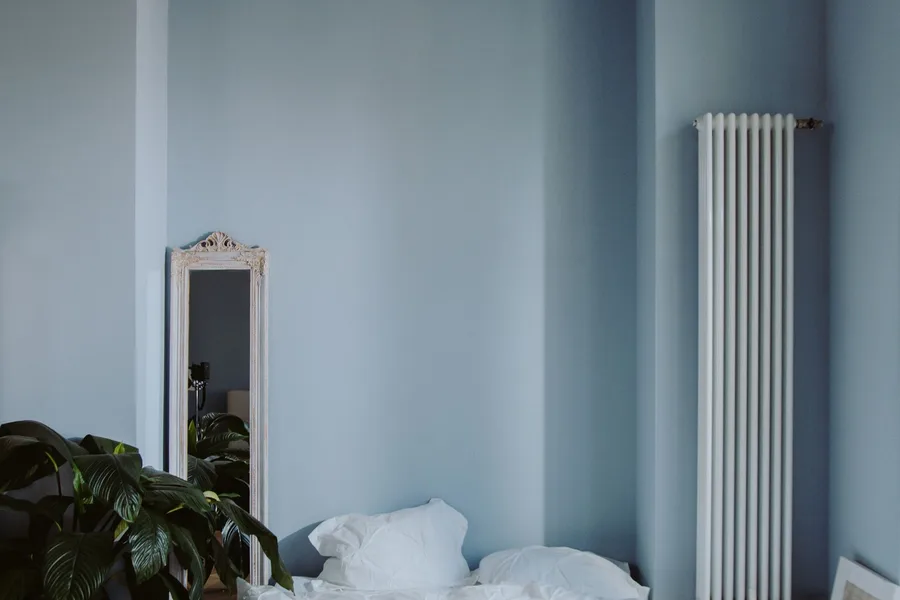
A mirror on a pale wall doubles the light that hits it, and the reflected room reads as a second space beyond the glass, which is the cheapest square footage a compact room will ever gain. The trick is hanging the mirror where daylight lands, not where the wall is empty: a mirror opposite a window catches the sky, while a mirror on a dark wall catches only the room you already have. The 24 by 36 inch mirror below is sized for a wall beside a bed or a console, and its slim frame stays out of the way of the reflection.
Hang the mirror at eye level, with its center at about 57 inches from the floor, so the reflection shows the room and not the ceiling. Keep the glass clean and the wall behind it pale, because a mirror reflects whatever faces it, and a dark wall behind a mirror is a dark room twice over. One mirror is enough for a bedroom or a hallway; a second mirror belongs in section 8, where it becomes the room’s accent.
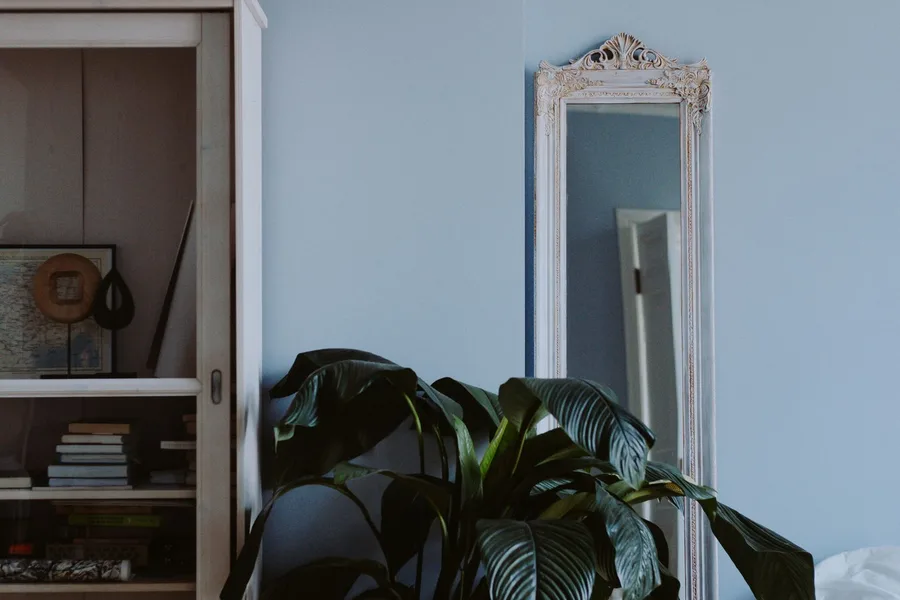
The living room version of the same mirror trick, a reflection that carries daylight across a whole seating area, lives in color psychology living rooms.
Melt the Window into the Wall
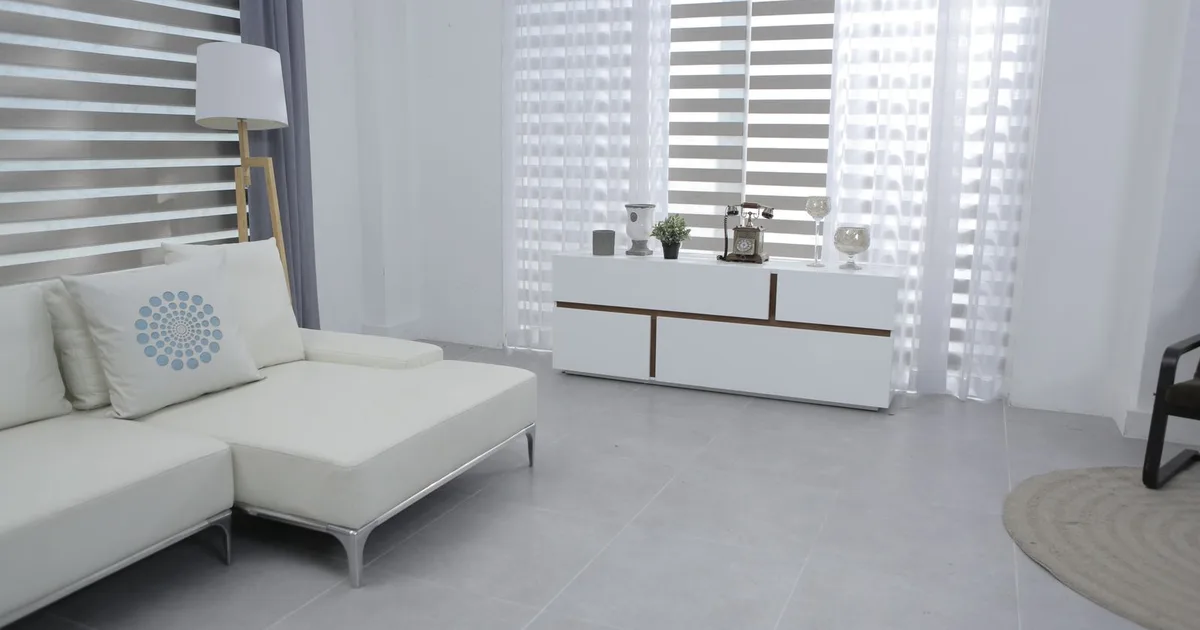
A window with heavy curtains reads as a hole in the wall, because the fabric stops the eye at the frame and the wall behind the curtain never enters the room’s color story. Sheer curtains in the same pale tone as the wall melt the window into the wall, so the light passes through and the frame disappears. The NICETOWN sheers below are 54 by 84 inches per panel, two panels per pack, and their white voile lets the daylight through while softening the view from outside.
Hang the sheers on a rod that extends at least six inches past the window frame on each side, so the fabric never covers the glass when it is open. Keep the rod at the ceiling line, not at the window top, so the window reads taller than it is. The sheers are the window treatment for a compact room; blackout panels belong on the bedroom wall, where the goal is darkness and not light.

NICETOWN White Sheer Curtains, 54 x 84 Inch, 2 Panels
Two 54 by 84 inch white voile panels that let daylight through and melt the window into a pale wall.
Not for: a reader who needs blackout, since these are sheer voile and let light through.
(paid link)
The entryway version of the same window trick, sheer fabric that lets light in without losing privacy at the door, lives in color psychology entryway.
Swap the Bulb Before Blaming the Paint
A warm white wall under a 2700K bulb reads yellow, and the same wall under a 5000K daylight bulb reads true, so a room that feels dingy may need a bulb swap and not a repaint. The audit in section 1 already asked for the swap, and this section is the purchase: a six-pack of 9W daylight bulbs at 800 lumens each, the brightness of a 60W incandescent, for every lamp and ceiling fixture in the room. Swap all the bulbs at once, because one warm bulb in a room of daylight bulbs pulls the whole room yellow.
Check the bulb base before ordering, because a room can hold E26, E12, or GU10 bases in different fixtures, and the pack below is E26 only. Run the new bulbs for a week before deciding on the paint, because the eye adjusts to daylight slowly and the wall that looked yellow on day one may read clean white by day seven. If the wall still reads yellow after the swap, the paint is the problem, and section 2 has the gallon.

Amazon Basics A19 LED Light Bulbs, Daylight 5000K, 9W, 800 Lumens, 6-Pack
Six 9W daylight bulbs at 5000K and 800 lumens each, the brightness of a 60W incandescent, for every fixture in the room.
Not for: a reader who needs a different base, since these are E26 only, or a reader who wants warm light, since these are daylight 5000K.
(paid link)
The warm-versus-cool question behind this swap, which temperature belongs in which room and why, lives in warm vs cool color psychology.
Run One Strip of Light Along the Low Ceiling
A room with a low ceiling feels taller when a line of light runs along the top of the wall, because the eye follows the glow upward and the ceiling edge stops reading as a hard line. A 16.4 foot LED strip with 150 beads, mounted on the wall just below the ceiling, gives that line for the price of one roll, and it plugs into a standard outlet with no wiring. Stick it level, hide the power lead behind the curtain or the shelf, and let the wall do the work.
Use warm white at night and daylight white in the morning, because the strip’s color follows the room’s mood and not the other way around. Keep the strip behind the top edge of the mirror or the curtain rod, so the beads themselves never show and only the wash of light reaches the ceiling. One strip is enough for a bedroom wall; a second strip belongs on the opposite wall only if the first one leaves a dark corner.
Govee LED Strip Lights, 16.4 ft, 150 LED Beads
A 16.4 foot LED strip with 150 beads that runs along the top of the wall and lifts a low ceiling with a line of light.
Not for: a reader who needs a longer run, since this strip is 16.4 feet, or a reader who wants a wired install, since this plugs into a standard outlet.
(paid link)
The living room version of the same strip trick, a line of light that carries a whole seating wall, lives in white living room ideas that feel inviting.
One Strong Wall, Nine Quiet Ones
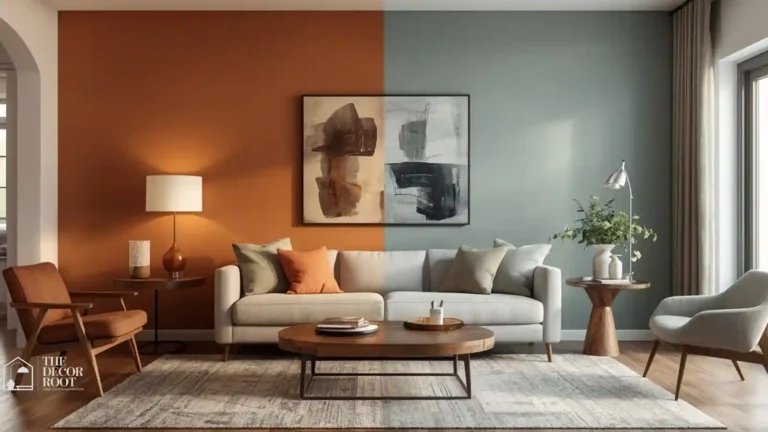
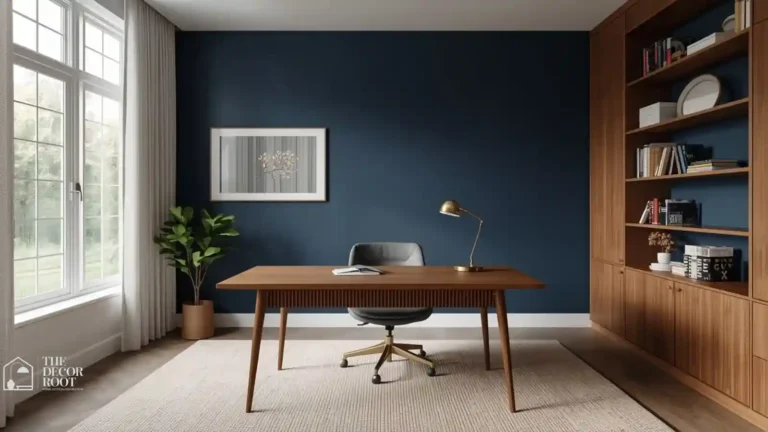
A compact room can carry one strong color, but only one, and only on one wall, because a second strong wall divides the room into two competing halves and the eye never settles. The strong wall is the one the door faces, or the one behind the bed, and it should be a color with a clear mood: a deep blue that calms, a warm terracotta that welcomes, or a sage green that steadies. The other walls stay pale, the trim stays pale, and the strong wall does all the talking.
The shiplap roll below is the texture for that one wall, a peel-and-stick plank that adds depth without paint and peels off when the lease ends. One roll covers 17.7 inches by 9.8 feet, which is a strip beside a door or a band above a bed, and two rolls side by side cover a narrow accent wall. Measure the wall first, because the roll is the accent, not the whole room.
HAOKHOME Peel and Stick Shiplap Wallpaper, 17.7 in x 9.8 ft
One peel-and-stick shiplap roll, 17.7 inches by 9.8 feet, that adds texture to one accent wall and peels off when the lease ends.
Not for: a reader who wants to cover a whole room, since one roll is a strip or a band, or a reader who wants real wood, since this is peel-and-stick vinyl.
(paid link)
The hallway version of the same one-strong-wall rule, a single color that pulls the eye down a narrow space, lives in hallway decorating ideas.
Paint the Ceiling, the Walls, and the Trim in Order
The order that keeps a room finished at every step is ceiling first, then walls, then trim, because drips fall down and every surface below the one being painted is still unpainted. Start with the ceiling paint from section 3, cut in the edges with a brush, and roll the field in one direction from the window. Let it dry overnight, because a ceiling that looks dry in two hours can still transfer paint to a roller frame the next morning.
Paint the walls next, with the White Dove from section 2, cutting in at the ceiling line and rolling from top to bottom in three-foot sections. The trim goes last, in the same White Dove at one sheen higher, so the color stays continuous and only the shine changes. The roller kit below is the tool for the whole order: a 10-piece set with 9 inch and 4 inch frames, for the ceiling, the walls, and the trim in one box.

Pro Grade Paint Roller Kit, 10-Piece, 9 Inch and 4 Inch
A 10-piece roller kit with 9 inch and 4 inch frames, for the ceiling, the walls, and the trim in one box.
Not for: a reader who wants a single roller only, since this is a 10-piece kit, or a reader who wants a sprayer, since this is rollers and trays.
(paid link)
FrogTape Multi-Surface Painter’s Tape, 1.5 Inch Wide, 60 Yards
A 60 yard roll of painter’s tape, 1.41 inches wide, that keeps the ceiling line crisp while the walls go on.
Not for: a reader who wants a wider tape, since this one is 1.41 inches, or a reader who wants a delicate-surface tape, since this is multi-surface.
(paid link)
Paint the ceiling in the morning, the walls in the afternoon, and the trim the next day, because a room painted in order is a room that stays finished, and a room painted out of order is a room that gets repainted.
Let One Light Layer Do the Work of Three
A compact room needs three kinds of light, and one fixture can carry all three if it is placed where the room is used: a zebra blind that filters daylight by day, a picture light that washes the wall by night, and a lamp that fills the corner. The two picks below are the filter and the wash: a cordless zebra blind for the window, and a battery picture light for the wall. Together they give the room a day mode and a night mode without a single new fixture.
Hang the zebra blind inside the window frame, so the fabric never touches the wall and the light filter stays where the light enters. Mount the picture light above the mirror or the strong wall, so its wash falls on the color that carries the room. Both picks run without wiring, which is the point: a compact room gets its light from the surface, not from the ceiling.
CHICOLOGY Cordless Zebra Blinds, 36 x 72 Inch, White
A 36 by 72 inch cordless zebra blind in white that filters daylight by day and closes for privacy at night.
Not for: a reader who needs a different size, since this blind is 36 by 72 inches, or a reader who wants a corded blind, since this one is cordless.
(paid link)
PopoIron Battery Picture Light, 12000mAh, 600LM, CRI 95+
A battery picture light with 12000mAh capacity, 600 lumens, and CRI 95 or higher that washes the strong wall by night.
Not for: a reader who wants a wired light, since this one runs on battery, or a reader who wants a dimmer switch, since this light has its own controls.
(paid link)
One accent, one light layer, and one mirror are enough for a compact room, because the room is finished when every surface has a job and no surface is shouting.
Frequently Asked Questions
1. Does white always make a room feel bigger?
Ans: White helps when the room has light to bounce, and it hurts when the room is dark, because a white wall in a dark room reads grey and cold. In a low-light room, a warm pale color with a light reflectance value of 70 or higher works better than a stark white, and the ceiling should be one shade lighter than the walls so the height reads as more than the distance to the plaster.
2. Is a dark accent wall a mistake in a compact room?
Ans: One dark wall is a tool, not a mistake, when the other nine surfaces stay pale and the dark wall is the one the door faces or the one behind the bed. Two dark walls divide the room into competing halves, and a dark ceiling closes the room down, so the rule is one strong wall, nine quiet ones, and the light layer from section 10 to keep the dark wall from swallowing the light.
3. Cool or warm colors for a compact room?
Ans: Cool colors recede and make a wall feel farther away, which is why the sample in section 1 is a pale cool blue, but a room painted only in cool colors can feel cold and clinical. The balance is a cool pale base on the walls with one warm accent, a warm wood tone or a terracotta cushion, so the room reads both bigger and welcoming, and the warm-versus-cool guide linked in section 6 names the temperature for each room.
4. Should the ceiling match the walls?
Ans: The ceiling should be the wall color or one shade lighter, never a separate bright white that sits on the room like a lid, and never a dark color that closes the height down. A flat finish scatters the light instead of reflecting it in a line, and the ceiling paint in section 3 covers 250 to 400 square feet per gallon, which is most bedrooms and every hallway.
5. What is the fastest single change that makes a room feel bigger?
Ans: Swap the bulbs to daylight 5000K, because a room that reads yellow under warm bulbs reads true under daylight, and the swap costs less than a gallon of paint and takes ten minutes. If the wall still reads yellow after the swap, the paint is the problem, and the test patch in section 1 decides the gallon before it is bought.
Quick Check Before You Order: Test the Color, Match the Trim, and Count the Gallons
Color psychology for compact rooms comes down to this: test the color on your own wall, drench the room in one pale color, lift the ceiling with a lighter plane, hang the mirror where the light lands, match the curtains to the wall, swap the bulbs to daylight, layer light with a strip, give one wall a pale pattern, paint in order, and keep one accent. One sample pot, one gallon of wall paint, one gallon of ceiling paint, and one buy order are the whole room, and the rest is a matter of keeping the numbers honest.
Save these color psychology ideas for compact rooms to your Pinterest board, so your next paint job makes the room feel bigger before the furniture moves!
Photos via Pexels. All photos are free to use and sourced from Pexels.