
Winter Bedroom Ideas: How to Make a Cold Bedroom Warm Without a Remodel
winter bedroom ideas start with one question, not one blanket. Ask what the room does wrong at 6 a.m., when the floor is cold, the bed is flat, and the light is harsh. Most winter bedroom lists skip that question and show a throw pillow, then call the room cozy. A bedroom earns its warmth from the order you fix it in, and the order is bed, floor, drafts, light, window, then the corner where you wind down.
This article promises a warm bedroom in layers, in the order you should buy them. You get a seven check audit before you spend, a quick decision table by starting point, six problems solved in order, two named palettes, six mistakes to skip, budget tiers in spend order, and 12 researched picks mapped two per problem. Nothing here asks you to buy everything at once, and nothing here asks the room to be one color.
This article is research based curation, not hands on testing. Where a detail could not be verified, it is left out rather than guessed, and you should check size, color, and contents on the live listing before ordering. The numbers quoted from other sites, the 60 to 67 degree sleep temperature, the 2700K warm white figure, the tog figures, and the 70/20/10 split, are their figures, not tested claims.
How these picks were chosen: each pick was researched from listing and source pages and checked at the publish date. No star rating is claimed for any pick. Check size, color, and contents on the listing before ordering, because listings and variants change. Where a detail cannot be verified, it is left out rather than guessed.
Affiliate disclosure: This article contains affiliate links to products on Amazon. As an Amazon Associate I earn from qualifying purchases. The price you pay stays the same, and the commission helps keep The Decor Root running.

Sleep at 60 to 67 degrees Fahrenheit, layer the bed three to four deep, and warm every bulb to 2700K. That is the whole fix in one line: the temperature decides whether the room sleeps warm, the layers hold the warmth, and the warm light makes the room read as warm at night.
The same range comes from Cleveland Clinic, which advises a bedroom temperature of about 60 to 67 degrees Fahrenheit for sleep.
The Winter Bedroom Audit for Winter Bedroom Ideas
Run seven checks in order before you spend on warmth.
First, run the bed check. Count the layers on the bed right now. If the count is one flat cover, the bed will sleep cold no matter what hangs on the wall. The audit asks for three to four layers, a fitted sheet, a flat sheet, a duvet insert, and a folded throw at the foot. Fix the bed first, and the rest of the room gets easier at once.
Second, run the floor check. Step out of bed barefoot at 6 a.m. and name what your feet land on. Bare wood or bare carpet tiles steal heat in seconds, and a rug that ends at the bed legs reads as a mat. The audit asks for an 8 by 10 rug for a queen bed, with about 18 inches of rug showing on each side, plus a felt pad under it.
Third, run the draft check. Hold a hand at the bottom of the bedroom door, then at the window frame, on a cold night. A draft you can feel with a hand is a draft that steals heat all night. The audit fixes the door first, then the window film, then the curtains, because a sealed window beside a leaking door is still a cold room.
Fourth, run the light check. Turn on every light you use after dark and name the temperature. One cool white bulb beside warm lamps splits the room, and the bed reads as cold even when the bedding is warm. The audit asks for 2700K warm white on every bulb, because the bulb is part of the warmth.
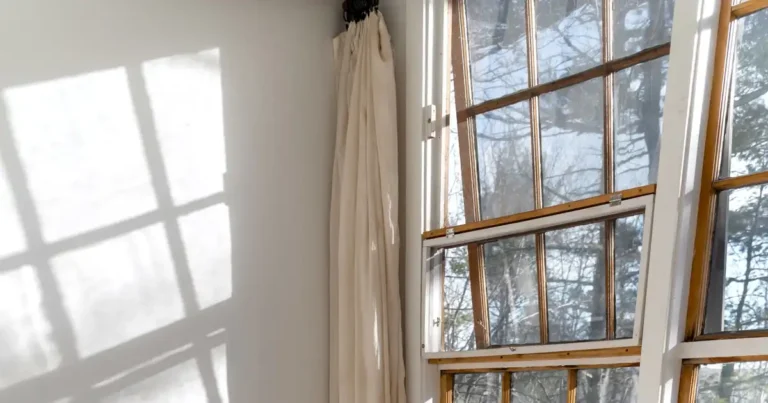
Fifth, run the window check. Look at the window at night and name what covers it. A bare window is a cold pane of glass that radiates chill into the room, and a short curtain that stops above the sill leaves the coldest strip open. The audit asks for floor length curtains on a rod hung high and wide, with a blackout liner behind them.
Sixth, run the corner check. Find the place where you sit for the last half hour before sleep. If the room has no chair, no lamp, and no surface for a book and a warm drink, the room has no wind-down corner, and the bed becomes the only seat. The audit asks for one chair or one clear bedside spot, one warm lamp, and one throw within reach.
Seventh, run the temperature check. Note the room temperature at bedtime and at 6 a.m. Sleep sources put the ideal range at 60 to 67 degrees Fahrenheit, and a room that swings ten degrees overnight needs sealing before it needs more blankets. If the room is under 60 at 6 a.m., fix the drafts first, because blankets cannot heat a room that leaks.
winter bedroom ideas are about fixing the room in order, bed first and decor last. A room with layered bedding, a warm floor, sealed drafts, and one warm light temperature reads as cozy, while a room with a new throw on a flat bed reads as a shop shelf. The color thread behind the warmth check, how warm and cool colors change the mood of a bedroom, lives in color psychology ideas for bedrooms.
Quick Decision Table: By Starting Point
Find your starting point, then move to the next section.
| Starting point | First move |
|---|---|
| Bed flat and cold | Layer the bed first, flannel sheets, then duvet insert, then folded throw |
| Floor cold at 6 a.m. | 8 by 10 rug with a felt pad under it, 18 inches showing on each side |
| Draft under the bedroom door | Twin draft stopper on the door, before any window work |
| Window rattles or feels cold | Window film on the glass, then thermal curtains at night |
| Harsh overhead light after dark | 2700K lamps first, then swap every other bulb to 2700K |
| Bare window, no privacy | Blackout curtains on a rod hung high and wide, floor length |
| No place to wind down | Throw and tea lights by the bed, one chair or one clear surface |
| Rental with no drilling and no paint | Film, stopper, throw, and lamps carry the whole plan, nothing fixed to the walls |
The rental row needs the most discipline, because a rental has no paint and no drilling to do the warming. The film, the stopper, the throw, and the lamps are the four markers, and the fall bedroom register that holds them together is shown in cozy fall bedroom ideas.
Problem 1: The Bed Stays Cold, the Bedding Lies Flat
The failure is a bed with one flat cover doing all the work, so the sleeper wakes cold at 3 a.m. and adds a second blanket on top, which slides off by morning. The bed is not ugly, it is flat, and flat reads as cold even when the room is warm.
The fix starts with the layer order, and the order is the whole section in one line. Fitted flannel sheet first, then flat sheet, then duvet insert, then a folded throw at the foot. Each layer shows its edge, so the bed reads as built, not thrown together, and each layer can be kicked off or pulled up without waking the other side of the bed.
The flannel rule is the base of the layer order. Flannel sheets for winter warm the surface that touches the sleeper, and a brushed flannel fitted sheet with deep pockets stays put on a thick mattress. A flat cotton sheet over the flannel gives a smooth band at the top, and the duvet insert above it gives the loft. Four layers is the ceiling, not the target, and a bed reads better at three layers than at five.
The loft rule finishes the bed. A quilted duvet insert, box stitched so the fill stays put, gives the bed its height, and the height is what the eye reads as warm. An insert that is too flat reads as a sheet, and an insert that is too puffy reads as a cloud, so the insert has to answer to the room, not fight it.

The flannel sheet set below is the base layer for this system: 4 pieces in gray, for the bed, where the warmth starts against the sleeper. Check the Gray color and the Queen size on the listing before ordering, because this listing carries several colors and sizes.
The duvet insert below is the second layer for this system: a quilted down alternative insert, 88 by 88 inches, for the bed above the flannel sheets, where the loft gives the bed its height.
Also solves this: the bed that needs loft above the flannel, not a second blanket on top
Utopia Bedding Queen Comforter Duvet Insert, Quilted, Box Stitched Down Alternative, 88 x 88 inches, White
88 by 88 inches, box stitched, down alternative, siliconized fiberfill, corner tabs, model UB0063, as printed. Not for: a reader who wants a duvet cover included in the box, because this is the insert only and the cover is bought separately.
Check Price on Amazon → (paid link)
The bed is warm when the flannel sits against the sleeper and the insert gives the bed its height. Judge the bed at 3 a.m., with the room dark and the heating low, because a bed that holds warmth through the night is a bed that works. The white linen register behind this section, how three whites and one texture hero hold a bed together, lives in white linen bedroom ideas.
Problem 2: The Floor Is Cold at 6 a.m.
The failure is a bare floor at the side of the bed, so the first step of the day is a shock that wakes the sleeper faster than the alarm. The room is not cold, the floor is cold, and a cold floor reads as a cold room even when the bedding is warm.
The fix starts with the rug, sized by the bed, not by the room. An 8×10 bedroom rug for a queen bed, placed so about 18 inches show on each side, gives bare feet a warm landing on both sides. A rug that ends at the bed legs reads as a mat, and a rug that runs wall to wall reads as carpet, so the size has to answer to the bed.
The pad rule is the whole section in one line. A felt pad under the rug adds a second warm layer between the feet and the cold floor, and it stops the rug sliding on wood. A rug with no pad slides, bunches, and thins at the edges, and a rug that slides is a rug that stops being used.
The placement rule finishes the floor. Push the rug so its top edge sits under the front third of the bed, with the long side running out toward the room. Both sides of the bed get the same warm landing, and the rug reads as part of the bed, not as a rug dropped beside it.
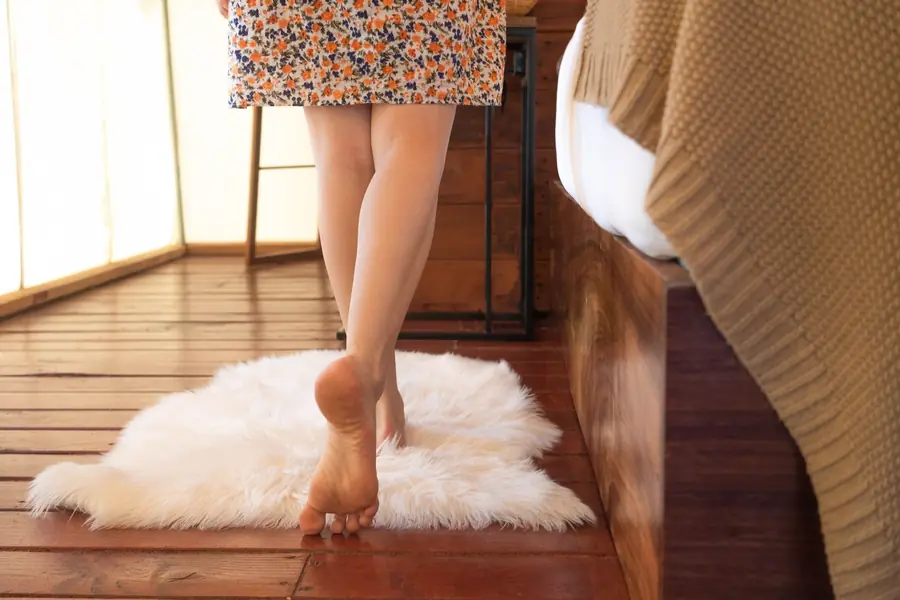
The washable rug below is the floor anchor for this system: 8 by 10 feet in beige, for the floor beside the bed, where bare feet land first. Check the Beige color and the 8×10 size on the listing before ordering, because this listing carries several colors and sizes.
The felt pad below is the second floor layer for this system: a 1/3 inch thick felt pad, 8 by 10 feet, for the floor under the rug, where the warmth and the grip live.
Also solves this: the rug that slides on a cold floor, not the rug that needs replacing
RUGPADUSA Basics, 8’x10′, 1/3″ Thick, 100% Felt Rug Pad
8 by 10 feet, 1/3 inch thick, 100% felt, model EXTH-810, safe for hardwoods, as printed. Not for: a reader who wants a rubber grip pad for a rug on carpet, because this one is felt and suits hard floors.
Check Price on Amazon → (paid link)
The floor is warm when the rug lands on both sides of the bed and the pad holds it still. Judge the floor at 6 a.m., barefoot, because a floor that feels warm on the first step is a floor that works. The zoning register behind this section, how a room is split into sleep, dress, and wind-down zones, lives in master bedroom ideas.
Problem 3: Drafts Steal the Heat
The failure is a room that never holds its heat, because cold air slips in under the door and around the window frame all night. The heating runs, the bedding is layered, and the room still feels cold, because the heat leaves as fast as it arrives.
The fix starts with the door, not the window. A draft stopper for bedroom door use sits at the gap under the door, where the coldest air enters, and it costs less than any other fix in this article. Seal the door first, then the window, because a sealed window beside a leaking door is still a cold room.
The film rule is the second draft fix. Window insulation film shrinks tight over the glass and the frame, and it stops the cold radiating off the pane. A kit that fits up to 5 windows covers the bedroom and leaves film for the next coldest room, and the tape that comes in the kit holds the film flat so it reads as a second pane, not as plastic.
The curtain rule finishes the draft system. Heavy curtains over the filmed window add a third layer at night, and the curtains close at dusk, when the cold sets in. Open the curtains by day, so the sun warms the room, and close them at dusk, so the heat stays in. The US Dept of Energy gives the same rhythm, open by day and close at dusk, and the rhythm is free.

The twin draft stopper below is the first draft fix for this system: 38 inches, for the gap under the bedroom door, where the coldest air enters.
The window film kit below is the second draft fix for this system: heavy-duty shrink film, 62 by 210 inches, for up to 5 windows, where the cold radiates off the glass.
Also solves this: the window glass that radiates cold, not the window that needs replacing
Duck MAX Strength Window Insulation Kit, fits up to 5 windows, 62 in. x 210 in., Clear
Fits up to 5 windows, 62 by 210 inches, heavy-duty shrink film, window tape included, manufacturer Shurtape Technologies, clear, as printed. Not for: a reader who wants a permanent window fix, because this film is seasonal and comes off in spring.
Check Price on Amazon → (paid link)
The room holds its heat when the door is sealed first and the window is filmed second. Judge the room at 6 a.m., with a hand at the door and at the window frame, because a room with no draft at either spot is a room that works. The guest room register behind this section, how a room is tested in the season guests actually visit, lives in guest bedroom ideas.
Problem 4: The Light Is Harsh After Dark
The failure is a room with one overhead light, usually cool white, so the warm bedding looks gray at night and the wood looks cold. The palette is right by day and wrong by night, and most bedrooms get the most use at night.
The fix starts with warm light, not new paint. A 2700K warm light keeps warm colors warm and cool colors soft, because the bulb is part of the warmth. A room lit with cool white light above 4000K stays cold, and the same room lit warm feels like a different room.
The lamp rule is the whole section in one line. One bedside lamp with a wood base and a linen shade, at 2700K warm white, gives the room a warm pool beside the bed, at the height where faces are seen. A lamp with a linen shade softens the light, and a wood base repeats the warm wood of the bed frame, so the light and the furniture answer each other.
The bulb rule finishes the evening light. Swap every bedroom bulb to 2700K soft white, 60 watt equivalent, dimmable, so one cool bulb in the ceiling fixture never undoes two warm lamps. One cool bulb in the ceiling fixture undoes two warm bedside lamps, so the swap has to be every bulb, not the visible ones.
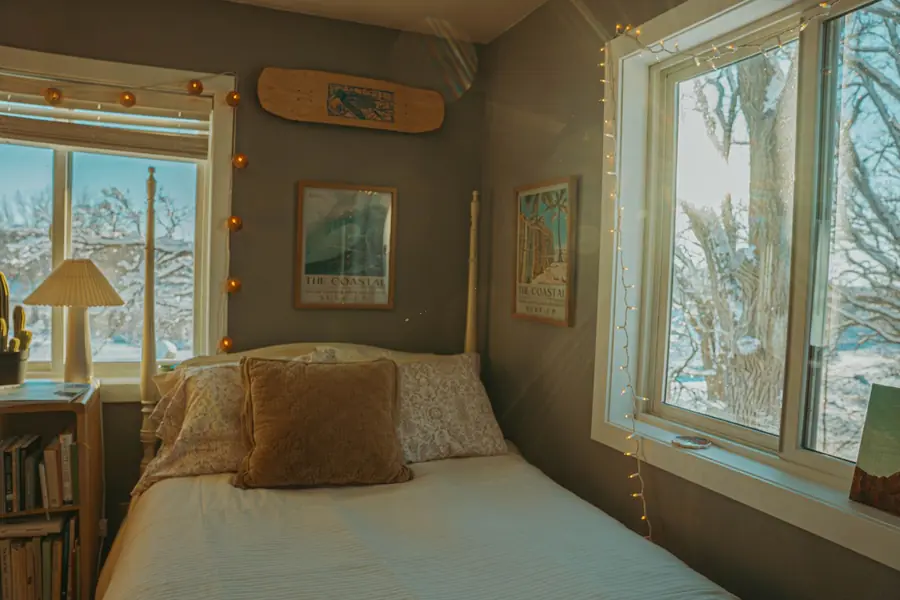
The bedside lamp below is the warm pool for this system: a wood base with a round linen shade, 2700K warm white, for the nightstand, where the light sits beside the bed.
Also solves this: the nightstand that needs a warm pool of light, not a second overhead
SEENSINY Bedside Table Lamp, Wood Base, Round Linen Shade, 2700K Warm White, 400 lumens, Beige
Wood base, round linen shade, 2700K warm white, 400 lumens, model TL01, beige, as printed. Not for: a reader who wants a bright reading lamp for the whole room, because this one gives a warm pool beside the bed at 400 lumens.
Check Price on Amazon → (paid link)
The bulbs below are the second evening layer for this system: an 8 pack of 60 watt equivalent soft white bulbs, for every bedroom fixture, where one cool bulb would undo two warm lamps.
Also solves this: the bedroom where one cool bulb kills the whole palette after dark
GE Relax LED Light Bulbs, 60 Watt Equivalent, 8.5W, 800 lumens, Soft White 2700K, Dimmable, A19, 8-Pack
8 pack, 60 watt equivalent, 8.5W, 800 lumens, soft white 2700K, dimmable, A19, model 44930, as printed. Not for: a reader who wants a cool daylight bulb for a work desk, because this pack is soft white 2700K throughout.
Check Price on Amazon → (paid link)
The room is right at night when every bulb is 2700K and the bedside lamp glows warm. Judge the room at 9 p.m., with only the bedside lamp on, because a room that looks right in lamplight is a room that works. The moody light register behind this section, how one warm temperature holds a deep room after dark, lives in dark academia bedroom ideas.
Problem 5: The Window Is Bare and Cold
The failure is a window with nothing on it, or with a short curtain that stops above the sill, so the coldest strip of glass stays open all night. The window is the largest cold surface in the room, and a bare window reads as a hole in the wall, not as a view.
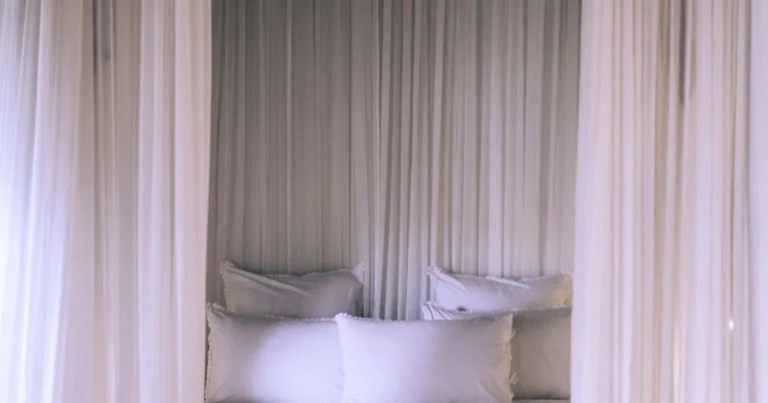
The fix starts with heavy curtains, not a new window. Thermal blackout curtains with a black liner block the cold at the glass and block the early morning light, so the room stays warm and dark until the sleeper chooses to wake. Two panels, each 52 inches wide, cover a standard window with a full gather, and a flat panel with no gather reads as a sheet, not as a curtain.
The rod rule is the whole section in one line. Hang the rod 4 to 6 inches above the window frame and 6 to 10 inches past the frame on each side, so the window looks taller and the curtains frame the wall. A rod that sits on the frame makes the window look short, and a rod that ends at the frame leaves the cold edges open.
The length rule finishes the window. Floor length is the standard here, because short curtains break the vertical line and leave the coldest strip open. Measure the window from the rod to the floor before ordering, because a curtain that stops 2 inches short of the floor reads as a mistake every night.
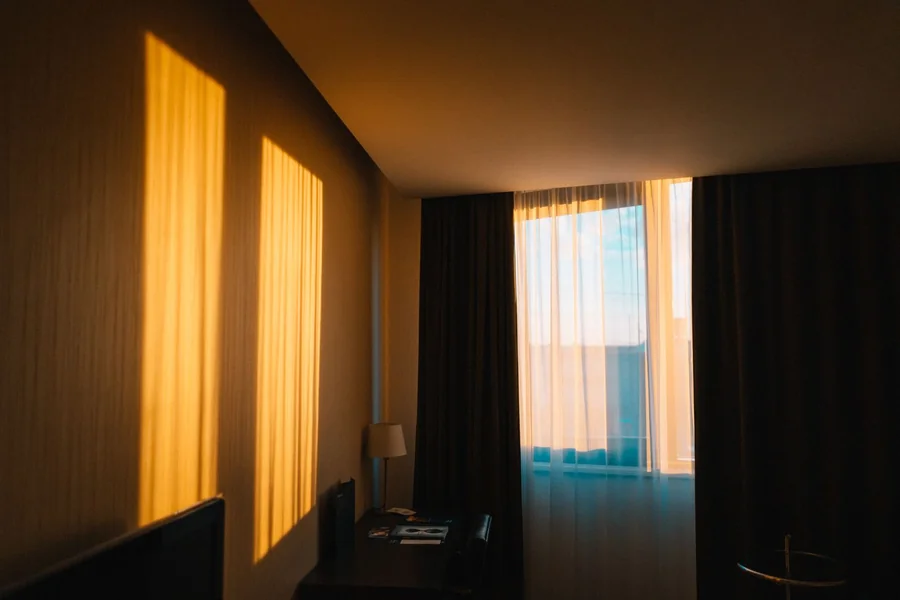
The blackout curtains below are the heavy layer for this system: 2 panels, each 52 by 84 inches, for the bedroom window, where the cold glass meets the night.
The curtain rod below is the second window layer for this system: a 1 inch rod, 32 to 86 inches, for the wall above the window, where the curtains hang high and wide.
Also solves this: the window that needs the rod high and wide, not a rod on the frame
KAMANINA Black Curtain Rod, 1 Inch, 32 to 86 Inches, Single Drapery Rod
1 inch, 32 to 86 inches, single drapery rod, supports up to 22 lb, black, as printed. Not for: a reader who wants a double rod for a sheer layer plus a blackout layer, because this is a single rod.
Check Price on Amazon → (paid link)
The window is dressed when the curtains hang high and wide and reach the floor. Judge the window at midnight, with a hand on the curtain, because a curtain that feels warm on the room side is a curtain that works. The farmhouse register behind this section, how one warm temperature and one shiplap wall hold a room together, lives in cozy farmhouse bedroom ideas.
Problem 6: No Cozy Wind-Down Corner, the Room Feels Unfinished
The failure is a room with a bed and nothing else to sit on, so the last half hour before sleep happens in bed, under the overhead light, with a phone. The room is not empty, it is unfinished, and unfinished reads as restless even when the bedding is warm.
The fix starts with a corner, not a whole room redo. One chair or one clear bedside spot, one warm lamp, one throw within reach, and one warm drink on a tray give the evening a place to land. A wind-down corner is a chair, a light, and a surface, and the room needs nothing more to feel finished.
The throw rule is the whole section in one line. A fleece throw, 50 by 60 inches, folded over one chair arm or across the foot of the bed, adds a third layer at a different height, so the warmth reads from the doorway. A throw draped across the whole bed reads as a cover, and a throw folded on one arm reads as an invitation.
The glow rule finishes the corner. Flameless tea lights with a remote and a timer give the corner a warm glow with no open flame in the bedroom, and the timer turns them off after 2, 4, 6, or 8 hours, so the glow never runs all night. One cluster of tea lights on the tray, beside the book and the drink, is enough, because the glow is the accent, not the light.

The fleece throw below is the warm layer for this system: 50 by 60 inches in sage green, for the chair arm or the foot of the bed, where the warmth reads from the doorway.
Also solves this: the chair arm that needs the warm color, not a second cushion
Bedsure GentleSoft Fleece Throw Blanket, Sage Green, 300 GSM, 50×60 Inches
50 by 60 inches, 300 GSM, GentleSoft fleece, sage green, as printed. Not for: a reader who wants a throw larger than 50 by 60 inches for two people, because this one measures 50 by 60 inches.
Check Price on Amazon → (paid link)
The tea lights below are the second wind-down layer for this system: 12 flameless LED tea lights with a remote and a timer, for the tray in the corner, where the warm glow sits beside the book.
Also solves this: the corner that needs a warm glow, not an open flame in the bedroom
Homemory 12pcs Flameless LED Tea Lights with Remote and Timer, 400+ Hours, Battery Operated
12 pieces, 10-key remote, 2/4/6/8H timer, 400+ hours, battery operated, CR2450 batteries, as printed. Not for: a reader who wants real candles with a real flame, because these are flameless LED lights.
Check Price on Amazon → (paid link)
The room is finished when the corner holds a chair, a lamp, a throw, and a warm glow. Judge the room at 10 p.m., with the overhead light off and the tea lights on, because a room that lets a tired person slow down is a room that works. The seasonal register behind this section, how a bedroom dresses for the cold months without losing its calm, lives in Christmas bedroom decor ideas.
Steal This Look: Two Winter Bedroom Palettes, Named
Two palettes, both named, both split 70/20/10. Pick the one that matches your mood word, then buy it in the order the audit gave you.
Palette A is Cabin Warmth. The 70 percent is Benjamin Moore White Dove OC-17 on the walls and cream bedding, a warm white that keeps a windowless bedroom open. The 20 percent is rust on the throw, the pillows, and the folded layer at the foot of the bed. The 10 percent is deep pine green on the tea light tray and one cushion. The ceiling and the trim are the same warm white as the walls, so the warmth reads as glow, not glare.
Palette B is Pine and Snow. The 70 percent is Sherwin-Williams Alabaster SW 7008 on the walls, a warm white that keeps a dark bedroom open. The 20 percent is pine green on one bedding layer, the rug, and the wind-down chair throw. The 10 percent is rust on the lumbar pillow and the tray. The ceiling and the trim are Alabaster too, so the calm reads as light, not gray.
The split rule decides between the two palettes when the bedroom has one window. A palette with the warm white on the walls and the deep color on the textiles suits a room with one window, because the textiles carry the depth and the walls carry the light. If your bedroom has no window, keep the deep color on the textiles only, and never on all four walls, because a dark wall with no window reads as a cave.
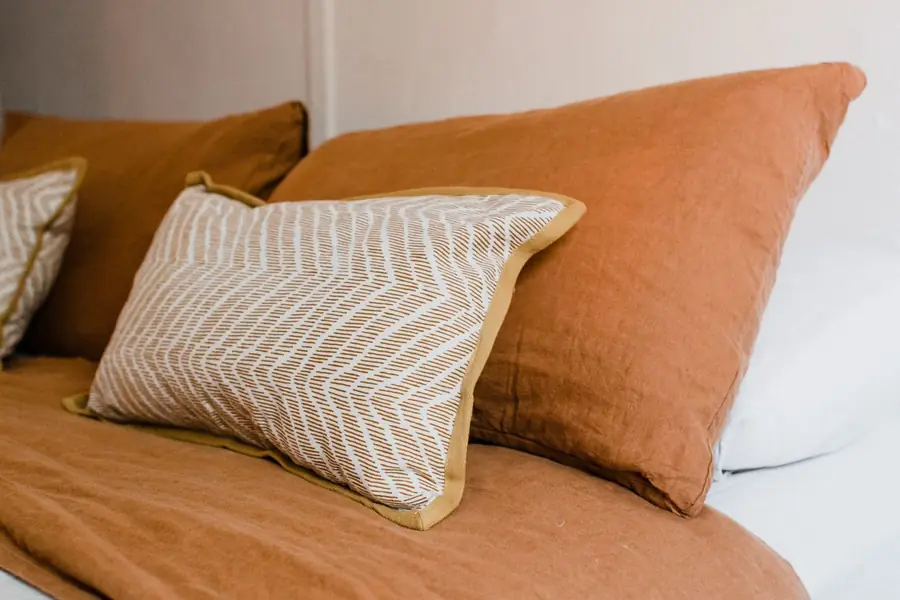
winter bedroom ideas are about fixing the room in order, bed first and decor last, and these two palettes are the proof. One mood word, one split, one tested layer order, and the bedroom stays warm every night. Buy the textiles first, then the tray, then the cushion.
6 Winter Bedroom Mistakes
First, buying one heavy blanket instead of layers. One heavy blanket traps heat, slides off, and leaves the sleeper cold at 3 a.m. Layer the bed in order, flannel, flat sheet, duvet insert, folded throw, and let each layer be kicked off or pulled up on its own.
Second, buying a rug that ends at the bed legs. A rug that ends at the bed legs reads as a mat, and bare feet land on cold floor on the far side. Size the rug by the bed, 8 by 10 for a queen, with about 18 inches showing on each side.
Third, sealing the window and leaving the door draft. A filmed window beside a leaking door is still a cold room, because the coldest air enters under the door. Seal the door first, then the window, then the curtains, in that order.
Fourth, mixing light temperatures. One cool white bulb beside warm lamps splits the room after dark, and the bed reads as cold even when the bedding is warm. Swap every bedroom bulb to 2700K, because the bulb is part of the warmth.
Fifth, hanging curtains short or on a narrow rod. Short curtains leave the coldest strip of glass open, and a narrow rod leaves the cold edges open. Hang the rod high and wide, and let the curtains reach the floor.
Sixth, buying decor before the bed, the floor, and the light are fixed. A new throw on a flat bed, a new sign on a bare wall, and a new vase on a cold floor read as a shop shelf. Fix the bed, the floor, the drafts, and the light first, and buy the decor last, for the gaps the audit names.
Budget Plans
Budget tiers in spend order, buy the first tier before the second, and the second before the third.
Tier 1, under 25, is the four markers. One draft stopper, one window film kit, one pack of warm bulbs, and one set of tea lights, or the stopper and the film if the bulbs already sit in the drawer. Four markers read as a warm room, because the stopper carries the door, the film carries the glass, the bulbs carry the light, and the tea lights carry the corner.
Tier 2, under 75, adds the flannel sheets, the throw, and the rod. One flannel sheet set for the bed, one fleece throw for the chair arm, and one curtain rod hung high and wide, with the curtains left for the next tier. The sheets and the throw fill the bed and the corner, and the bed and the corner are where the room reads as warm.
Tier 3, under 150, adds the rug and pad, the duvet insert, the curtains, and the lamp. One washable rug with a felt pad for the floor, one quilted insert for the loft, one blackout curtain pair for the window, and one bedside lamp for the warm pool. The rug holds the floor, the insert holds the bed, the curtains hold the window, and the lamp holds the night.

Frequently Asked Questions
1. How do I layer bedding for winter?
Ans: Layer in order: fitted flannel sheet first, then flat sheet, then duvet insert, then a folded throw at the foot. Three to four layers is the ceiling, and each layer should show its edge, so the bed reads as built. A flat sheet folded back over the duvet gives a crisp band at the top, and the throw folded across the lower third gives the texture.
2. What temperature should a bedroom be in winter?
Ans: Sleep sources put the ideal range at 60 to 67 degrees Fahrenheit. A room that swings ten degrees overnight needs sealing before it needs more blankets, because blankets cannot heat a room that leaks. Seal the door first, then the window film, then the curtains, and check the temperature again at 6 a.m.
3. How do I stop drafts in a bedroom?
Ans: Work in order: a twin draft stopper under the door first, window insulation film on the glass second, and heavy curtains closed at dusk third. The door is the first fix because the coldest air enters under it. Open the curtains by day, so the sun warms the room, and close them at dusk, so the heat stays in.
4. What light color is best for a bedroom at night?
Ans: Warm white at 2700K is the best color for a bedroom at night, because it keeps warm colors warm and cool colors soft. Use one temperature across every lamp and bulb, because one cool white bulb beside warm lamps splits the room. A bedside lamp with a linen shade gives the warm pool, and the overhead stays off.
5. What size rug goes beside a queen bed?
Ans: An 8 by 10 rug suits a queen bed, placed so about 18 inches show on each side, with a felt pad under it. Push the rug so its top edge sits under the front third of the bed, with the long side running out toward the room. Both sides of the bed get the same warm landing, and the rug reads as part of the bed.
Bottom Line
Winter bedroom ideas come down to this: layer the bed, warm the floor, seal the door and the window, keep the light at 2700K, and give the evening a corner. One flannel sheet set, one rug with a pad, one draft stopper, one warm lamp, and one throw are the whole bedroom, and the rest is a matter of keeping the order honest.
Save these winter bedroom ideas to your Pinterest board, so your warm bedroom plan is ready when the first cold night arrives!
Photos via Pexels. All photos are free to use and sourced from Pexels.