
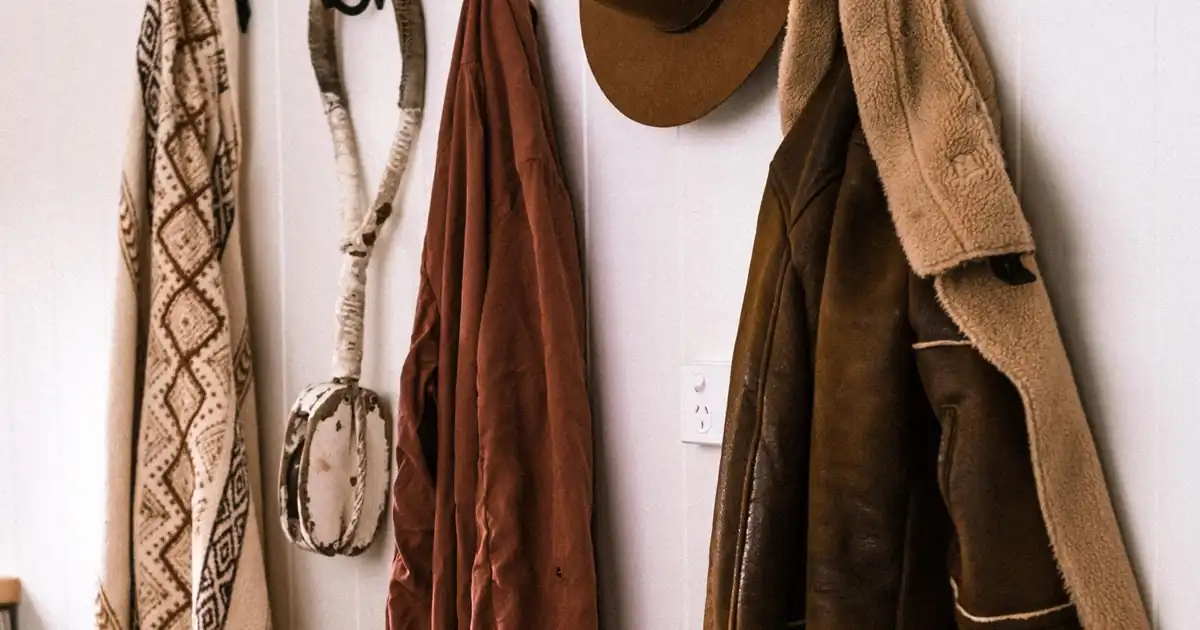
Winter Entryway Ideas: How to Beat Wet Boots, Salt and Cold Drafts
winter entryway ideas start with a wet floor, not with a wreath. Every winter the entryway turns into the same mess: boots puddle on the floor, road salt stains the rug, coats pile on the bench, and a cold draft slips under the door at five in the evening. Most entryway galleries skip the mess and show a styled hall, then call it winter ready. An entryway earns its winter readiness from the system that handles the wet, the salt, and the draft.
This article promises an entryway that handles winter in the order you should buy it. You get a seven check audit before you spend, a quick decision table by starting point, six problems solved in order, two named winter systems, six mistakes to skip, budget tiers in spend order, and 12 researched picks mapped two per problem. Nothing here asks you to buy everything at once.
This article is research based curation, not hands on testing. Where a detail could not be verified, it is left out rather than guessed, and you should check size, color, and contents on the live listing before ordering. The numbers quoted from other sites, the 2700K warm white figure and the 40 inch tray size, are their figures, not tested claims.
How these picks were chosen: each pick was researched from listing and source pages and checked at the publish date. No star rating is claimed for any pick. Check size, color, and contents on the listing before ordering, because listings and variants change. Where a detail cannot be verified, it is left out rather than guessed.
Affiliate disclosure: This article contains affiliate links to products on Amazon. As an Amazon Associate I earn from qualifying purchases. The price you pay stays the same, and the commission helps keep The Decor Root running.
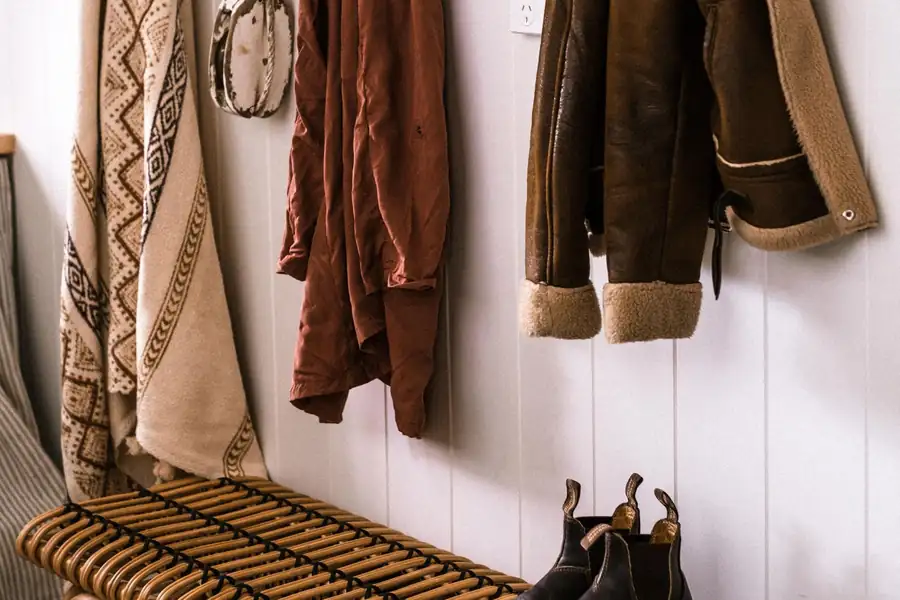
The Winter Entryway Audit for Winter Entryway Ideas
Run seven checks in order before you spend on gear.
First, run the wet zone check. Mark a wet zone on the floor with tape, from the door to the bench, and decide that boots land there and nowhere else. Every wet boot past the tape carries slush onto the wood and the rug, so the wet zone is the line that protects the rest of the hall. A wet zone and dry zone split is the whole winter system in one line.
Second, run the boot tray math check. Count the pairs that come home on a snowy night: one pair per person, plus one guest slot, plus one spare for the pair drying from yesterday. A 40 inch tray holds 4 to 6 pairs, so a house with four people fits on one tray, and a house with six needs two. A boot tray with a real lip keeps the meltwater in the tray, and a lip 1.25 inches high holds a full day of melt.
Third, run the salt check. Look for white marks on the rug and the floor, and touch the rug where boots land to feel for grit. Salt stains set in wood and stone when they sit, so wipe salt before it stains, every night in a snowy week. A rug that cannot be washed keeps the salt, and a floor with no mat under the boots shows the winter by February.
Fourth, run the draft check. Hold a tissue at the edges of the front door on a windy day and watch it flutter, then feel for cold air at the bottom of the door with the back of your hand. A draft stopper only works when the gap is measured first, because a stopper that is too short leaves a gap at the end, and one that is too thick will not fit. Note the door thickness and the gap size before you buy, because those two numbers decide the fit.
Fifth, run the hook check. Count the coats that come home on a cold night, then count the hooks, and give one hook per person, with two hooks spare for guests. Hang the hooks at two heights, low for kids and high for adults, so a coat is hung in one motion. A hall where coats pile on the bench has too few hooks, and a hall with one hook per person stays clear all winter.
Sixth, run the bench check. Sit on the bench and pull your boots on and off, because a bench you cannot sit on is a shelf, not a bench. A seat height near 19 inches suits most adults, and a bench with storage under it holds the shoes not in use. If the bench wobbles when you sit, anchor it or replace it, because a winter bench takes a wet boot and a heavy coat every day.
Seventh, run the light and reset check. Walk in at five in the evening and see whether the entry is lit before you reach for a switch, because a dark entry at night is a cold welcome. A motion light at the door and a five-minute weekly reset, empty the tray, shake the mat, wipe the salt, rotate the coats, keep the hall working. A hall with no reset rule looks good for one week and falls apart by the second.
winter entryway ideas are about stopping the wet, the salt, and the draft first, and decorating second. A hall with a wet zone, a tray sized by math, a salt rule, a sealed draft, one hook per person, and a bench to sit on works every night of the winter. The festive entryway register behind this audit, how a hall dresses for the season without losing its system, lives in Christmas entryway ideas.
Quick Decision Table: By Starting Point
Find your starting point, then move to the next section.
| Starting point | First move |
|---|---|
| Renter, no drilling allowed | Twin draft stopper, boot tray, washable runner, freestanding rack, nothing on the walls |
| Hall with no mudroom | Wet zone tape on the floor, tray by the door, hooks at two heights, bench with storage under it |
| Family with kids | One hook per person at kid height, one tray per two kids, baskets with jobs, one per child |
| Dog household | Extra tray by the door for muddy paws, washable runner, basket of towels, shake the mat twice a week |
| Guests coming for the holidays | Guest station with two hooks, one tray slot, and slippers, plus a spare boot tray by the door |
| Wood floors in the entry | Boot tray with a real lip first, washable runner second, coir mat at the door, wipe salt nightly |
| Entry faces north, cold all winter | Draft stopper first, warm light second, runner third, never a bare floor by the door |
| Entry is dark by five in the evening | Motion spotlight at the door, motion sconce inside, warm white bulbs, never a single ceiling bulb alone |
The renter row needs the most discipline, because a rental has no drilling and no weatherstripping. The twin draft stopper, the boot tray, the washable runner, and the freestanding rack are the four markers, and the color register behind them is shown in color psychology entryway ideas.
Problem 1: Wet Boots Puddle the Floor Every Night
The failure is a hall where wet boots come straight onto the wood floor, so every snowy evening leaves a puddle that dries into a ring, and the rings pile up all winter. The hall is not dirty, it is wet, and wet reads as neglected. A puddle by the door is also a slip risk, and a slip by the door is the one winter problem that can hurt someone.
The fix starts with a boot tray with a real lip, not with a mat. A tray 40 inches wide holds 4 to 6 pairs, and the 1.25 inch lip holds a full day of meltwater without spilling. A tray with ridges inside lifts the boots above the melt, so the boots dry from the air instead of sitting in their own water. A mat alone soaks through and stays wet, while a tray with a lip empties in seconds.
The tray math rule is the whole section in one line. Count one pair per person, plus one guest slot, plus one spare for the pair drying from yesterday, then buy the tray that holds that count. A tray that holds fewer pairs than the house owns overflows, and a tray that overflows is a puddle with a rim.
The dryer rule finishes the wet boots. A boot dryer that dries up to 2 pairs in 1.5 hours, with an adjustable timer, means the boots worn today are dry by morning. A heated boot tray is the upgrade for a house with regular snow, because it dries the boots where they sit.
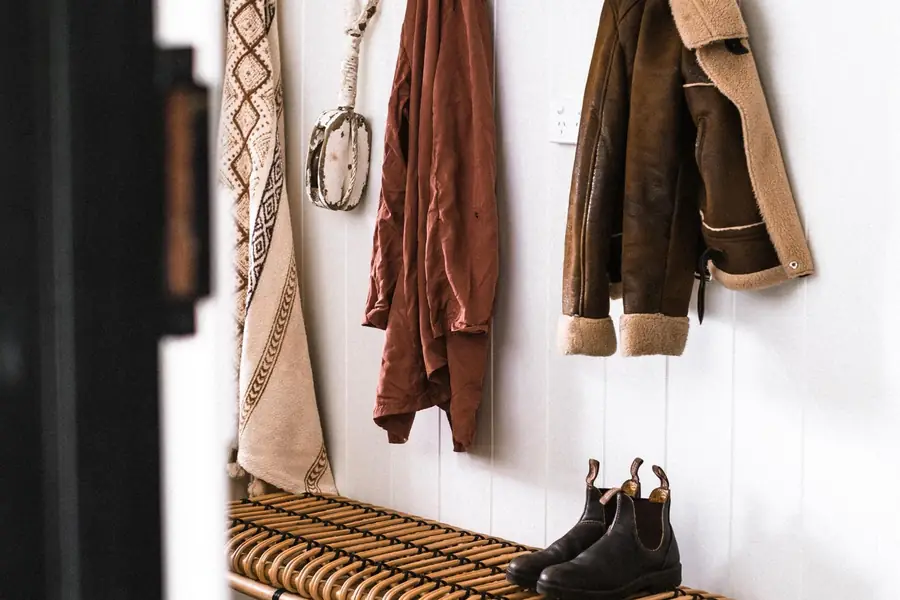
The boot tray below is the wet zone anchor for this system: 40 by 20 inches with a 1.25 inch lip, for the floor by the door, where the meltwater goes first.
The boot dryer below is the second wet layer for this system: an 800W dryer with a dual air duct, for the bench beside the tray.
Also solves this: the boots that stay wet overnight, not the boots that need a new closet
POPCHOSE Heavy-Duty Boot Dryer, Upgraded Shoe Dryer Helps Reduce Odor, Glove and Boot Warmer, Fast 1.5-Hour Drying Dual Air Duct with Heating Blower, Silent and Adjustable Timer, Blue
800W, 140F hot wind, dual air duct, dries up to 2 pairs, 1.5 hour drying, adjustable timer, model SG-SD101, as printed. Not for: a reader who wants to dry more than 2 pairs at once, because this one dries up to 2 pairs.
Check Price on Amazon → (paid link)
The floor stays dry when the tray holds the melt and the dryer dries the boots by morning. Judge the hall after a snowy evening, with four pairs on the tray and none on the floor. The warm layers register behind this section, how a cold room stays warm with the right layers, lives in cozy fall bedroom.
Problem 2: Salt Stains the Rug and the Floor
The failure is a hall where road salt rides in on boots and dries into white marks on the rug and the floor, and the marks set in because nobody wipes them the same night. The hall is not stained, it is salted, and salt reads as damage. A rug that cannot be washed keeps the salt season after season, and a floor with no mat shows the winter by February.
The fix starts with two layers, not one. A coir doormat at the door scrapes the salt off the boots, and a washable patterned rug over the floor catches what the mat misses. The washable patterned rug is the winter rug, because a rug you can wash is a rug you can reset. A dark pattern hides the salt between washes.
The rug rule is the whole section in one line. A runner 2 by 6 feet, 0.1 inch low pile, suits a hall, because a low pile rug lets the door swing over it and dries fast after a wash. Measure the door swing first, because a runner that stops the door gets kicked up and stays bunched. A runner 2 feet shorter than the hall, with 6 inches clear of the door swing, reads as fitted, not dropped.
The salt rule finishes the system. Wipe salt before it stains, every night in a snowy week, with a damp cloth on the floor and a shake of the mat outside. A mat shaken 2 to 3 times a week stays open enough to scrape boots, and a mat left full of grit stops scraping. Wash the runner on a gentle cycle and air dry it, because heat sets the salt and shrinks the weave.
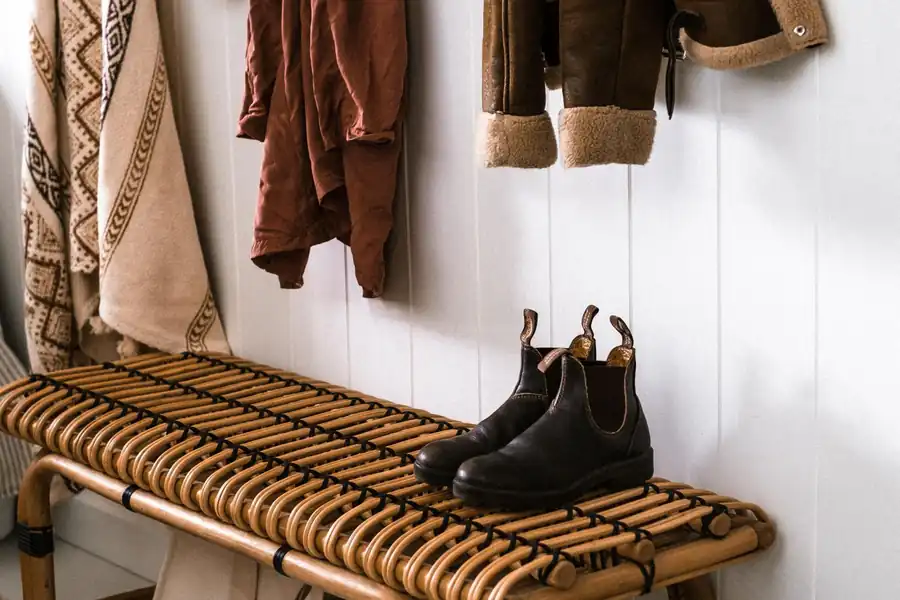
The washable runner below is the salt layer for this system: 2 by 6 feet in brown, for the walk from the door, where the salt goes first.
The coir doormat below is the second salt layer for this system: 30 by 17 inches of natural coir, for the door itself.
Also solves this: the boots that carry salt past the door, not the boots that need a new pair
Barnyard Designs Natural Coco Coir Doormat Welcome Mat for Front Door and Outdoor Entrance, Large Door Mat for Indoor Entrance or Porch Entry, Brown (17×30, Border)
30 by 17 inches, 100% natural coconut coir fibers, non-slip rubber backing, semicircular with border, model DMC-DBOR-30HM, as printed. Not for: a reader who wants a soft indoor rug under bare feet, because coir bristles are coarse and made to scrape boots.
Check Price on Amazon → (paid link)
The rug stays clean when the mat scrapes the salt at the door and the runner catches the rest, and both get shaken and washed on a schedule. Judge the hall in February, with no white marks on the rug and no grit underfoot. The bedroom register behind this section, how a warm room stays warm with the right layers, lives in Christmas bedroom decor ideas.
Problem 3: A Cold Draft at the Door
The failure is a hall where a cold draft slips under the front door and runs across the floor, so the hall stays cold even when the heat is on. The hall is not drafty, it is open at the bottom, and a gap at the door reads as cold. A draft at the door also pulls dust and cold air into the rug.
The fix starts with measuring the gap, not with buying a stopper. Hold a tissue at the edges of the door and feel for cold air at the bottom with the back of your hand, then note the door thickness and the gap size. A twin foam stopper fits doors 1 to 1.75 inches thick and moves with the door, so it seals the gap every time the door closes. An adhesive stopper fills a gap up to 1 inch under the door and stays put.
The stopper rule is the whole section in one line. A draft stopper that matches the door thickness and the gap size seals the hall, and one bought without measuring leaves a gap or will not fit. Check the stopper once a month, because foam and fabric compress over the winter, and a flattened stopper has stopped sealing.
The renter rule finishes the draft. A twin foam stopper needs no adhesive and no drilling, so it suits a rental, and an adhesive stopper suits a door you own. A door sweep is the third option for a wide gap, and a curtain over the door is the fourth, for a hall that faces north and stays cold.
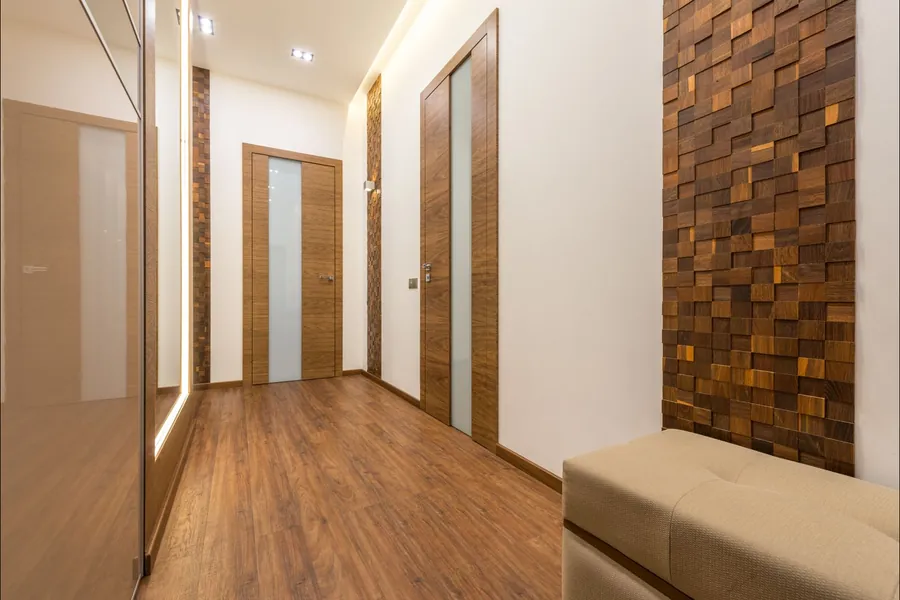
The twin draft stopper below is the draft anchor for this system: 34 inches of twin foam, for the bottom of the front door, where the cold air comes in first.
The adhesive stopper below is the second draft layer for this system: a 2 pack of 39 inch adhesive strips, for the front door and one spare.
Also solves this: the gap under the door that needs a stuck-on seal, not a stopper that moves
Holikme Door Draft Stopper Under Door Draft Blocker Insulator Doors Sweep Weather Stripping Noise Stopper Strong Adhesive, White (2 Pack)
39 inches, strong adhesive silicone strip, 2 pack, one for the front door and one spare, no tools needed, model 2 Pack Door Draft Stopper-1, as printed. Not for: a reader who wants a stopper with no adhesive, because this one sticks on with strong adhesive.
Check Price on Amazon → (paid link)
The hall stays warm when the stopper matches the door and the gap, and the stopper is checked once a month. Judge the hall on a windy night, with no cold air at your ankles by the door. The moody room register behind this section, how one deep color holds a room after dark, lives in dark moody living room ideas.
Problem 4: No Place to Sit, Boots Pile Up
The failure is a hall where nobody can sit to pull boots on and off, so the boots pile by the door and the coats pile on the bench, and the pile grows every night. The hall is not cluttered, it is missing a seat, and a hall with no seat reads as a passage. A bench with storage under it holds the shoes not in use, so the pile has somewhere to go.
The fix starts with a bench you can sit on, not with a console. A 3-tier bamboo bench 35.4 inches wide, with a seat that holds up to 300 lb, gives one person a seat and two tiers of storage under it. A seat height near 19 inches suits most adults, and a bench 35.4 inches wide suits a standard hall. Measure the hall first, because a bench that blocks the door gets moved and stays moved.
The hook rule finishes the sitting. A freestanding rack with 11 hooks across 3 tiers, each hook holding up to 4.4 lb, gives every coat a hook, so a heavy wet parka gets its own hook and never drags the rack down. Hooks at two heights, low for kids and high for adults, mean a coat is hung in one motion. One hook per person, plus two hooks spare for guests, is the count that keeps the bench clear.
The storage rule is the quiet partner. Shoes not in use live on the bench tiers, boots that are drying live on the tray, and the floor holds nothing. A hall where the floor holds nothing reads as calm, and a hall where the floor holds a pile reads as a passage.
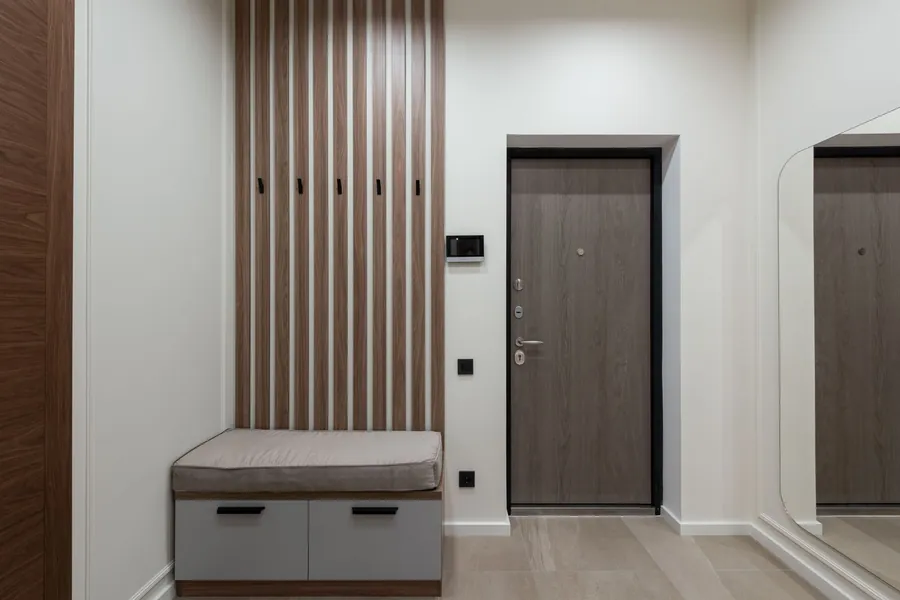
The bamboo bench below is the sitting anchor for this system: 3 tiers, 35.4 inches wide, for the wall beside the door, where a guest sits and the shoes live under it.
The coat rack below is the second sitting layer for this system: 11 hooks across 3 tiers, for the wall by the bench.
Also solves this: the coats that pile on the bench, not the coats that need a new closet
Mind Reader Freestanding Coat Rack, Multi-Tier Organizer for Office and Entryway, Metal, Black
11 hooks across 3 tiers, metal, free-standing, each hook holds up to 4.4 lb (2 kg), model COATRACK11-BLK, as printed. Not for: a reader who wants to hang a heavy wet parka plus a bag on one hook, because each hook holds up to 4.4 lb.
Check Price on Amazon → (paid link)
The hall is calm when the bench holds the sitting and the rack holds the coats, and the floor holds nothing. Judge the hall after a snowy evening, with the bench clear and the rack full. The bedroom register behind this section, how a guest room stays ready without fuss, lives in guest bedroom ideas.
Problem 5: Wet Coats, Umbrellas, Gloves Nowhere to Go
The failure is a hall where wet coats, umbrellas, and gloves have nowhere to go, so the umbrellas lean in a corner and drip, the gloves pile in a drawer and stay damp, and the coats pile on the bench. The hall is not messy, it is missing a wet-gear plan, and a hall with no plan reads as a pile by February. Wet gloves that sit damp in a closed basket stay damp and smell, so the basket is not the plan, the drying is the plan.
The fix starts with a stand that catches the drip, not with a hook. An umbrella stand with a detachable drip tray holds the umbrellas upright and catches the water. Four hooks on the stand hold the canes and the walking sticks, so the stand does the work of a hook and a tray in one square. A stand with no tray is a stand that puddles, and a puddle by the door is the problem this section solves.
The basket rule finishes the wet gear. A set of 6 baskets, 2 each in three sizes, gives every job a basket: one for gloves, one for hats, one per child, and one spare for scarves. Wet gloves dry first, on the bench or by the door, and only dry gloves go in the basket. A basket with a job stays tidy, and a basket with no job becomes a drawer that nobody opens.
The coat rule is the quiet partner. Coats hang on hooks at two heights, umbrellas stand in the stand, gloves dry and then go in the basket. A hall where the wet gear has a place reads as calm, and a hall where it piles reads as a closet that gave up.
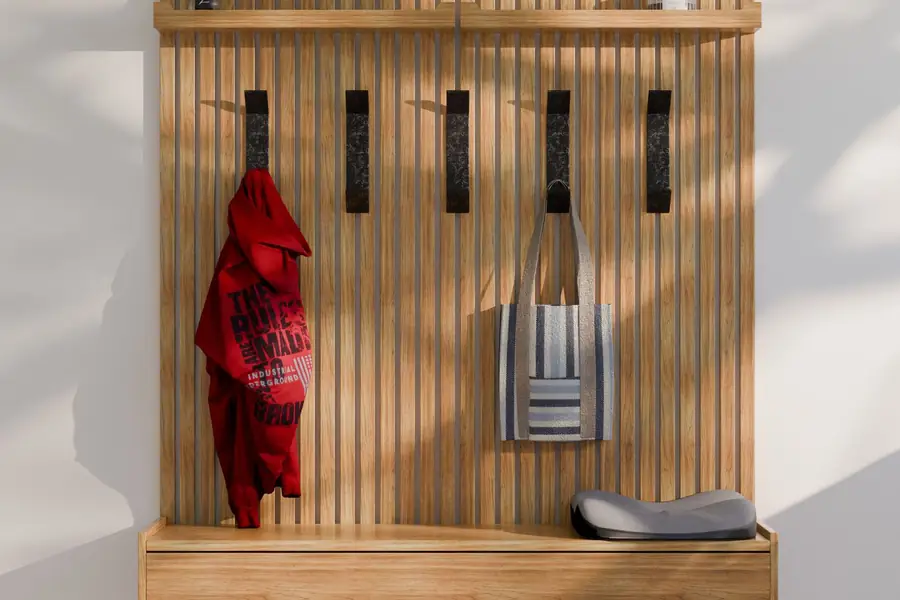
The umbrella stand below is the wet gear anchor for this system: a steel square stand with a detachable drip tray, for the corner by the door, where the umbrellas stand and the water is caught.
Also solves this: the umbrellas that lean in a corner and drip, not the umbrellas that need a new closet
SONGMICS Umbrella Stand, Umbrella Holder for Entryway, Steel Square Umbrella Rack Organizer Freestanding, for Canes Walking Sticks, with a Detachable Drip Tray, 4 Hooks, Black ULUC026B33
Steel, square, detachable drip tray, 4 hooks, for umbrellas, canes and walking sticks, model ULUC026B33, as printed. Not for: a reader who wants a stand with no tray to empty, because this one has a detachable drip tray to empty.
Check Price on Amazon → (paid link)
The basket set below is the second wet gear layer for this system: 6 handwoven baskets in three sizes, for the shelf above the bench.
Also solves this: the gloves and hats that pile in a drawer, not the gloves that need a new drawer
M4DECOR Set of 6 Water Hyacinth Storage Baskets, Wicker Storage Baskets for Shelves, Pantry Baskets for Organizing, Handwoven Wicker Baskets for Storage (Combo 2 Sets SML)
6 baskets, 2 each in three sizes, handwoven water hyacinth, for scarves, gloves, socks and clothing, model M4SBME003, as printed. Not for: a reader who wants one single large basket, because this set comes as 6 baskets in three sizes.
Check Price on Amazon → (paid link)
The hall stays dry when the stand catches the drip and the baskets hold only dry gear, and the gloves dry before they go in. Judge the hall after a rainy evening, with the tray empty and the baskets dry. The living room register behind this section, how a room stays warm with the right layers, lives in Christmas living room decor ideas.
Problem 6: A Dark, Cold Welcome at Night
The failure is a hall where the entry is dark by five in the evening, so guests walk into a cold, dark hall and reach for a switch they cannot find. The hall is not dark, it is unlit at the door, and a dark entry at night reads as cold. A single ceiling bulb leaves the corners dark and the faces in shadow.
The fix starts with light at the door, not with a new fixture. A battery motion spotlight with 140 lumens, motion detection up to 30 feet and 180 degrees, lights the entry the moment someone steps in. A motion sconce inside, rechargeable with a remote, lights the hall at face height. Warm white light around 2700K keeps the hall warm, because the bulb is part of the welcome.
The light rule is the whole section in one line. One motion light at the door, one motion sconce inside, and warm white bulbs in every hall fixture. A light that needs a switch is a light that stays off, and a light that turns itself on is a light that works every night.
The battery rule finishes the evening light. A battery light needs no wiring, so it suits a rental and a hall with no outlet by the door. Check the batteries once a month, because a motion light with dead batteries is a dark hall with a fixture on the wall.
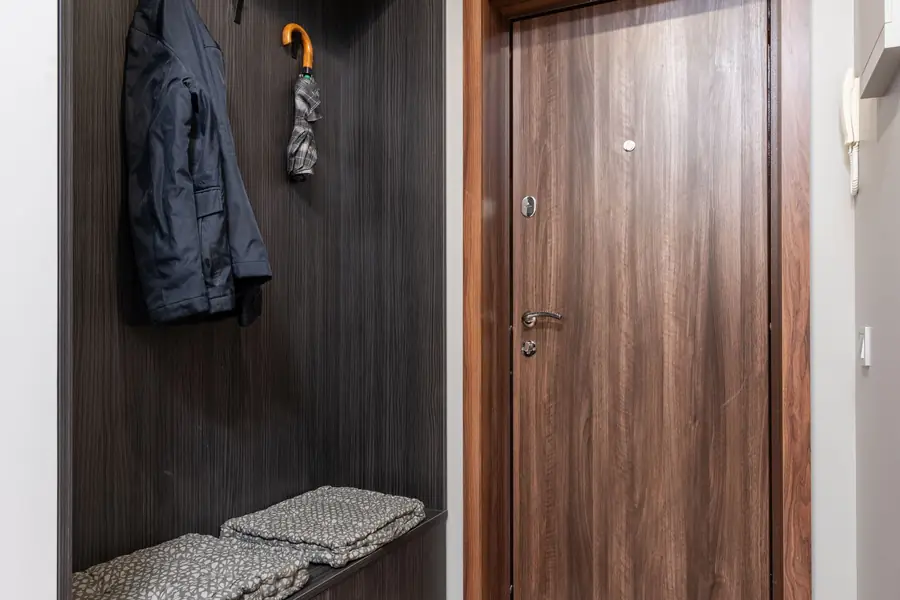
The motion spotlight below is the evening anchor for this system: 140 lumens with a motion sensor, for the wall by the door, where the light turns itself on.
Also solves this: the entry that stays dark until someone finds the switch, not the entry that needs new wiring
Mr Beams MB330 140 Lumens Battery Operated Wireless Weatherproof LED Spotlight with Motion Sensor and Photocell, White
140 lumens, motion detection up to 30 feet, 180 degrees, 3 D-cell batteries, not included, battery powered, weatherproof, model MB330, as printed. Not for: a reader who wants a wired light, because this one runs on batteries.
Check Price on Amazon → (paid link)
The motion sconce below is the second evening layer for this system: a rechargeable sconce with a remote, for the wall inside the hall.
Also solves this: the hall that needs light at face height, not a second ceiling bulb
EZVALO Motion Sensor Wall Sconce with Remote, 4000mAh Rechargeable Battery Operated Wall Light, 3 CCT and 12 RGB Colors, Up and Down LED Lighting for Hallway, Stairway (Black, 1 Pack)
4000mAh rechargeable battery, motion sensor with remote, 3 CCT and 12 RGB colors, up and down LED lighting, model WL10, as printed. Not for: a reader who wants a wired sconce, because this one is battery operated and rechargeable.
Check Price on Amazon → (paid link)
The hall is welcoming at night when the light turns itself on at the door and the sconce lights the faces inside. Judge the hall at 9 p.m., with only the motion lights on. The tree register behind this section, how a hall dresses for the season without losing its warmth, lives in Christmas tree ideas.
Two Winter Entryway Systems, Named
Two systems, both named, both ready in one weekend. Pick the one that matches your hall, then buy it in the order the audit gave you.
System A is Wet Zone First. The wet zone is taped on the floor, the boot tray with a real lip sits by the door, the boot dryer sits on the bench beside the tray, the coir mat scrapes the salt at the door, and the washable patterned rug catches what the mat misses. The hooks hang at two heights, one hook per person, and the umbrella stand catches the drip in the corner.
The guest station is two hooks, one tray slot, and slippers by the door. System A suits a hall with wood floors and a family that comes home wet every night, because the wet is the problem and the wet gets the system.
System B is Warm Welcome. The bench sits by the door with baskets above it, one basket per job, and the draft stopper seals the bottom of the door, so the hall holds its heat. The motion spotlight lights the entry the moment someone steps in, and the motion sconce lights the hall at face height, with warm white bulbs around 2700K in every fixture. The runner is washable and dark, so the salt hides between washes, and the five-minute weekly reset keeps it all working.
A heated boot tray is the upgrade for a house with regular snow, because it dries the boots where they sit, and System B adds it last, after the draft and the light. System B suits a hall that faces north and stays cold and dark, because the cold and the dark are the problem.
The tray math decides between the two systems when the house is large. A 40 inch tray holds 4 to 6 pairs, so a house with four people fits on one tray in either system, and a house with six needs two trays side by side. A hall with no tray has no system, whatever the decor, and a hall with a tray, a draft stopper, and a light has a winter entryway.
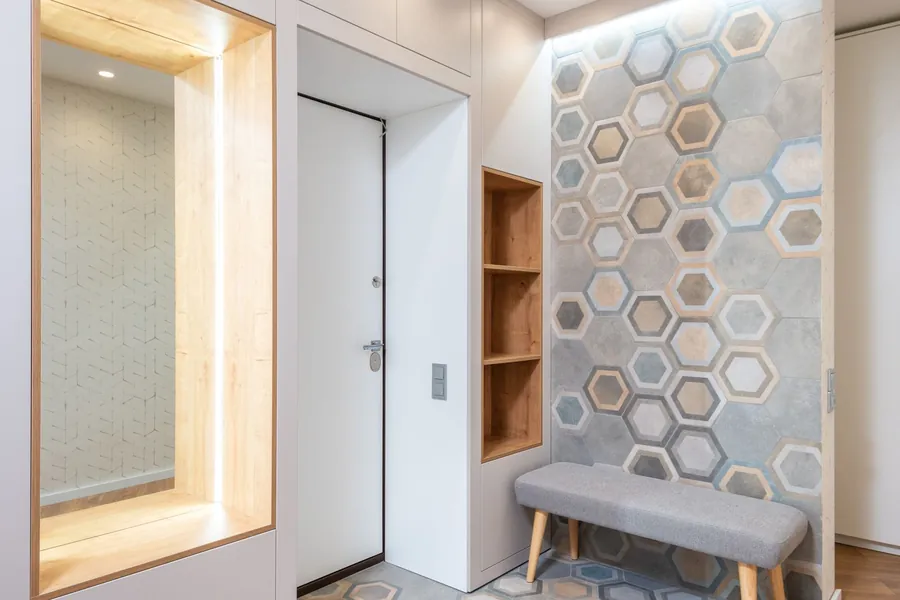
winter entryway ideas are about stopping the wet, the salt, and the draft first, and these two systems are the proof. One wet zone, one tray sized by math, one sealed draft, one warm light, and the hall greets people right every night of the winter.
6 Winter Entryway Mistakes
First, one mat and done. A single mat soaks through and stays wet, and a wet mat spreads the salt instead of catching it. Use two layers, a coir mat at the door and a washable runner inside.
Second, every coat at the door. A hall with one hook, or no hook at all, puts every coat on the bench, and a bench full of coats is a bench nobody can sit on. Give one hook per person, at two heights, with two hooks spare for guests.
Third, overloading the hooks. A heavy wet parka plus a bag on one hook drags the rack down. Each hook holds up to 4.4 lb on the rack in this article, so a heavy wet parka gets its own hook, and the bag gets the next one.
Fourth, a rug you cannot wash. A rug that cannot be washed keeps the salt season after season, until the rug is stained for good. A washable patterned rug is the winter rug, because a rug you can wash is a rug you can reset, and a dark pattern hides the salt between washes.
Fifth, wet boots straight onto wood floors. Wet boots on wood leave rings that dry into stains, and the stains pile up all winter. A boot tray with a real lip holds the melt, and a tray that holds 4 to 6 pairs keeps the boots off the floor entirely.
Sixth, no reset rule. A hall with no five-minute weekly reset looks good for one week and falls apart by the second, because the tray fills, the mat fills with grit, and the coats pile. Empty the tray, shake the mat, wipe the salt, rotate the coats, and the hall stays working all season.
Budget Plans
Budget tiers in spend order, buy the first tier before the second, and the second before the third.
Tier 1, under 25, is the four markers. One adhesive draft stopper 2 pack, one coir doormat, one basket set, and one motion spotlight. Four markers read as a new winter entryway, because the stopper seals the draft, the mat scrapes the salt, the baskets hold the gear, and the light greets you at the door.
Tier 2, under 75, adds the tray and the runner. One boot tray with a real lip for the floor by the door, and one washable runner for the walk from the door. The tray and the runner fill the floor, and the floor is where the winter reads as handled.
Tier 3, under 150, adds the bench, the rack, the stand, and the sconce. One bamboo bench for the wall beside the door, one freestanding coat rack for the wall by the bench, one umbrella stand for the corner by the door, and one motion sconce for the wall inside the hall. The bench holds the sitting, the rack holds the coats, the stand catches the drip, and the sconce lights the faces.
Frequently Asked Questions
1. How do I keep wet boots from puddling on my entryway floor?
Ans: Put a boot tray with a real lip by the door, and keep every wet boot on the tray. A 40 inch tray holds 4 to 6 pairs, and a 1.25 inch lip holds a full day of meltwater. Add a boot dryer so the boots worn today are dry by morning.
2. How do I stop road salt from staining my entryway rug and floor?
Ans: Use two layers: a coir doormat at the door to scrape the salt off, and a washable patterned rug inside to catch the rest. Wipe salt before it stains, every night in a snowy week, shake the mat 2 to 3 times a week, and wash the runner on a gentle cycle and air dry it.
3. What is the best way to seal a cold draft at the front door?
Ans: Measure the gap first with a tissue at the door edges, then match the stopper to the door. A twin foam stopper fits doors 1 to 1.75 inches thick and moves with the door, and an adhesive stopper fills a gap up to 1 inch under the door. Check the stopper once a month, because foam compresses over the winter.
4. How many hooks and how much boot tray space does a family entryway need?
Ans: Give one hook per person, at two heights, low for kids and high for adults, plus two hooks spare for guests. For the tray, count one pair per person, plus one guest slot, plus one spare for the pair drying from yesterday. A 40 inch tray holds 4 to 6 pairs, so a house with six needs two trays side by side.
5. How do I keep a winter entryway tidy all season without a daily deep clean?
Ans: Run a five-minute weekly reset: empty the boot tray, shake the mat outside, wipe the salt off the floor, and rotate the coats once a month. Give every job a basket, one for gloves, one for hats, one per child, and dry wet gloves before they go in.
Bottom Line
winter entryway ideas come down to this: mark a wet zone, size the tray by math, wipe the salt before it stains, seal the draft, and give one hook per person. One tray with a real lip, one washable runner, one draft stopper, one bench to sit on, and one five-minute weekly reset are the whole entryway.
Save these winter entryway ideas to your Pinterest board, so your dry, draft-free entry is ready before the first snow!
Photos via Pexels. All photos are free to use and sourced from Pexels.