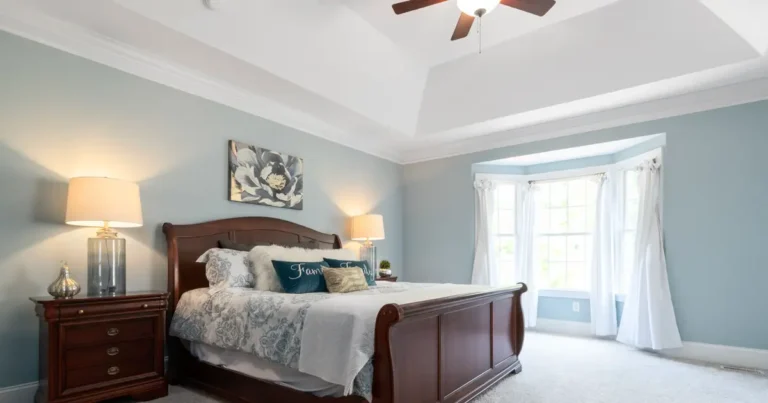
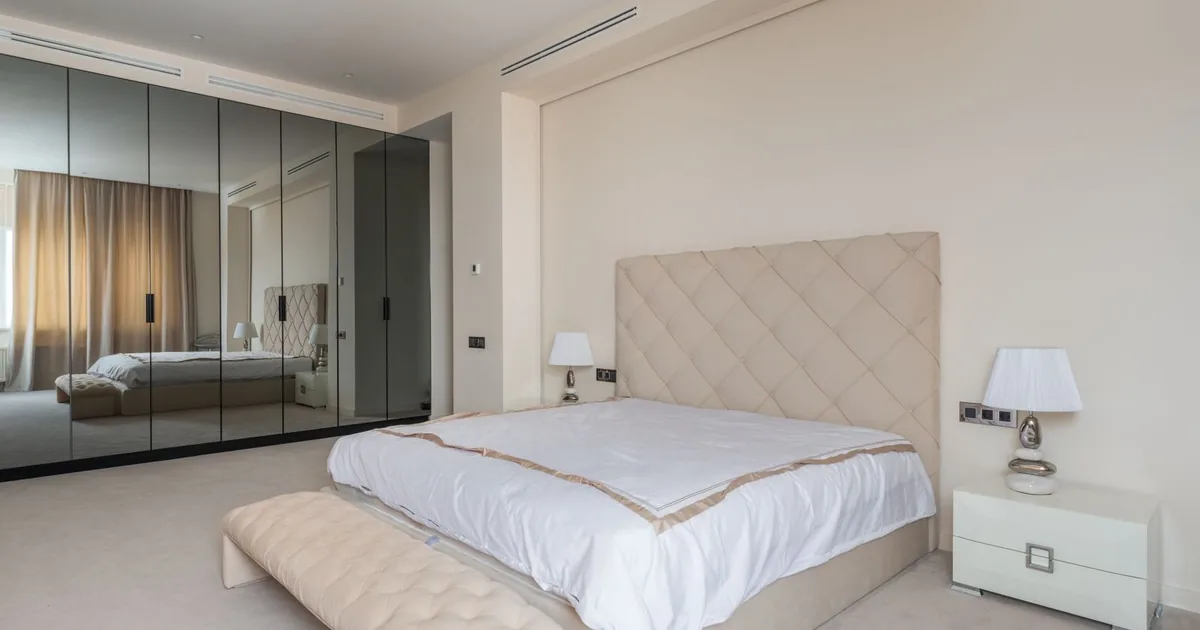
Bedroom Storage Ideas: Give Every Inch One Clear Job
bedroom storage ideas start with the tape measure, not the shopping cart. A bedroom that is bought for before it is measured ends up with bins that will not slide under the bed, a rack that blocks the door, and a bench that eats the walking space, because the room decides the clearance, the width, and the depth, and the catalog decides none of them. Most storage lists show pretty boxes and stop there, and the reader is left to guess the fit, the order, and the job each piece does. This guide starts the other way around: measure first, give every inch one clear job second, and buy in the order that keeps the room finished at every step.
You get the clearance table first, 12 to 14 inches off the floor for a queen bed with 8 to 10 inches usable, then the furniture table, a second rod, a rolling cart, and a bench sized to the foot of the bed, then the zone plan, hanging, folded, under bed, and little things, then 12 researched picks mapped to the jobs where they work. Nothing here asks you to buy everything at once, and nothing here asks one bin to carry the whole room.
This article is research based curation, not hands on testing. Where a detail could not be verified, it is left out rather than guessed, and you should check size, color, and contents on the live listing before ordering. The numbers quoted from other sites, the 12 to 14 inch bed height, the 30 inch walking space, and the bench figures, are their figures, not tested claims.
How these picks were chosen: each pick was researched from listing and source pages and checked at the publish date. No star rating is claimed for any pick. Check size, color, and contents on the listing before ordering, because listings and variants change. Where a detail cannot be verified, it is left out rather than guessed.
Affiliate disclosure: This article contains affiliate links to products on Amazon. As an Amazon Associate I earn from qualifying purchases. The price you pay stays the same, and the commission helps keep The Decor Root running.
Bedroom Storage Ideas: Measure the Room First, Then Give Every Inch a Job
Measure the room first, because the room decides the clearance, the width, and the depth, and the catalog decides none of them. A queen bed sits 12 to 14 inches off the floor, which leaves 8 to 10 inches of usable clearance once the frame is accounted for, per build-construct, and many frames clear only 6 to 9 inches, per dwellnesthub, so the same bin fits one bed and fails the next. A bin bought before the bed is measured is a bin that lives in the hall, and the room stays as crowded as before.
Run the audit in order, because the order is the method. Measure the tightest floor-to-frame clearance, the narrowest span between the bed legs, and the shortest path a bin must travel, then subtract about 1 inch of buffer from the height, per kitchprep. Measure at the head, the middle, and the foot on both sides, and keep the tightest reading as the working height, because frames flex and floors slope, and the bin must pass the tightest point in every direction.
The winter thinking behind this section, how a measured room carries a whole season, lives in winter bedroom ideas.
| Measure | Figure | Source |
|---|---|---|
| Queen bed off the floor | 12 to 14 in, 8 to 10 in usable | build-construct |
| Platform bed | 5 to 12 in | build-construct |
| Standard frame with box spring | 8 to 12 in | build-construct |
| Tall frame or captain bed | 14 to 20 in | build-construct |
| Bed risers add | 3 to 6 in | build-construct |
| Bed risers add | 4 to 6 in | dwellnesthub |
| Many frames clear | 6 to 9 in | dwellnesthub |
| Interior width between bed legs | 4 to 8 in narrower than the mattress | build-construct |
| Lidded plastic bin | 6 to 7 in high, 30 to 60 L | build-construct |
| Fabric zipper bag | 7 to 9 in, 20 to 40 L | build-construct |
| Rolling drawer unit | 5 to 6 in, 20 to 40 L per drawer | build-construct |
| Vacuum compression bag | 4 to 6 in, 3x compression | build-construct |
| Cedar or wooden chest | 6 to 8 in, 40 to 80 L | build-construct |
| Measure with mattress and bedding in place | Subtract an inch for lid and carpet pile | build-construct |
| Under 6 in clearance | Flat zippered bags | arealoom |
| 6 to 12 in clearance | Standard low-profile bins and wheeled drawers | arealoom |
| 12 in and over | Stackable containers | arealoom |
| Measure headboard-to-foot and side-to-side | Subtract an inch or two | arealoom |
| Tightest clearance, buffer | Subtract about 1 in, keep the tightest reading | kitchprep |
| Measure to the underside of the frame | Never to the mattress top | kitchprep |
| Under-bed drawers | About 30 in wide, 18 in deep, 6 in high | linenandnest |
| Tall narrow dresser | About 30 in wide, 16 in deep, 48 to 54 in high, 5 or 6 drawers | linenandnest |
| Shelf above the door | 24 to 36 in wide, 10 to 12 in deep | linenandnest |
| Lift-up storage bed, queen | About 60 by 80 in, 10 to 12 in deep | linenandnest |
| Slim rolling cart | About 12 in wide, 16 in deep, 32 in high | linenandnest |
| Double-hang closet organizer kit | Fits a closet 48 to 72 in wide | linenandnest |
| Floating shelves | 24 in wide, 8 to 10 in deep, mounted 12 to 18 in above the nightstand | linenandnest |
| Storage bench | About 40 to 48 in wide, 15 to 18 in deep, 18 in high | linenandnest |
| Clothing rack | 24 to 36 in wide, 14 to 18 in deep | dwellnesthub |
| Clear walking space | About 30 in | dwellnesthub |
| Narrow drawer unit | 12 to 18 in wide | dwellnesthub |
| Four zones | Hanging, folded, under bed, little things | dwellnesthub |
| Typical bedroom | 10 by 12 ft, 120 sq ft; queen bed 60 by 80 in, about 33.3 sq ft | honeyandhomestyle |
| Door swing and walkways | Door needs 30 to 36 in; walkways 24 in minimum, 30 in beside the bed | honeyandhomestyle |
| Hidden zones | Under the bed about 33 cubic ft; upper wall band about 20 cubic ft; shelf above the door about 4 cubic ft | honeyandhomestyle |
The table figures come from named guides, and where the guides disagree, the range is shown and the conflict is named, not settled. The two riser figures, 3 to 6 inches per build-construct and 4 to 6 inches per dwellnesthub, describe the same lift in two ways, so the article uses 3 to 6 inches as the wider range and names the other.
The queen clearance figures also disagree, 12 to 14 inches off the floor with 8 to 10 inches usable per build-construct, against 6 to 9 inches for many frames per dwellnesthub, so the article shows both and lets the tape measure settle the reader’s own bed. The buffer figures agree: subtract an inch per build-construct, an inch or two per arealoom, and about 1 inch per kitchprep, so the article uses about 1 inch as the standard buffer.
Measure First: Tape, Clearance, and the One Inch Buffer
The tape measure is the first buy because it is the cheapest fix in the whole article, and every buy after it depends on the numbers it gives. Lay the tape flat on the floor and read up to the underside of the frame, the rail, or the slat, never to the mattress top, and take the reading at the head, the middle, and the foot on both sides. The tightest reading is the working height, because a bin that clears at the head and jams at the foot is a bin that never slides all the way in.
The risers below are the fix when the tape shows the clearance is an inch short of the bin. They stack to 3, 5, or 8 inches under the bed legs, and they turn a bed that takes only flat bags into a bed that takes wheeled bins. Check the legs fit the 3 inch opening first, and check the bed stays steady once it is lifted, because a lifted bed that wobbles is worse than a low bed that holds.
The master thinking behind this section, how a measured room is split into sleep, dress, and wind-down zones, lives in master bedroom ideas.
Roll It Out: Wheeled Bins Under the Bed
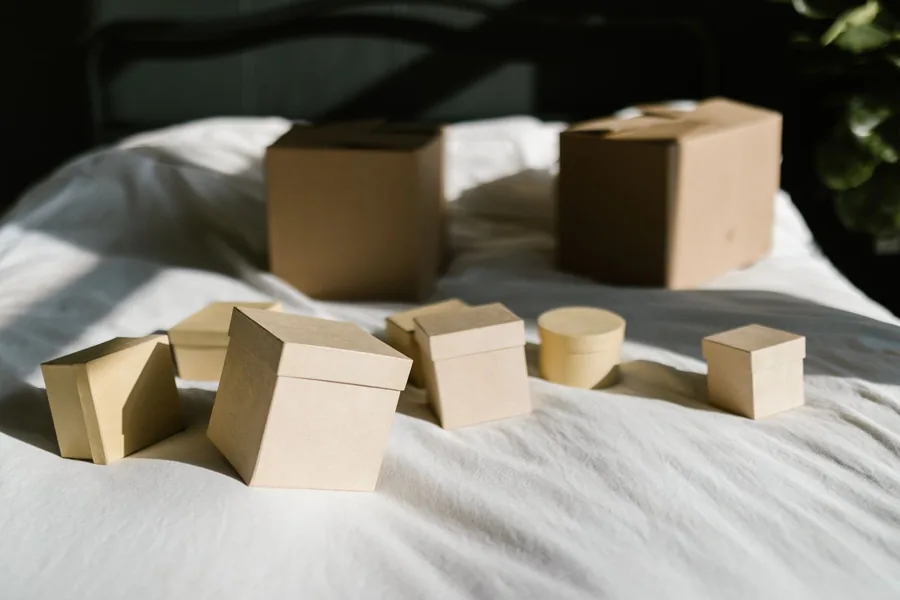
Under the bed is the largest unused closet in the house, because a queen bed covers about 33 square feet of floor and the gap beneath it holds about 33 cubic feet at 12 inches of clearance, per honeyandhomestyle. The wheeled bins below are the first thing that gap should hold, because they roll out on wheels and latch shut, so off-season clothes and spare bedding come out with one pull. Daily items do not belong under the bed, because a lidded box has to come all the way out before it opens, and that is fine for a sweater wanted in October and a nuisance for socks wanted every morning.
The box below is 7 inches high, so it needs a little more than 7 inches of clearance, and the tape from the first section is what says yes or no. Four boxes at 56 quarts each hold the off-season wardrobe and the guest bedding, and the latching lids keep dust out while the boxes sit under the bed for months. If the clearance is under 7 inches, skip this box and use the flat fabric bins in the next section, because a bin that jams is a bin that never gets used.
The guest thinking behind this section, how a spare bed and spare bedding are kept ready without a spare room, lives in guest bedroom ideas.
Flat and Soft: Fabric Bins and Vacuum Bags
A low bed is not a lost bed, because flat bins and vacuum bags are made for the gap a hard box cannot clear. Under 6 inches of clearance takes flat zippered bags, per arealoom, and the fabric bins below are 6 inches high, so they slide under a frame that stops a 7 inch box. The clear top shows what is inside without opening the bin, and the handles on three sides pull the bin out without a grip on a lid edge. Two bins hold a winter wardrobe, per the roundup that named these bins best for low beds, and the label holder on the front keeps the two bins from being opened to find the right one.
The vacuum bags below are the answer for bulky bedding, because a comforter that fills a whole bin presses down to a flat pack at 3x compression, per build-construct, and a 4 to 6 inch gap holds what a full bin could never hold. Vacuum bags suit off-season bedding and bulky coats, and they do not suit daily clothes, because a bag must be opened and resealed each time, and a daily bag is a bag that never gets sealed again.
Also solves this: the low bed that a 7 inch box cannot clear, not the bed that needs a new frame
StorageWorks 6 In Low Profile Under Bed Storage Containers with Clear Lid, 2-Pack
Low profile under bed storage containers, 6 in high, 2-pack, 33 by 17 by 6 in, fabric with clear top, handles and label holder, as printed. The flat fabric bin for a low bed. Two 6 in fabric bins slide under a frame that a 7 in hard box cannot clear, so a low bed still gets under-bed storage, and the clear top shows what is inside without opening the bin. Not for: a reader whose clearance is under 6 in, since these bins are 6 in high, or a reader who wants hard plastic with wheels, since these are fabric bins with no wheels.
Check Price on Amazon → (paid link)
Also solves this: the bulky bedding that fills a whole bin, not the daily clothes that need a drawer
SpaceAid Jumbo Vacuum Storage Bags, Space Saver Sealer Compression Bags for Comforters, Blankets, Pillows, Bedding, Clothes, X-Large, 3 Pack
Jumbo vacuum storage bags, X-Large, 3 pack, space saver sealer compression bags for comforters, blankets, pillows, bedding, clothes, as printed. The flat pack for bulky bedding. Three jumbo vacuum bags press comforters and bulky coats down to a flat pack, so a 4 to 6 in gap under the bed holds what a full bin could never hold. Not for: a reader who needs daily access, since a vacuum bag must be opened and resealed each time, or a reader who wants a rigid bin, since these are soft bags.
Check Price on Amazon → (paid link)
The fall thinking behind this section, how layered bedding is stored between seasons, lives in cozy fall bedroom.
Double the Closet: A Second Rod and a Kit
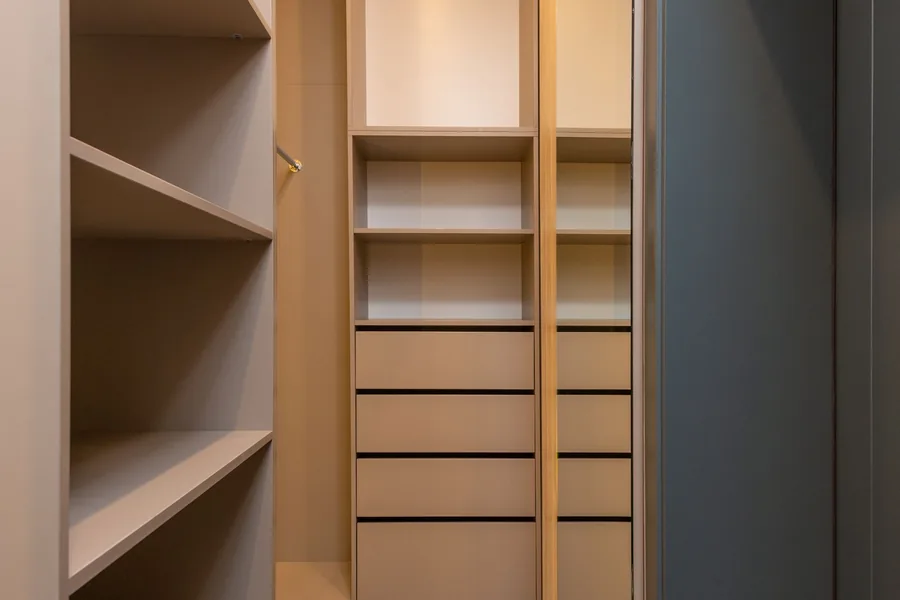
A closet with one rod is a closet used at half its height, because the rod holds hanging clothes and everything below it is floor. The kit below adds a tower, three rods, and two drawers to the same wall, and the three rods at 30 to 48 inches give 144 inches of hanging space in total, so the closet doubles without a wall moving. The tower holds folded clothes on five shelves, and the drawers hold the little things that never had a home, so the closet floor clears for shoes and the top shelf stops being a pile.
The kit fits closets 5 to 9 feet wide, so measure the closet width with the tape from the first section before ordering. A closet narrower than 5 feet needs the hanging organizer and the dividers in the next section instead, because a kit that does not fit the wall is a kit that goes back. A double-hang kit fits a closet 48 to 72 inches wide, per linenandnest, and this kit covers that range and more, so most closets take it as it comes.
The color thinking behind this section, how one calm color keeps a crowded closet from reading as clutter, lives in color psychology ideas for bedrooms.
Fold It Neat: Hanging Shelves and Dividers
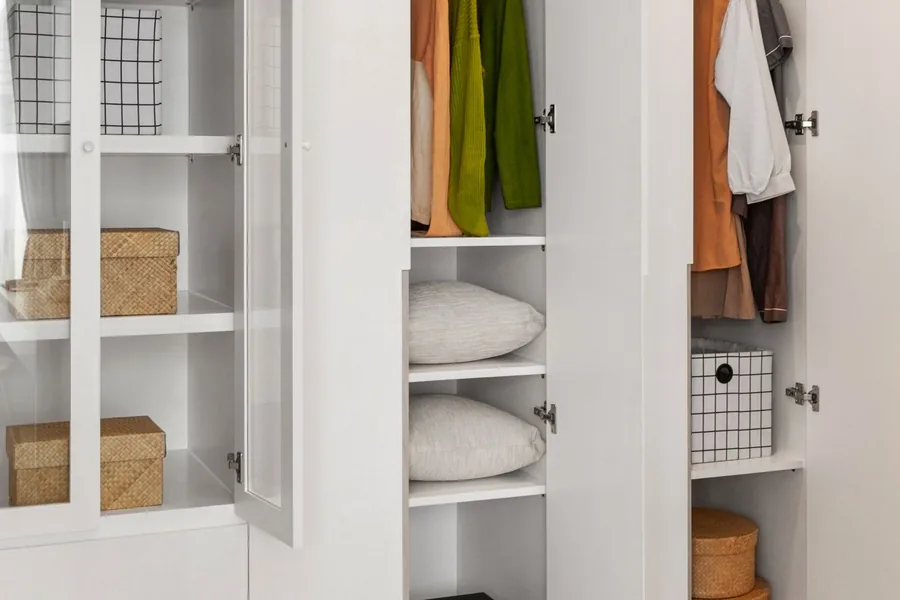
Folded clothes fail in piles, because a pile has no edges and pulling one sweater topples the whole row. The hanging organizer below hangs from the closet rod and gives folded clothes six shelves, so each stack gets its own shelf and the closet floor stays clear. The side pockets hold the little things, belts, scarves, and socks, that used to live in a drawer that never opened. File-folding helps here too, per dwellnesthub, because folded clothes stood on edge show their edges and come out without disturbing the stack beside them.
The dividers below are the second half of the same fix, for the shelves the kit already built. Four clear dividers stand on the shelf and hold each folded stack apart, so the stack stays upright and the shelf reads as rows, not as one long pile. Clear acrylic suits a closet because it holds the stack without adding a color of its own, and 11 inches tall is enough for folded sweaters and jeans without hiding them.
Also solves this: the folded clothes that pile on the closet floor, not the hanging clothes that need a rod
Amazon Basics 6-Tier Hanging Closet Shelf Organizer with Pockets, Grey
6-tier hanging closet shelf organizer, with pockets, grey, as printed. The folded-clothes shelf that hangs from the rod. Six shelves hang from the closet rod, so folded sweaters and jeans get a shelf each instead of a pile on the closet floor, and the side pockets hold the little things. Not for: a reader who wants a rigid wood shelf, since this is a fabric hanging organizer, or a reader who wants to hang long dresses in that spot, since the organizer takes the rod space it hangs from.
Check Price on Amazon → (paid link)
Also solves this: the folded stack that topples when one sweater is pulled, not the shelf that needs rebuilding
ROUFA 4-Pack Clear Acrylic Shelf Dividers, 11.8 by 11 in
Clear acrylic shelf dividers, 4-pack, 11.8 in deep by 11 in tall, fits any thickness of shelf, as printed. The divider that keeps folded stacks upright. Four clear dividers stand on the closet shelf and hold each folded stack apart, so pulling one sweater no longer topples the whole row. Not for: a reader who wants tall dividers over 11 in, since these are 11 in tall, or a reader who wants fabric dividers, since these are clear acrylic.
Check Price on Amazon → (paid link)
No Closet, No Problem: A Rack That Stands on Its Own
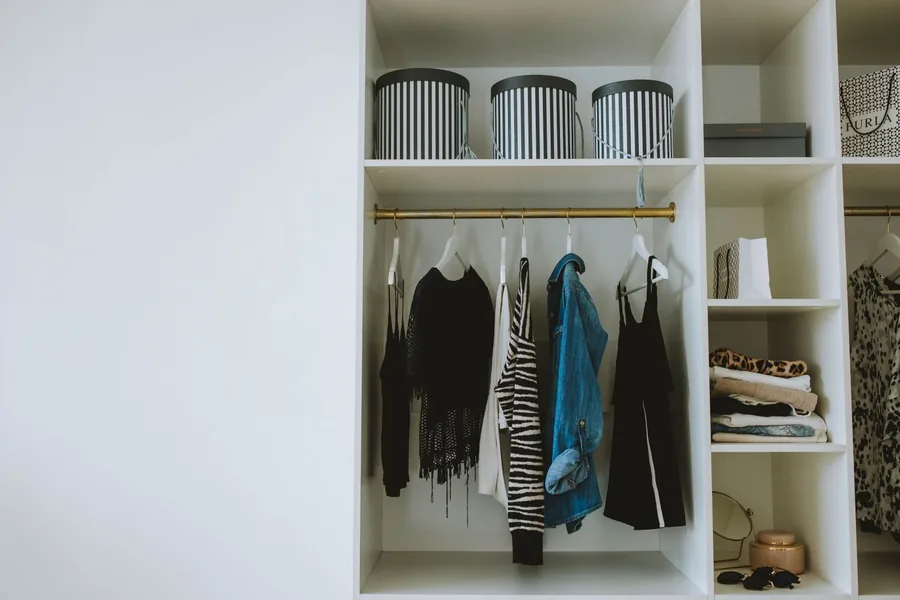
A bedroom with no closet still works when it is split into four zones, hanging, folded, under bed, and little things, per dwellnesthub, and the rack below carries the hanging zone on its own. Two rods, one above the other, hold shirts on the top rod and trousers on the lower rod, and two shelves at the top and bottom hold folded clothes and shoes. The rack is 36 inches wide and 14 inches deep, so it fits a wall that a wardrobe never could, and it rolls on four wheels, two of them locking, so it moves aside when the room needs the floor back.
Keep about 30 inches clear in front of the rack, per dwellnesthub, because a rack with no walking space in front of it is a rack that cannot be used. The under-bed bins from the second section carry the folded zone, and the hanging organizer from the last section hangs from the top rod when folded clothes need shelves, so the rack, the bins, and the organizer form one closet without a wall moving.
Also solves this: the bedroom with no closet at all, not the bedroom that needs a wall built
Amazon Basics Adjustable, Double Hanging Rod Garment Rolling Closet Organizer Rack with Wheels, Heavy Duty, Black, 36 by 14 by 72 in
Adjustable double hanging rod garment rolling closet organizer rack, heavy duty, black, 36 by 14 by 72 in, upper and lower hanging rods, top and bottom adjustable shelves 36 by 14 in, 400 lb weight capacity when not moving, 200 lb when moving, 4 industrial wheels, 2 locking, model WI-GAR1436B, as printed.
The closet that stands on its own. A double-rod rack on wheels gives a bedroom with no closet two hanging rods and two shelves, so clothes hang in the open and the rack rolls aside when the room needs the floor back. Not for: a reader who wants a built-in closet look, since this is a freestanding rack, or a reader who wants to hang long dresses on the lower rod, since the lower rod sits under the upper rod.
Check Price on Amazon → (paid link)
The rug thinking behind this section, how a room is zoned by what sits on the floor, lives in winter rug ideas.
The Gap Beside the Bed: A Cart That Rolls In
The gap beside the bed is the narrowest storage in the room, and it is the one most rooms waste. A slim rolling cart about 12 inches wide, 16 inches deep, and 32 inches high, per linenandnest, fits a gap that a dresser never could, and three tiers hold books, chargers, and nightstand overflow on separate shelves. The cart below rolls on wheels, so it pulls out for use and slides back when the bed needs the space, and it suits a room where the nightstand is full and the floor is where everything else lands.
Measure the gap before ordering, because a cart wider than the gap is a cart that lives in the hall, and the tape from the first section is the tool for that job. A narrow drawer unit 12 to 18 inches wide, per dwellnesthub, is the fixed version of the same idea, for a reader who wants drawers instead of open tiers, and the cart is the rolling version, for a reader who wants the gap to stay flexible.
Also solves this: the narrow gap beside the bed that a dresser cannot fill, not the wall that needs a wide wardrobe
SPACEKEEPER Slim Rolling Storage Cart, 3 Tier, Black
Slim rolling storage cart, 3 tier, black, model SPKSC301B, as printed. The cart for the gap beside the bed. A 3-tier cart rolls into the narrow gap between the bed and the wall, so books, chargers, and nightstand overflow get a shelf each instead of the floor. Not for: a reader who wants a wide dresser, since this is a narrow cart, or a reader who wants a fixed piece, since this cart rolls on wheels.
Check Price on Amazon → (paid link)
The moody thinking behind this section, how one dark piece anchors a pale wall, lives in dark moody living room ideas.
Walls That Hold the Overflow: Shelves Above the Nightstand
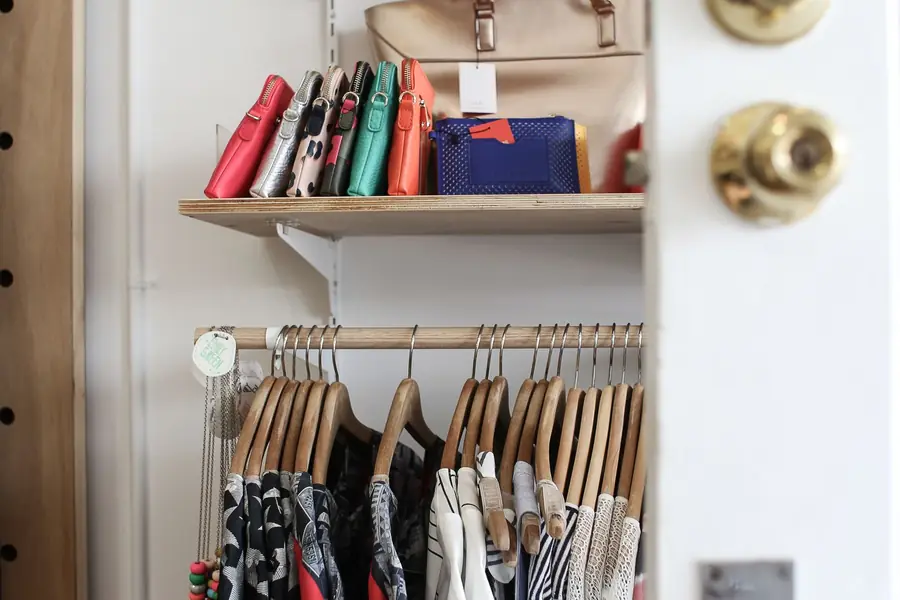
The wall above the nightstand is free storage, because it holds what the nightstand top cannot, and it costs no floor at all. Floating shelves 24 inches wide and 8 to 10 inches deep, mounted 12 to 18 inches above the nightstand, per linenandnest, hold books, a lamp, and the little things, while the nightstand top keeps only the lamp and the glass of water. The upper wall band, 6 to 8 feet high and 12 inches deep on one 10 foot wall, holds about 20 cubic feet, per honeyandhomestyle, and the shelves below are the first step into that band.
The shelves below are solid reclaimed wood, 24 inches wide and 8 inches deep, with an invisible metal bracket, so they read as a wood ledge, not as a bracket with a board on it. Mount them into a stud or with the anchors in the box, and keep the heaviest books low, because a shelf that pulls out of the wall is worse than no shelf at all. Hooks on the back of the door carry the same idea further, for hats, bags, and tomorrow’s clothes, and they cost no wall at all.
Also solves this: the wall above the nightstand that holds nothing, not the floor that needs another dresser
FLYJOE Floating Shelves, 8 In Deep Rustic Solid Reclaimed Wood Wall Shelves, 24 In Width, Set of 2, Natural
Floating shelves, 8 in deep, rustic solid reclaimed wood, 24 in width, set of 2, natural, invisible heavy-duty metal bracket, shelf thickness 1.37 in, as printed. The wall shelf above the nightstand. Two 24 in wood shelves mount 12 to 18 in above the nightstand, so books, a lamp, and the little things live on the wall and the nightstand top stays clear. Not for: a reader who wants a shelf wider than 24 in, since these are 24 in wide, or a reader who wants to mount on a wall that cannot take a bracket, since these need a bracket and anchors.
Check Price on Amazon → (paid link)
A Bench at the Foot: Storage You Can Sit On
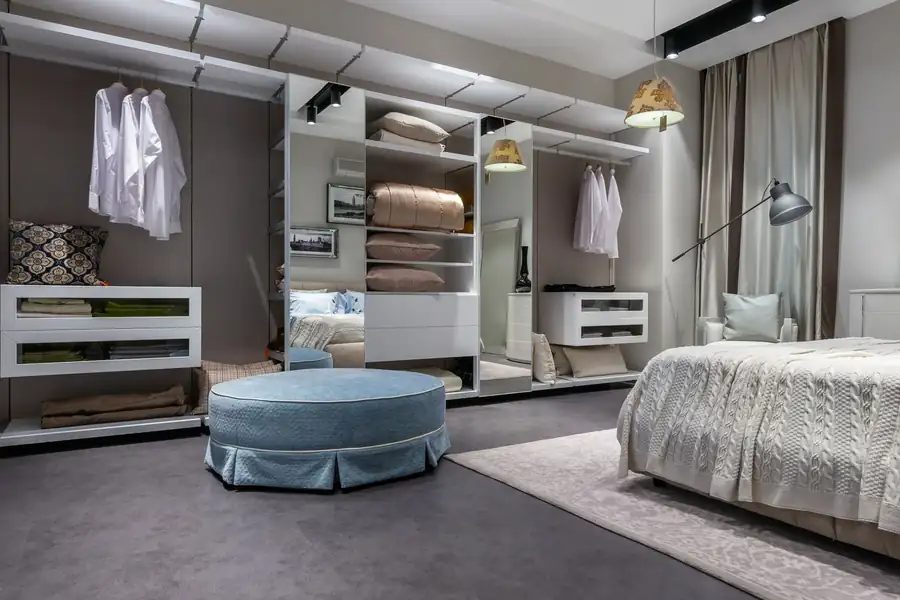
The foot of the bed is the last wasted zone in the room, and a bench there does two jobs at once. A storage bench about 40 to 48 inches wide, 15 to 18 inches deep, and 18 inches high, per linenandnest, holds spare bedding inside and gives the room a seat for dressing, so the bench earns its floor twice over. The bench below is 43 inches wide, inside that range, and it holds up to 660 pounds, so two people can sit on it while one dresses and the other waits.
Keep about 30 inches clear in front of the bench, per dwellnesthub, because a bench with no walking space in front of it blocks the bed. Fold the bench flat when it is not needed, because it folds for storage, and keep the spare bedding inside it, not on the bed, because a bed with spare bedding on it is a bed that never looks made.
Also solves this: the foot of the bed that holds nothing, not the room that needs a second dresser
SONGMICS 43 In Folding Storage Ottoman Bench, Storage Chest, Footrest, Padded Seat, Faux Leather, Holds up to 660 lb, Brown, ULSF703
Folding storage ottoman bench, 43 in, 15 by 43 by 15 in, holds up to 660 lb, faux leather, padded seat, model ULSF703, as printed. The bench at the foot of the bed. A 43 in folding bench holds spare bedding inside and gives the foot of the bed a seat, so the bench does two jobs and the room gains storage without giving up floor. Not for: a reader who wants a bench longer than 43 in, since this bench is 43 in wide, or a reader who wants real leather, since this is faux leather.
Check Price on Amazon → (paid link)
The elegant thinking behind this section, how one dark bench grounds a pale bedroom, lives in dark elegant bedroom ideas.
Buy in Order: Measure, Under Bed, Closet, Then the Rest
Buy in the order the problems appear, because the order is the method and the method is what makes the room finished at every step. First the tape measure and the risers, because the numbers decide everything after them, and the STANLEY tape is the first buy, with the Home It risers beside it when the clearance runs short. Then the under-bed bins, because the dead space under the bed is the biggest hidden zone, and the Sterilite wheeled boxes are the third buy, with the StorageWorks fabric bins and the SpaceAid vacuum bags for the low bed and the bulky bedding.
Then the closet, because the closet doubles without a wall moving, and the ClosetMaid kit is the fourth buy, with the Amazon Basics hanging organizer and the ROUFA dividers beside it for the folded half. Then the rack for the room with no closet, because the Amazon Basics double-rod rack stands on its own, and the SPACEKEEPER cart and the FLYJOE shelves fill the gap and the wall in that order.
Last the bench, because the foot of the bed is the last zone, and the SONGMICS bench closes the job. Measure the clearance, count the bins, hang the second rod, and the bedroom holds everything it owns.
Frequently Asked Questions
1. How much clearance do I need under the bed?
Ans: A queen bed sits 12 to 14 inches off the floor, with 8 to 10 inches of usable clearance, per build-construct. Under 6 inches takes flat zippered bags, 6 to 12 inches takes standard bins and wheeled drawers, and 12 inches and over takes stackable containers, per arealoom. Measure the tightest clearance and subtract about 1 inch of buffer, per kitchprep.
2. How do I add storage to a bedroom with no closet?
Ans: Split the room into four zones, hanging, folded, under bed, and little things, per dwellnesthub. A clothing rack 24 to 36 inches wide and 14 to 18 inches deep carries the hanging zone, the under-bed bins carry the folded zone, and the rack, the bins, and a hanging organizer form one closet without a wall moving. Keep about 30 inches clear walking space.
3. How do I double closet space without building anything?
Ans: Add a second rod, or a double-hang kit that fits a closet 48 to 72 inches wide, per linenandnest. A kit with a tower, three rods, and two drawers doubles the hanging and gives folded clothes shelves and drawers in the same wall, and a hanging organizer adds six shelves for folded clothes beside it.
4. What fits in a 6 inch gap under the bed?
Ans: Flat zippered bags fit under 6 inches, per arealoom, and a 6 inch fabric bin, 33 by 17 by 6 inches, slides into the same gap. A lidded plastic bin at 6 to 7 inches high, per build-construct, needs a little more than 6 inches of clearance. Measure first, because a bin half an inch too tall lives in the hall.
5. Where does a storage bench go, and how big should it be?
Ans: At the foot of the bed, about 40 to 48 inches wide, 15 to 18 inches deep, and 18 inches high, per linenandnest. The bench holds spare bedding inside and gives the room a seat for dressing, so it earns its floor twice over. Keep about 30 inches clear walking space in front of it, per dwellnesthub.
Quick Check Before You Order: Measure the Clearance, Count the Bins, and Hang the Second Rod
bedroom storage ideas come down to this: hold the tape to the tightest clearance, subtract about 1 inch of buffer, buy bins to that number, hang the second rod, and buy in order, measure, under bed, closet, then the rest. One tape measure, one clearance number, one second rod, and one buy order are the whole room, and the rest is a matter of giving every inch one clear job.
Save these bedroom storage ideas to your Pinterest board, so your storage plan is ready when you are!
Photos via Pexels. All photos are free to use and sourced from Pexels.