Dining Room Wall Decor Ideas: How to Fill a Dining Wall Without Clutter
dining room wall decor ideas start with the tape measure, not the shopping cart. A big blank dining wall makes even a good table look unfinished, because the table fills the middle of the room and the walls carry the style, and a wall bought for before it is measured ends up with art that is too narrow for the sideboard, hung too high for the people sitting at the table, or scattered in bits that never read as one wall.
Most wall decor lists show pretty pictures and stop there, and the reader is left to guess the size, the height, and the order. This guide starts the other way around: measure first, size the art to the furniture second, and buy in the order that keeps the wall finished at every step.
You get the size table first, art about two-thirds the width of the furniture below it, the centre at 57 to 60 inches from the floor, and a 6 to 8 inch gap above a sideboard, then the height rules for a seated room, the mirror rule, and the chandelier height, then the wall plan, one anchor piece, a gallery, a mirror, light, and texture, then 12 researched picks mapped to the jobs where they work. Nothing here asks you to buy everything at once, and nothing here asks one frame to carry the whole wall.
How these picks were chosen: each pick was researched from listing and source pages and checked at the publish date. No star rating is claimed for any pick. Check size, color, and contents on the listing before ordering, because listings and variants change. Where a detail cannot be verified, it is left out rather than guessed.
Affiliate disclosure: This article contains affiliate links to products on Amazon. As an Amazon Associate I earn from qualifying purchases. The price you pay stays the same, and the commission helps keep The Decor Root running.
Dining Room Wall Decor Ideas: Size the Art to the Furniture First
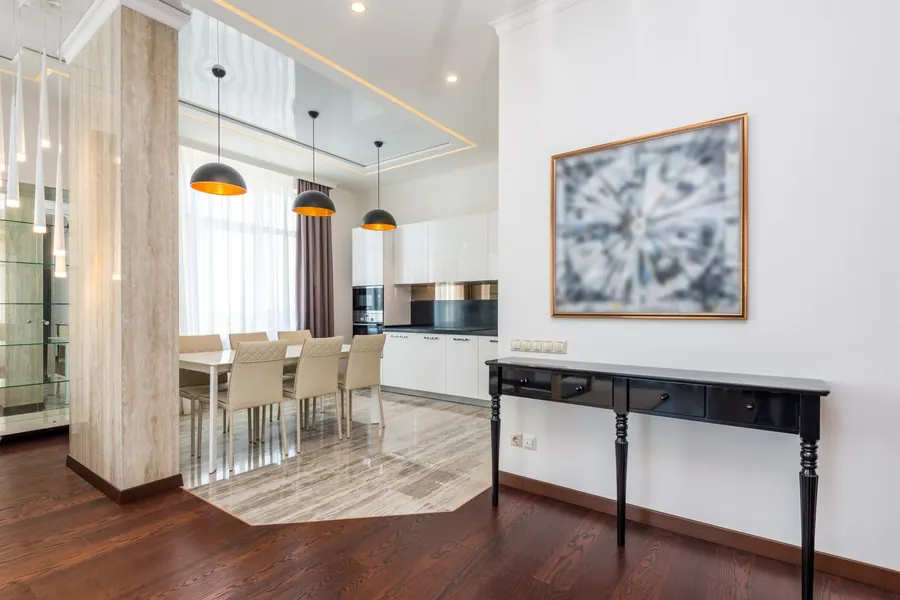
Size the art to the furniture first, because the furniture decides the width and the wall decides nothing on its own. Art above a sideboard should span about two-thirds of the furniture’s width, per theluxellehomes, wallcraft, stradarte, and bouclair, so a 72 inch sideboard wants art about 48 inches wide, per bouclair, and a piece narrower than that looks lost while a piece wider than the furniture looks unstable.
The centre of the art sits at 57 to 60 inches from the floor on an open wall, per theluxellehomes, stradarte, bouclair, fab-art, and kitchenwaresets, and the wall faced from the table takes the lower end, 54 to 57 inches, per wallandform, because seated eye level is about 48 inches and the people looking at the wall are sitting down.
Run the audit in order, because the order is the method. Measure the width of the sideboard or the table, multiply by two-thirds, and write the number down. Measure the wall section the art will cover, and check the art fits inside it with room to breathe on both sides. Mark the centre height on the wall with painter’s tape, 57 to 60 inches from the floor, then mark the bottom of the frame 6 to 8 inches above the sideboard top, per theluxellehomes, wallandform, and bouclair. If the two marks disagree, trust the gap first, because art that floats away from its furniture reads as a mistake from every seat.
The elegant thinking behind this section, how one warm room is built from light, proportion, and a table worth sitting at, lives in elegant dining room ideas.
| Measure | Figure | Source |
|---|---|---|
| Art width above furniture | About two-thirds of the furniture width | theluxellehomes, wallcraft, stradarte, bouclair |
| Art width above furniture | Two-thirds to three-quarters | hurrelleditions, decorfloorwindow |
| Art width above furniture | 50 to 75 percent of the sideboard width | wallcraft |
| 72 in furniture wants art | About 48 in wide | bouclair |
| Table 90 cm, 3 ft | Art 60 cm, 2 ft, print 16 by 24 in | wallcraft |
| Table 120 cm, 4 ft | Art 80 cm, 2.5 ft, print 20 by 30 in | wallcraft |
| Table 150 cm, 5 ft | Art 100 cm, 3.3 ft, print 24 by 36 in | wallcraft |
| Table 180 cm, 6 ft | Art 120 cm, 4 ft, print 30 by 40 in or a gallery wall | wallcraft |
| Centre height, open wall | 57 to 60 in | theluxellehomes, stradarte, bouclair, fab-art, kitchenwaresets |
| Centre height, wall faced from the table | 54 to 57 in | wallandform |
| Centre height | 50 to 57 in | wallcraft |
| Seated eye level | About 48 in | wallandform |
| Seated eye level | 48 to 52 in | wallandform |
| Museum standard centre | 57 to 58 in | wallandform |
| Museum standard centre | 145 cm, 57 in | artsby, canvy |
| Gap above a sideboard or buffet | 6 to 8 in | theluxellehomes, wallandform, bouclair |
| Gap above a sideboard | 6 to 10 in | cozydecorworld |
| Gap above a sideboard | 3 to 5 in | wallcraft |
| Gap above furniture | 15 to 25 cm | artsby |
| Gap above furniture | At least 8 in | canvy |
| Mirror, minimum size | At least 24 by 36 in | kitchenwaresets |
| Mirror width | About two-thirds of the table or sideboard | decorfloorwindow |
| Mirror gap above furniture | 4 to 6 in | kitchenwaresets |
| Mirror gap above a console | 6 to 10 in | decorfloorwindow |
| Gallery spacing between frames | 2 to 3 in | theluxellehomes, cozydecorworld, kitchenwaresets |
| Grid spacing | 2 in | theluxellehomes, kitchenwaresets, fab-art |
| Gap between pieces | 3 to 6 in, Simply Framed | canvy |
| Gallery spacing | 5 cm, 2 in, edge to edge | fab-art |
| Gallery total footprint | About 60 to 75 percent of the wall space between furniture and ceiling | fab-art |
| Art should fill | About one-half to two-thirds of the empty wall width | bouclair |
| Pair gap | 2 to 3 in between two prints of the same size | stradarte |
| Diptych and triptych panels | 2 to 3 in apart | theluxellehomes |
| Chair clearance | Bottom of the frame about 8 to 10 in above the chair tops | stradarte |
| Buffet height | About 36 in standard | wallandform |
| Sideboards run | 34 to 38 in tall | wallandform |
| Buffet math | 36 in buffet plus a 7 in gap puts the bottom at 43 in; a 24 in piece then centres at 55 in | wallandform |
| Centre below 50 in | Looks like the piece is sitting on the furniture | wallandform |
| Centre above 62 in | Floats away from the buffet | wallandform |
| Chandelier | 30 to 36 in above the tabletop, 8 ft ceiling, plus about 3 in per extra foot of ceiling, at least a foot narrower than the table | cozydecorworld |
| Accent colours | Pull 1 to 2 from tableware, curtains, or rug into the art | wallcraft |
The table figures come from named guides, and where the guides disagree, the range is shown and the conflict is named, not settled. The centre-height figures disagree most: 57 to 60 inches per theluxellehomes, stradarte, bouclair, fab-art, and kitchenwaresets, 54 to 57 inches for the wall faced from the table per wallandform, and 50 to 57 inches per wallcraft, so the article uses 57 to 60 inches as the standing rule and the lower end for the seated wall.
The sideboard gap figures also disagree, 6 to 8 inches per theluxellehomes, wallandform, and bouclair, 6 to 10 inches per cozydecorworld, 3 to 5 inches per wallcraft, and 4 to 6 inches for a mirror per kitchenwaresets, so the article uses 6 to 8 inches as the standard and names the others. The width figures agree on two-thirds as the standard, with two-thirds to three-quarters per hurrelleditions and decorfloorwindow and 50 to 75 percent per wallcraft as the range.
Measure First: The Two-Thirds Rule and the 57 to 60 Inch Centre
The tape measure is the first buy because it is the cheapest fix in the whole article, and every buy after it depends on the numbers it gives. Measure the sideboard or the table first, multiply the width by two-thirds, and that number is the art width to shop for. A 60 inch sideboard wants art about 40 inches wide, a 72 inch sideboard wants art about 48 inches wide, and a 90 inch sideboard wants art about 60 inches wide, so the tape tells you the size before the catalog tempts you with a piece that is too narrow.
The level below is the second half of the same fix, because a centre line drawn by eye drifts a few millimetres per frame and the drift is the only thing anyone sees. Mark the centre at 57 to 60 inches, hold the level on the mark, and draw the line the whole grouping hangs from. The kit below holds the hooks, the nails, the sawtooth hangers, the wire, and the D rings for every piece after it, so the wall is hung from one box, not five separate trips.
The nook thinking behind this section, how a tight corner is measured before a single piece is bought, lives in dining nook ideas.
One Big Piece: A Trio That Covers Two-Thirds of the Long Wall
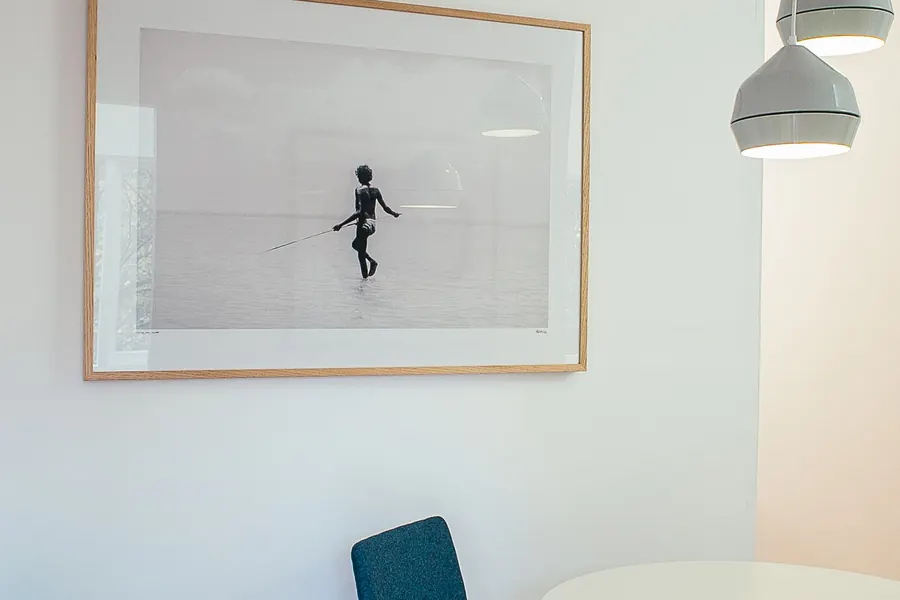
One big piece beats five bits, because the eye needs one place to rest and the wall needs one anchor before anything else is added. The trio below is three framed textured panels, each 24 inches wide by 36 inches tall, hung side by side as one piece, and the set reads as a single wide work rather than three separate pictures. Three 24 inch panels with 2 to 3 inch gaps between them span about 76 to 78 inches in total, so at the two-thirds rule they match a wall section about 114 inches wide, and they belong on the long wall behind the table, not above a standard sideboard.
Hang the middle panel first, because the middle panel sets the centre and the two outer panels follow it. Mark the centre at 57 to 60 inches, hold the level on the mark, hang the middle panel with its centre on the line, then hang the outer panels 2 to 3 inches from it, per theluxellehomes and stradarte, and check the level again after the third panel, because a trio that drifts by a few millimetres reads as a mistake from the table.
A 36 inch tall panel centred at 57 to 60 inches has its bottom edge at 39 to 42 inches, so above a 36 inch sideboard the gap runs 3 to 6 inches, and if the gap reads under 6 inches, raise the centre toward 60 inches.
The farmhouse thinking behind this section, how one warm piece anchors a whole dining room, lives in modern farmhouse dining room ideas.
The Gallery Wall: Frames Spaced 2 to 3 Inches, Counted as One Piece
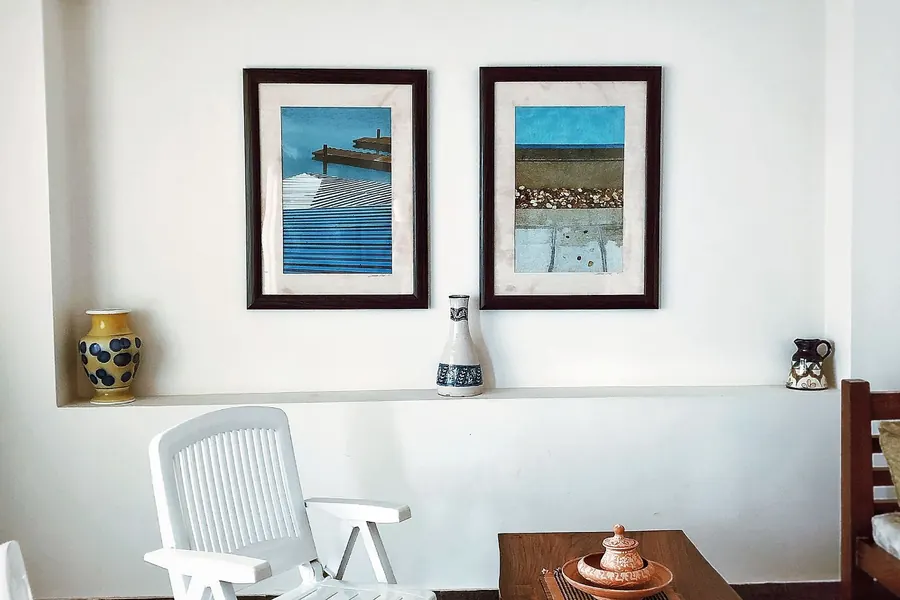
A gallery wall fails when it is hung frame by frame, because each frame finds its own height and the wall reads as leftovers. Hang it as one piece instead: plan the total footprint first, then hang the frames into it. Five 8 by 10 inch frames in a row with 2 inch gaps between them span 48 inches in total, which is two-thirds of a 72 inch sideboard, so the frame set below is already sized to the furniture most dining rooms own.
A formal grid takes a precise 2 inch spacing, per theluxellehomes, kitchenwaresets, and fab-art, while a looser cluster takes 2 to 3 inches, per cozydecorworld, and either way the spacing stays the same in every direction, because one uneven gap is the only thing anyone sees.
Lay the frames on the floor first, photograph the layout, and hang from the centre outward, because the centre frame sets the line and the outer frames follow it. The centre of the whole arrangement goes at 57 to 60 inches, per fab-art, not the centre of any one frame, and the total footprint should cover about 60 to 75 percent of the wall space between the furniture and the ceiling, per fab-art. If the wall is wider than the grouping, add a plate or a woven piece at the edge rather than stretching the gaps, because wide gaps break the grouping into separate pictures.
Also solves this: the gallery that needs five matching frames in one box, not five separate frame hunts
Amazon Basics Rectangular Picture Frame Set for Wall Hanging or Tabletop Display, 8 x 10 in, Black, 5-Pack
Rectangular picture frame set, 8 by 10 in, black, 5-pack, real glass, wall hanging or tabletop display, horizontal or vertical, as printed. The gallery wall in one box. Five matching 8 by 10 in black frames hang as a grid or a row, so the gallery starts uniform and the 2 inch gaps between them read as one planned piece. Not for: a reader who wants mixed frame sizes in one box, since all five frames are 8 by 10 in, or a reader who wants a gold frame, since these are black.
Check Price on Amazon → (paid link)
The Japandi thinking behind this section, how a calm wall is built from a few matching pieces and nothing extra, lives in japandi dining room ideas.
A Mirror That Doubles the Candlelight: Size It to the Table
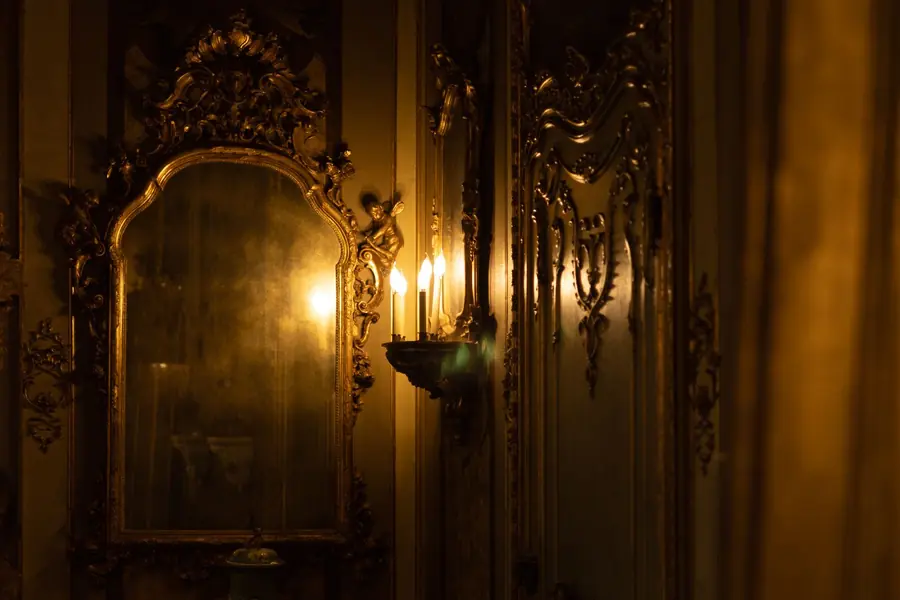
A mirror is the fastest fix for a dark dining wall, because it doubles the light already in the room instead of adding another object to look at. Size it like art: at least 24 by 36 inches, per kitchenwaresets, and about two-thirds the width of the table or sideboard below it, per decorfloorwindow, so a 54 inch sideboard wants a mirror about 36 inches wide. Hang it with the bottom 4 to 6 inches above the furniture, per kitchenwaresets, and opposite a window or the pendant, so it has something worth reflecting, because a mirror facing a blank wall doubles a blank wall.
The mirror below is 24 by 36 inches in a bronze tube frame, so it suits a sideboard about 36 inches wide at the two-thirds rule, or a narrow wall section beside the table. Hang it with two hooks on one level line, because a mirror hung on one hook swings with every door shut and a tilted mirror doubles a tilted room. Check the weight on the hook before the mirror goes up, because a mirror is the heaviest piece on this wall and the hook that holds a frame will not always hold glass.
The colour thinking behind this section, how one warm metal repeats through a room and ties the wall to the table, lives in color psychology dining room ideas.
Light on the Wall: A Picture Light Over the Art
A picture light is the cheapest way to make the anchor piece read at night, because the art that is lit is the art people look at, and the art left dark is the art people walk past. The light below clips over the framed trio and throws a gallery glow on it, and it runs on a rechargeable battery, so the wall gets light with no wiring and no new hole beyond the mount. Three colour temperatures cover the moods: warm white at 3000K for dinner, natural white at 4300K for a working lunch, and cool white at 8000K for a bright room that needs the art to read clearly.
Size the light to the art, not the wall: the light should cover the width of the piece below it without running past the frame ends, and the head should tilt so the glow lands on the canvas, not on the ceiling. Charge it before the first dinner, because a rechargeable light that dies halfway through the meal is worse than no light at all, and keep the remote on the sideboard, because a light that needs a ladder to switch off never gets switched on.
Also solves this: the anchor piece that goes dark at night, not the wall that needs rewiring
LUXSWAY Wireless Picture Frame LED Lighting, Rechargeable Art Display Lighting Clip on Pictures, Over Painting Lights with Remote, Artwork Lamp with Flexible Neck, 28 LEDs 3 Lighting Modes 200LM, Black
Wireless picture frame LED lighting, rechargeable, 28 LEDs, 200 lumens, 3 lighting modes at 3000K, 4300K, and 8000K, 4400mAh battery, remote, flexible neck, model DY600YW-Black-1, as printed. The light over the art. A rechargeable picture light clips over the framed trio and throws a gallery glow on it, so the anchor piece reads at night as well as it does at noon, with no wiring. Not for: a reader who wants a wired picture light, since this is battery powered and rechargeable, or a reader who wants warm white only, since this light offers three colour temperatures.
Check Price on Amazon → (paid link)
Sconces Beside the Art: Warm Light Without Wiring
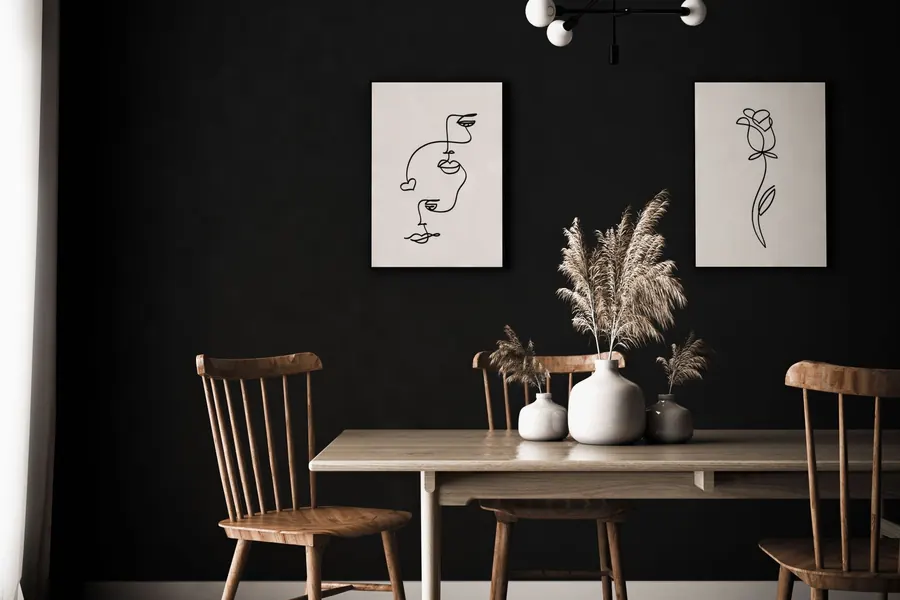
A pair of sconces beside the art turns the wall into a composition, because the art sits between two points of light and the whole wall reads as one planned piece. The sconces below are 19.9 inches long, rechargeable, and remote controlled, so they mount either side of the anchor piece with no electrician and no cable running down the wall. Three colour temperatures cover the same moods as the picture light, warm white at 3000K for dinner, natural white at 4500K for a working lunch, and cool white at 6500K for a bright room, and the dimming runs from 20 to 100 percent, so the wall can glow low at dinner and bright when the room is being cleaned.
Mount the pair at the same height, on the same level line the art hangs from, because sconces at two heights read as a mistake even when the art between them is straight. Leave a hand’s width between the sconce and the frame edge, so the light washes the wall without crowding the art, and charge both sconces together, because one lit sconce and one dark sconce is worse than no sconces at all.
Also solves this: the wall beside the art that stays dark, not the wall that needs an electrician
NIORSUN 19.9 inch Battery Operated Wall Sconce Set of 2, Gold Rechargeable Wall Lights with 5200mAh Dimmable Detachable Bulbs and Remote, 10 Colors Wireless Sconces for Bedroom Living Room Hallway
Battery operated wall sconces, set of 2, 19.9 in, gold metal frame with white fabric shades, 5200mAh rechargeable bulbs, 300 lumens each, remote control, 3 colour temperatures at 3000K, 4500K, and 6500K, dimming 20 to 100 percent, up to 25 hours at full brightness, model SW025, as printed. The pair of lights that flank the art. Two 19.9 in rechargeable sconces mount either side of the anchor piece, so the wall gets warm, low light at dinner without an electrician, and the remote sets the brightness from the table. Not for: a reader who wants hardwired sconces, since these are battery operated, or a reader who wants a warm white only, since these offer three colour temperatures.
Check Price on Amazon → (paid link)
The open-plan thinking behind this section, how one wall of light carries a room that has no walls of its own, lives in open plan dining area ideas.
Plates, Baskets, and Weave: A Wall That Is Not All Frames
A wall of frames alone reads flat, because every piece is a rectangle at the same depth and the eye finds no texture to rest on. Plates, baskets, and weave break the flat plane, and the dining room is the one room where plates belong on the wall, because the room’s own dishes are its own decoration.
Mix plate sizes, from salad plates to serving platters, but keep one colour family, all white, blue and white, or earthy stoneware, per theluxellehomes, and lay the arrangement on the floor first, per cozydecorworld. The brass hangers below hold plates from 6 to 10.5 inches, in three sizes, so the wall gets a plate gallery that reads as collected, not bought as a set.
The baskets below hang as a cluster of seven, in sizes from 7.1 to 14 inches, and the mix of sizes is the point, because a cluster of identical baskets reads as a product and a cluster of mixed sizes reads as a collection. The macrame hanging below fills the narrow wall section where a frame would look lost, 31 by 33 inches of hand-knotted cotton that softens the wall at the height where the gallery stops. Keep 2 to 3 inches between every piece, plates, baskets, and weave alike, because even spacing is what makes a mixed wall read as one wall.
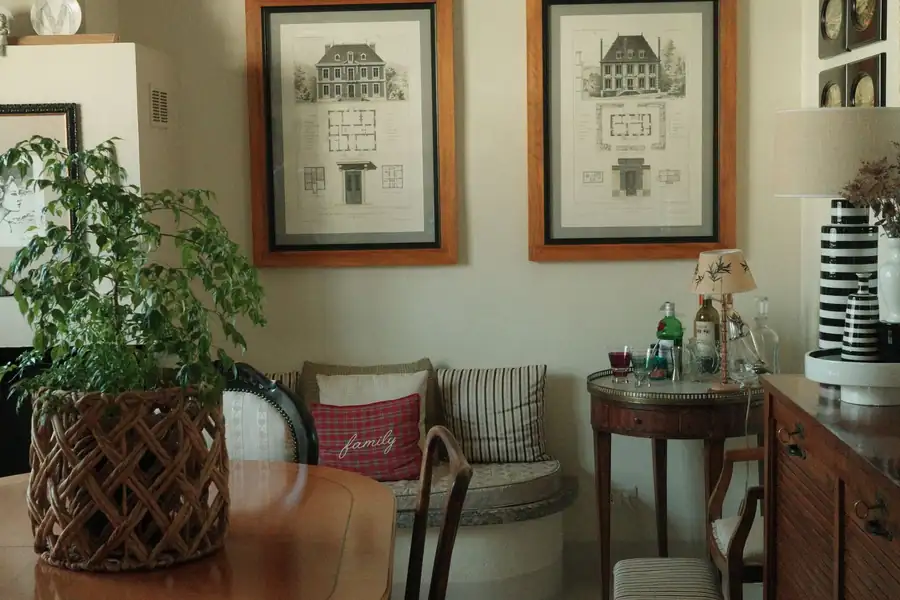
Also solves this: the plate wall that needs hangers in three sizes, not one hanger that fits nothing well
Fasunry 12 Piece Plate Hangers, 6/8/10 Inch Invisible Brass Wall Plate Hangers, Comes with 16 Piece Wall Hooks for Decorative Plates
Plate hangers, 12 piece, 6, 8, and 10 in, invisible brass, 4 pack each of 6, 8, and 10 in, 16 hanging hooks, 50 rubber tip protectors, as printed. The plate wall in one box. Twelve brass hangers in three sizes hold plates from 6 to 10.5 inches, so the dining room’s own plates become the gallery, mixed in size but held in one colour family. Not for: a reader who wants to hang plates larger than 10.5 in, since the largest hanger fits 8.5 to 10.5 in plates, or a reader who wants adhesive disc hangers, since these are brass spring hangers.
Check Price on Amazon → (paid link)
Also solves this: the flat wall that needs weave and warmth, not another rectangle in a frame
Wall Woven Basket Decor Set of 7, Hanging Handmade Rattan Baskets for Boho, Seagrass Wicker Rustic Natural Wall Decor, Size 7.1 to 14 inches
Wall woven basket decor, set of 7, hanging handmade rattan baskets, seagrass wicker, rustic natural wall decor, sizes 7.1 to 14 in, as printed. The texture that breaks the flat wall. Seven woven baskets in sizes from 7.1 to 14 inches hang as a cluster, so the wall gains weave and warmth beside the frames, and the mix of sizes reads as collected, not bought as a set. Not for: a reader who wants one large basket only, since this is a set of 7, or a reader who wants painted baskets, since these are natural seagrass and rattan.
Check Price on Amazon → (paid link)
Also solves this: the narrow wall section where a frame would look lost, not the wide wall that needs a trio
Mkono Large Macrame Wall Hanging Boho Decor Tapestry Fringe Wall Art Headboard Woven Home Decoration for Living Room Bedroom Dorm Apartment Background, Christmas Gift, Including Hanging Rod, 31 by 33 in
Large macrame wall hanging, 31 by 33 in per the listing title, 100 percent cotton cord, wood dowel and hanging rod included, ivory, as printed. The woven piece that softens the wall. A 31 by 33 in hand-knotted cotton hanging fills the narrow wall section where a frame would look lost, so the room gets texture at the height where the gallery stops. Not for: a reader who wants a framed print, since this is a woven hanging, or a reader who wants a piece wider than 33 in, since this one is 31 by 33 in per the listing title.
Check Price on Amazon → (paid link)
The al-fresco thinking behind this section, how a table outside is dressed with what the house already owns, lives in al fresco dining tablescape ideas.
Shelves That Hold the Decor: Ledges Above the Sideboard
A picture ledge is the wall that changes without new holes, because frames lean on it instead of hanging from it, and the wall swaps by season while the nails stay where they are. Two 24 inch pine ledges stacked above a sideboard hold leaning frames, a vase, and a candle, and the lower ledge carries the frames while the upper ledge carries the lighter pieces, so the wall gains depth without gaining weight.
The ledges below are 2.2 inches deep, which is enough for a frame to lean and too narrow for a plant to fall from, and they mount with the screws and anchors in the box, so the ledge goes up on the same level line as the art.
Keep the top ledge clear of the pendant line, because a ledge that crowds the light reads as clutter from the table, and keep one stretch of each ledge open, because a ledge filled edge to edge is a shelf, not a display. Lean one large frame and one narrow frame on the lower ledge, overlap them slightly for a relaxed look, per cozydecorworld, and let the upper ledge hold the pieces that change with the season.
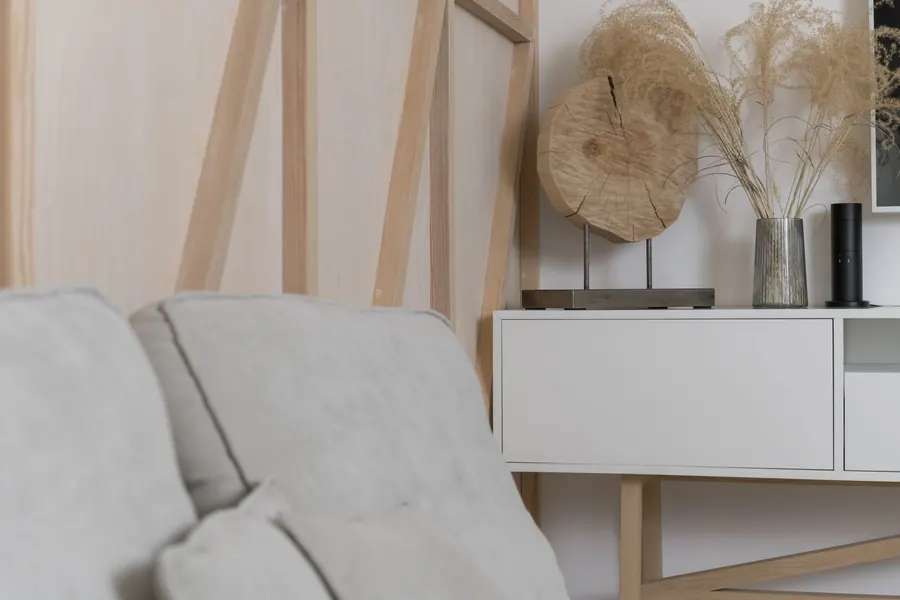
Also solves this: the wall that must change by season without new holes, not the wall that needs another nail
Fun Memories Picture Ledge Shelf for Wall, 24 inch Pine Wood Nursery Book Shelves Set of 2, Wall Book Shelves for Kids Room, Home Decor, Kitchen Spice, Carbonized
Picture ledge shelf, 24 in, pine wood, set of 2, 4.9 by 24 by 2.2 in, carbonized colour, model PI20, as printed. The ledge that lets the wall change without new holes. Two 24 in pine ledges hold leaning frames, so the art swaps by season and the wall never needs another nail for a new print. Not for: a reader who wants a deep shelf for plants and books, since this ledge is 2.2 in deep, or a reader who wants a wide shelf over 24 in, since these are 24 in wide.
Check Price on Amazon → (paid link)
Hang It Straight and Safe: Strips, Hooks, and the Level Check
The hanging is the part of the wall nobody photographs and everybody sees, because a crooked frame is visible from the door and a fallen frame is visible on the floor. The strips below hold frames up to 24 by 36 inches without nails, so the gallery can be tried, moved, and re-hung while the layout is still being decided, and the strips remove cleanly when the wall changes. Wait seven days after painting before using them, per the listing, because fresh paint has not cured and the strips will take it off the wall, and do not hang valuable items with adhesive, per the listing, because adhesive is for trying a layout, not for trusting a keepsake.
Heavy pieces hang from the kit, not the strips: the mirror hangs on two hooks from the KURUI kit, the trio hangs on sawtooth hangers and wire, and the level checks the line before the last frame goes up. Hang with two hooks where the frame allows it, spaced evenly about a third of the frame width apart, per hangandhue, because two hooks split the weight and fix the frame level, while one hook lets it swing. Step back to the table after every frame, sit down, and look, because the wall is viewed from a chair and a frame that reads straight standing can read crooked sitting.
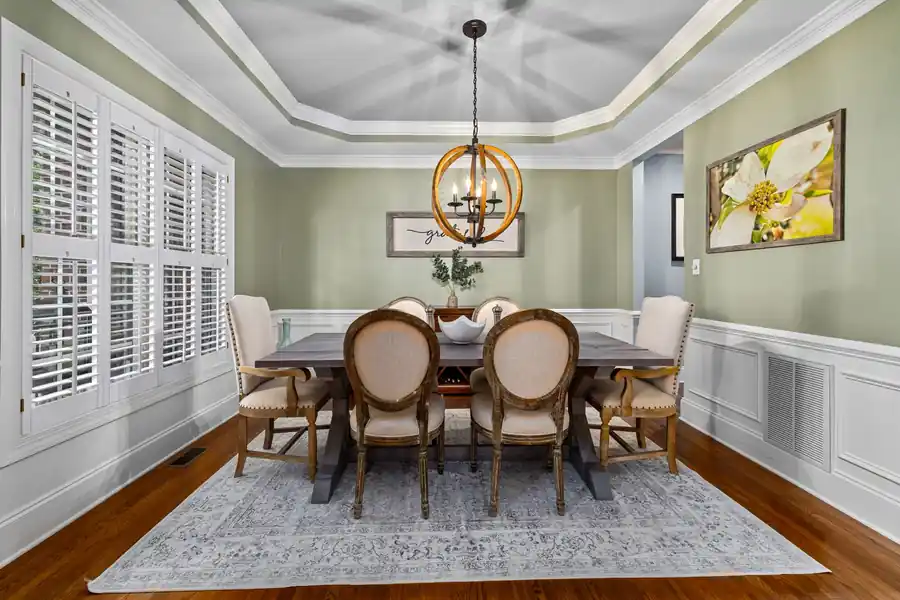
Also solves this: the gallery that must be tried before it is nailed, not the wall that gets holes on the first guess
Command Large Picture Hanging Strips, White, Holds up to 16 lbs, 14-Pairs, Easy to Open Packaging
Large picture hanging strips, white, 14 pairs, 28 strips, model PH206-14NA, maximum frame size 24 by 36 in, as printed. The no-hole hang for the gallery. Fourteen pairs of large strips hold the frames without nails, so the gallery can be tried, moved, and re-hung while the layout is still being decided, and the strips remove cleanly when the wall changes. Not for: a reader who wants to hang a frame larger than 24 by 36 in with these strips, since the listing gives 24 by 36 in as the maximum frame size, or a reader who wants to hang valuable items with adhesive, since the listing warns against hanging valuable items with these strips.
Check Price on Amazon → (paid link)
The moody thinking behind this section, how one dark wall makes pale frames glow, lives in dark moody living room ideas.
A Backdrop for the Wall: Wallpaper, Paint, and Panel Moulding
A plain wall is a blank canvas and a patterned wall is a finished room, because the backdrop does the work the art cannot do on its own. Floral wallpaper behind a sideboard gives the wall a garden to frame the art, and the paper below is unpasted, so the paste goes on the wall and the paper goes up dry, which is the easier order for a first-time paperer. Two rolls cover a 57 square foot wall, and the paper’s gridlines make it easy to line up the next strip, per the listing, so the pattern lines up even when the wall does not.
Keep the wallpaper calm behind busy art, because the paper and the frame fight for the eye when both are loud, and keep the paper busy only where the art is quiet. The two rolls below are 20.8 by 396 inches, with a 25.2 inch repeat, so the pattern needs more paper than a straight wall would suggest, and the trim is the place to check the repeat before cutting.
Where wallpaper feels like too much commitment, paint one wall a deep green or charcoal and hang pale frames on it, because a dark wall makes pale frames glow and a pale wall makes dark frames disappear. Panel moulding is the middle way: thin strips of trim nailed to the wall in rectangles, painted the same colour as the wall, give the wall architecture without paint or paper, and the art hangs inside the rectangles as if the wall were built for it.

Frequently Asked Questions
How big should art be above a sideboard?
Two-thirds the width of the sideboard below it, measured end to end, frames and gaps included. A 48 inch sideboard takes a 32 inch piece, so the art reads as part of the furniture rather than a picture that landed on the wall by accident.
How high should I hang art in a dining room?
The centre of the piece at 57 to 60 inches from the floor, and the frame bottom 6 to 10 inches above the sideboard below it. The wall is viewed from a chair, so a piece hung for a standing viewer reads too high at dinner.
How far above a sideboard should art hang?
Six to 10 inches between the frame bottom and the sideboard top, and the same 6 to 10 inches between the frame bottom and the tallest object on the sideboard. Any closer and the art reads as part of the surface; any higher and it floats.
How far apart should frames be on a gallery wall?
Two to 3 inches between frames, measured edge to edge, and the same 2 to 3 inches between frames and the other pieces on the wall. Even spacing is what makes a mixed wall read as one wall rather than a set of separate pictures.
What size mirror goes above a sideboard?
Two-thirds the width of the sideboard below it, the same rule as art, and the mirror’s bottom 6 to 10 inches above the sideboard top. The mirror in this guide is 35.4 inches wide, so it sits above sideboards from about 53 inches wide.
Bottom Line
Bottom Line: Measure the furniture first, hang the anchor piece at 57 to 60 inches, and keep every gap even — two-thirds the width, 6 to 10 inches of clearance, 2 to 3 inches between frames. The wall that follows those numbers fills itself, and the picks in this guide are the tools that make it happen.
Save this to Pinterest so you can find it when the wall is ready.
Photos via Pexels. All photos are free to use and sourced from Pexels.