

Dining Room Storage Ideas: How to Store Linens, Dishes and Serving Pieces
dining room storage ideas start with the inventory, not the shopping cart. Most dining rooms fail for one reason: the linens live in a bedroom closet, the good dishes live in the kitchen, and the serving pieces live wherever they fit last. Dinner means a trip to three rooms before the table is set, and clearing up means the same trip in reverse. The fix is not a bigger cabinet. It is a system by item, sized to the wall and the table, so every piece lives where it is used.
You get the measurements first, the sideboard length at 60 to 75 percent of the table, the height at 30 to 36 inches, the depth rule at 15 to 18 inches where the wall run is tight, and the 30 inch clearance in front so chairs pull out freely, then the storage plan by item, linens in bins, china in cases with felt between every plate, stemware in cells or on a rack, flatware in lanes, and serving pieces filed upright. Twelve researched picks follow in buy order, from the sideboard to the riser, mapped to three tiers, Starter, Standard, and Full, so you buy to a tier, not to a guess.
The numbers here come from the guides that publish them, storagesideas, hernest, noblehouse, creativelyliving, build-construct, and Z Gallerie, and each figure in the table below names its source. Where the sources disagree, this guide shows both numbers and names the split, because a guide that hides a disagreement asks you to trust it instead of checking it. Measure your wall, read the table, and the rest of the room follows.
How these picks were chosen: each pick was researched from listing and source pages and checked at the publish date. No star rating is claimed for any pick. Check size, color, and contents on the listing before ordering, because listings and variants change. Where a detail cannot be verified, it is left out rather than guessed.
Affiliate disclosure: This article contains affiliate links to products on Amazon. As an Amazon Associate I earn from qualifying purchases. The price you pay stays the same, and the commission helps keep The Decor Root running.
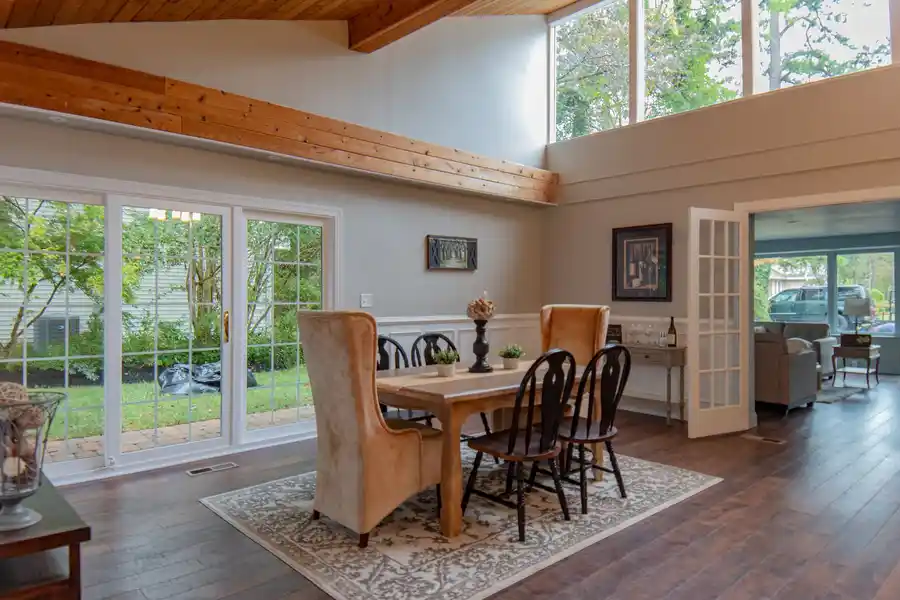
Dining Room Storage Ideas: Measure the Wall, Size the Sideboard, Give Every Piece a Home.
Size the sideboard to the table first, because the length rule is the number every other choice hangs from. Aim for a sideboard 60 to 75 percent as long as the dining table, per hernest and storagesideas, and 12 to 24 inches shorter than the table, per storagesideas, so the cabinet reads as part of the table wall, not as a second table. A 60 inch sideboard holds a 12-person dinnerware service plus folded linens, per storagesideas, which is the capacity to plan around before you buy a single organizer.
| Measure | Figure | Source |
|---|---|---|
| Sideboard length, share of table | 60 to 75 percent of the table length | hernest, storagesideas |
| Sideboard length, vs the table | 12 to 24 in shorter than the table | storagesideas |
| Sideboard height | 30 to 36 in | hernest, storagesideas |
| Sideboard depth, standard | 18 to 22 in | storagesideas |
| Sideboard depth, most rooms | 16 to 20 in | hernest, creativelyliving |
| Sideboard depth, narrow, 40 to 45 cm | 16 to 18 in | noblehouse |
| Sideboard depth, shallow piece | 14 to 16 in | spacesavvylife |
| Sideboard depth, this guide, tight wall run | 15 to 18 in | thedecorroot rule, see the split below |
| Front clearance | At least 30 in of clear floor in front | hernest, storagesideas |
| End clearance | 6 to 12 in where the layout permits | hernest |
| Sideboard capacity | 8 to 12 cubic feet, about two kitchen cabinets | storagesideas |
| Dinner plates | 10 to 12 in across | storagesideas |
| Plate stack | No more than 8 to 10 plates high, felt between every plate | storagesideas |
| Felt round size | 1 in under the plate diameter | storagesideas |
| Shelf clearance, dinner plates | At least 13 in between shelves | storagesideas |
| Platter bay, upright filing | 14 to 16 in clear | storagesideas |
| Middle shelf, clear height | 12 to 14 in fits 8 to 12 dinner plates plus a row of bowls | storagesideas |
| Wine glass spacing | About 3 in per stem | storagesideas |
| Stemware rack clearance | 12 to 13 in vertical for 8 to 10 in goblets | storagesideas |
| Tablecloth length | Most 60 to 90 in long, roll on 30 in tubes | storagesideas |
| Serving pieces | Plan 1 to 2 cubic feet per set, measure the biggest platter first | storagesideas |
| Drawer depth, standard | 18 to 21 in | storagesideas |
| Under-sideboard baskets | 10 to 12 in tall fits most cabinet clearances | storagesideas |
| Cabinet bands, everyday items | Middle band 30 to 60 in from the floor | build-construct |
| Shelf depth, plates and glasses | Shallow shelves 10 to 12 in | build-construct |
| Shelf depth, platters and bowls | Deeper shelves 16 in | build-construct |
One number in the table deserves a second look, because the sources do not agree on it. On sideboard depth, storagesideas gives 18 to 22 inches as the standard wall run, hernest and creativelyliving give 16 to 20 inches, noblehouse gives 40 to 45 centimetres, which is 16 to 18 inches, and spacesavvylife gives 14 to 16 inches for a shallow piece. This guide recommends 15 to 18 inches where the wall run is tight, because a dinner plate at 10 to 12 inches across still fits with room for a liner, and the chairs keep their 30 inch clearance.
Where chairs pull out, keep at least 30 inches of clear floor in front of the sideboard, per hernest and storagesideas, and allow 6 to 12 inches at the ends where the layout permits, per hernest. Measure the wall run first, then pull out the nearest chair as you would to sit down, per Z Gallerie, because a sideboard that fits with every chair tucked in can still block the chair swing once someone sits down to eat.
The dining thinking behind this section, how light over the table carries the whole room, lives in dining room lighting ideas.
Measure First: The Wall Run, the Table, and the 15 to 18 Inch Depth.
Measure the wall run before you shop, because the wall decides the sideboard, and the catalog decides none of it. Run the tape along the open wall, then subtract the chair clearance, at least 30 inches of clear floor in front, per hernest and storagesideas, and check the ends, 6 to 12 inches where the layout permits, per hernest. Measure the table too, because the sideboard should run 60 to 75 percent as long as the table, per hernest and storagesideas, and 12 to 24 inches shorter than the table, per storagesideas.
Measure the depth next, because depth is the number the sources argue about, and the argument matters. Storagesideas gives 18 to 22 inches as the standard, hernest and creativelyliving give 16 to 20 inches, noblehouse gives 40 to 45 centimetres, and spacesavvylife gives 14 to 16 inches for a shallow piece. This guide recommends 15 to 18 inches where the wall run is tight, because a dinner plate at 10 to 12 inches across still fits, the cabinet still holds 8 to 12 cubic feet, per storagesideas, and the chairs keep their clearance.

The elegant thinking behind this section, how one anchor piece carries a whole dining wall, lives in elegant dining room ideas.
The Good Dishes: Cases for China, Felt Between Every Plate.
The good dishes earn cases, because open stacks chip a little at a time, and the chip always shows on the rim. Stack no more than 8 to 10 plates high, per storagesideas, with a felt round between every plate, and cut the felt 1 inch under the plate diameter, per storagesideas. Heavy platters and dinner plates belong at the base of the cabinet, per onwardlivinghq, where a slip drops inches, not feet, and the holiday pieces go high and to the back, where they wait for their two nights a year.
Cases change the math, because a case holds a full set in one lift and keeps dust off the rims between uses. A 5-piece hard shell set holds 48 plates in total, 12 dinner plates at 11.75 inches, 12 salad plates at 10 inches, 12 dessert plates at 8.5 inches, and 12 saucers at 7 inches, plus a cup and mug case with 12 compartments. Stack the cases inside the sideboard with the dinner plates at the bottom, the saucers on top, and the label facing out, so the set you need comes out first.
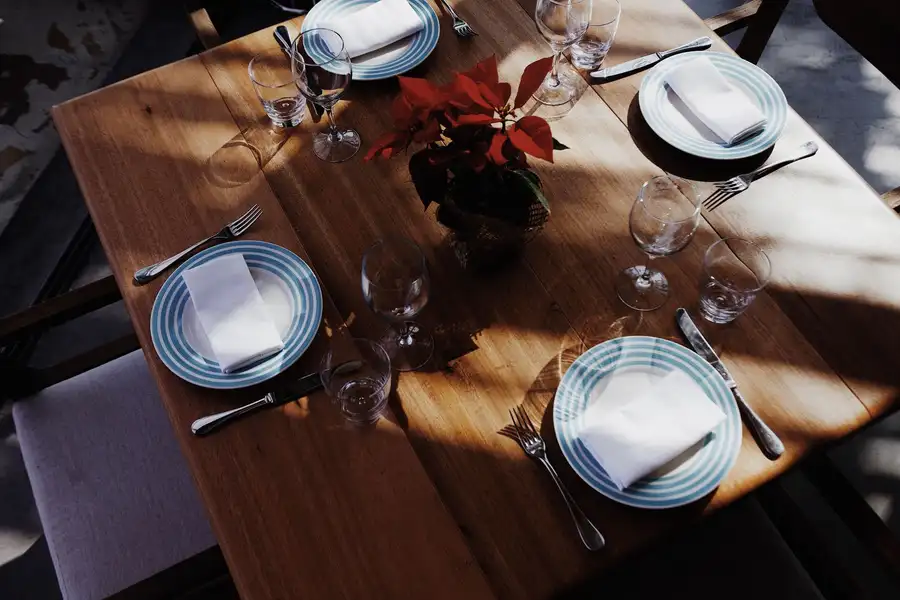
Also solves this: the stack of good plates with no felt between them, not the stack that needs a new cabinet
Richards Homewares Felt Plate Dividers, Soft White, Set of 48, Model RIC-1601
Soft white felt plate dividers, set of 48, 12 dinner plate dividers at 10 in, 24 dessert or salad plate dividers at 6 in, 12 saucer dividers at 4.5 in, can be cut to fit, model RIC-1601, as printed. The felt between every plate, so stacked china stops chipping itself, one divider per plate, cut to fit the plate it guards. Confirm the buy box live at publish, because a listing snippet at research time notes no featured offers for this ASIN. Cost: Starter tier. Not for: a reader who wants a case, since these are loose dividers for stacks already in the cabinet, or a reader who wants one size only, since this set mixes three sizes.
Check Price on Amazon → (paid link)
The rug thinking behind this section, how a sized rug keeps chairs on the rug and off the floor, lives in dining room rug ideas.
Plates Upright: Racks and Risers That Split One Shelf in Two.
Plates filed upright beat plates stacked flat, because the plate you need always hides at the bottom of a flat stack. Six 18 inch oval platters stacked flat can weigh 20 pounds together, per storagesideas, and the one you need is never on top. Filed upright in a rack, each plate slides out like a record from a crate while everything else stays put, per storagesideas, and the rack needs a 14 to 16 inch clear bay, per storagesideas, which most sideboards have once one adjustable shelf is raised.
Risers do the same work vertically, because one tall shelf wastes the air above a low stack. A riser splits the shelf into two levels, so bowls ride above plates instead of beside them, and a middle shelf at 12 to 14 inches clear fits 8 to 12 dinner plates plus a row of bowls beside them, per storagesideas. Dinner plates need at least 13 inches between shelves, per storagesideas, so measure the tallest plate, add 1 inch, and buy the riser that fits the gap, not the riser that looks right in the photo.
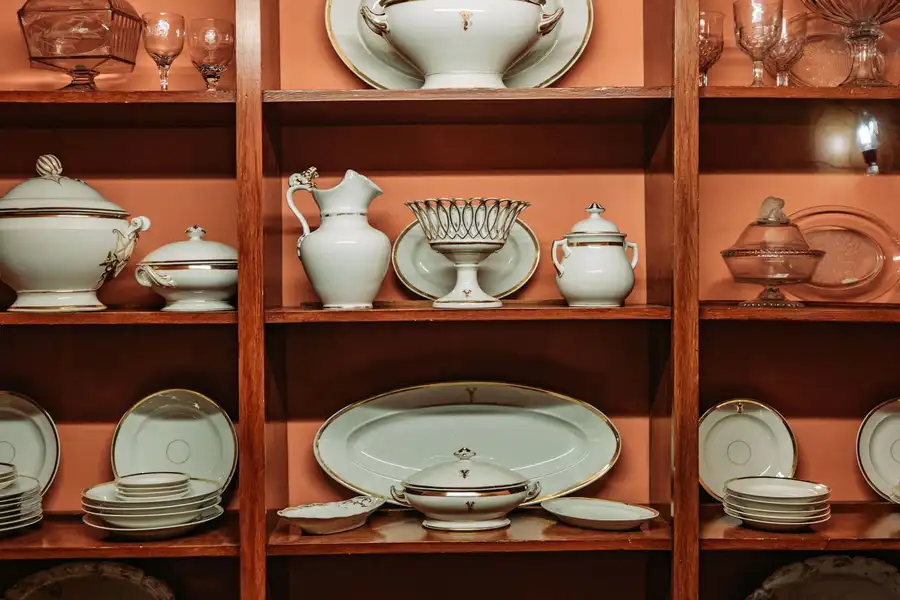
Also solves this: the plate stack that hides the plate you need at the bottom, not the stack that needs a new shelf
INNERNEED Bamboo Wooden Plate Racks, Pack of 4, Model UKBM20241019000U
Bamboo plate racks, pack of 4, each rack 11.8 in by 4.73 in by 3.94 in, 1.2 in between pegs, 3.5 in between the two long rack sides, model UKBM20241019000U, as printed. The upright file for plates, bowls, and lids, so one plate comes out without lifting five. Cost: Starter tier. Not for: a reader who wants a rack for platters over 12 in tall on edge, since the rack suits plates, bowls, lids, and cutting boards at this size, or a reader who wants one rack only, since this pick is sold as a pack of 4.
Check Price on Amazon → (paid link)
Also solves this: the tall shelf that wastes the air above a low stack, not the shelf that needs a carpenter
SpaceAid Cabinet Shelf Organizers, 2-Pack, Bamboo and Black Metal, Short
Cabinet shelf organizers, 2-pack, bamboo tops with black powder-coated metal frames, stackable, expandable, as printed. The riser that splits one tall sideboard shelf into two levels, so bowls ride above plates instead of beside them. No dimensions are printed for this variant, so none are claimed here. Cost: Starter tier. Not for: a reader who wants a fixed shelf, since these risers sit loose on the shelf, or a reader who wants exact dimensions on the listing, since no dimensions are printed for this variant and none are claimed here.
Check Price on Amazon → (paid link)
The farmhouse thinking behind this section, how a measured wall carries a whole plan, lives in modern farmhouse dining room ideas.
Stemware: A Chest for the Good Glasses, a Rack for the Everyday Ones.
Stemware wants air, not stacking, because glass on glass chips rims and stems, and a chipped rim retires a glass. A chest with 12 separate cells keeps every stem apart, and the handles carry the whole set from the sideboard to the table in one trip. Hang the everyday glasses upside down on an under-shelf rack instead, which needs 12 to 13 inches of vertical space for standard 8 to 10 inch goblets, per storagesideas, and keep glasses about 3 inches apart on the rack, per storagesideas, so rims never touch.
Split the glasses by use, because the good glasses and the Tuesday glasses do different jobs. The balloon glasses go in the chest, high and to the back, where they wait for guests, and the everyday wine glasses and champagne flutes hang on the rack, where hands land first. A rack that holds 12 wine glasses or 18 champagne flutes covers a full table, and the shelf below it stays free for bowls, which is the trade that makes the rack worth its screws.
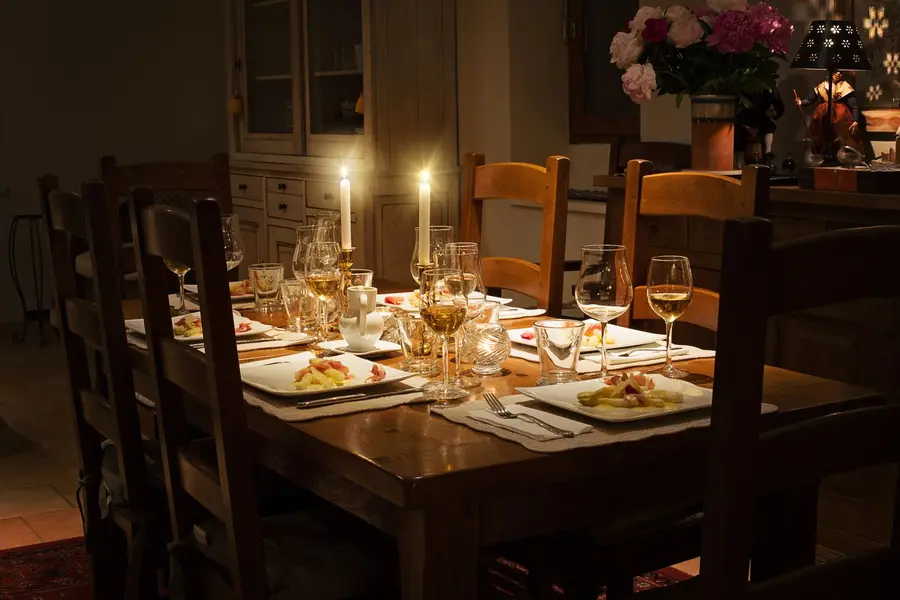
Also solves this: the shelf where glasses crowd the bowls, not the shelf that needs a new cabinet
Organize It All Hanging Under Cabinet Stemware Rack, Chrome
Chrome metal wire stemware rack, mounts under a shelf or cabinet, holds up to 12 wine glasses or 18 champagne flutes, as printed. The under-shelf rack that hangs glasses upside down in dead air above a shelf, freeing the shelf below for bowls. Cost: Starter tier. Not for: a reader who wants a rack for stemless glasses, since this rack hangs glasses by their stems, or a reader with no shelf above the glasses, since the rack needs a shelf or cabinet to mount under.
Check Price on Amazon → (paid link)
The japandi thinking behind this section, how calm order carries a whole room, lives in japandi dining room ideas.
Flatware in Lanes: One Tray That Sets the Table in a Minute.
Flatware earns lanes, because loose flatware wastes half of every drawer, and the serving spoon always hides under the teaspoons. One wide tray with lanes for forks, knives, spoons, and serving pieces turns setting the table into a one-minute job, and the tray should expand to the drawer, not the other way around. Measure the drawer first, because a tray that fits the drawer leaves no gap for the serving pieces to slide into, and a tray that runs short leaves a dead strip at the back.
Give the serving pieces their own lane, because the carving fork and the serving spoon are the pieces that vanish first. Slanted slots tilt forks and spoons upward for an easy grab, and removable dividers let the tray change shape when the set grows. Keep the everyday flatware at the front of the tray and the serving pieces at the back, so the hand lands on the fork first and the serving spoon second, which is the order the table is set in.

Also solves this: the drawer where flatware slides into one pile, not the drawer that needs a new cabinet
Landmok Bamboo Silverware Drawer Organizer, Expandable 17.7 to 29.5 in, Natural
Bamboo silverware drawer organizer, expands from 17.7 in to 29.5 in wide, 5 to 8 slots, removable dividers, 7-degree slanted slots, as printed. The flatware tray that turns one wide sideboard drawer into lanes for forks, knives, spoons, and serving pieces. No divider count is claimed for this pick, because the listing text gives two different counts. Cost: Starter tier. Not for: a reader whose drawer runs under 17.7 in wide, since the tray does not shrink below that width, or a reader who wants a fixed tray, since this one expands and its dividers move.
Check Price on Amazon → (paid link)
The festive thinking behind this section, how one tray carries a whole table setting, lives in christmas dining room ideas.
Drawers With Lanes: Dividers for Napkins, Placemats, and Table Tools.
The top drawer of the sideboard is the linen drawer, and it earns dividers, because napkins, placemats, and table tools slide into one pile without lanes. Spring-loaded dividers split the drawer into lanes in seconds, with no tools, and the lanes hold their place because the spring keeps them pressed to the drawer walls. Measure the drawer depth first, because dividers that run 16 to 22 inches fit a standard drawer at 18 to 21 inches deep, per storagesideas, and dividers that run short leave a gap at the back.
Give each lane one job, because a lane with two jobs becomes a pile again. Napkins in one lane, placemats in the next, napkin rings and table tools in the last, and the table spray and cloth at the end, where the hand lands after the table is cleared. Keep the lane for the cloth napkins at the front, because those are the pieces that come out at every meal, and the holiday napkin rings at the back, where they wait for their two nights a year.

Also solves this: the drawer where napkins, placemats, and table tools slide into one pile, not the drawer that needs a rebuild
Bambüsi Bamboo Drawer Dividers, 4-Pack, Adjustable 16 to 22 in, 2.6 in High, Model BAM-4DD
Bamboo drawer dividers, 4-pack, adjustable from 16 in to 22 in, 2.6 in high, spring-loaded, slip resistant, stackable, model BAM-4DD, as printed. The dividers that split a deep sideboard drawer into lanes for napkins, placemats, and table tools. Cost: Starter tier. Not for: a reader whose drawer runs under 16 in deep, since the dividers do not shrink below that length, or a reader who wants tall dividers, since these stand 2.6 in high.
Check Price on Amazon → (paid link)
The bedroom thinking behind this section, how divided drawers keep a whole room tidy, lives in bedroom storage ideas.
The Deep Shelf: A Turntable That Brings the Back Row Forward.
A deep sideboard shelf hides its back row, because the hand reaches the front and the eye stops at the bowls. A turntable brings the back row forward with one spin, so condiments, serving bowls, and the gravy boat stop hiding behind the dinner plates. The turntable needs a full 12 inches of shelf depth, so measure the shelf before you order, and keep the tall pieces at the center and the low pieces at the edge, where the spin never tips them.
Use the turntable for the pieces that move, because the pieces that stay put belong on a fixed shelf. Sauces, dressings, and the butter dish ride the turntable to the table and back, while the stacked bowls and the platter rack stay where they are. A non-skid surface keeps the turntable from sliding while it spins, and handles let the whole turntable lift out for cleaning, which is the difference between a tool that gets used and a tool that gathers dust.
Also solves this: the deep shelf where the back row hides behind the dinner plates, not the shelf that needs a rebuild
Homerays Lazy Susan Organizer, 12 in, Non-Skid Bamboo, Model DTS-YS-12IN
Bamboo lazy susan, 12 in diameter, non-skid, 360-degree rotation, handles, model DTS-YS-12IN, as printed. The turntable that brings the back row of a deep sideboard shelf forward, so condiments and serving bowls stop hiding. Cost: Starter tier. Not for: a reader whose shelf runs under 12 in deep, since the turntable needs a full 12 in of depth, or a reader who wants a two-tier turntable, since this one is a single tier.
Check Price on Amazon → (paid link)
Drinks and Dessert: A Cart That Parks Beside the Table.
Drinks and dessert need a station, because a table crowded with bottles leaves no room for plates. A rolling cart parks beside the table for the meal, holds the bottles, the glasses, and the dessert plates on three tiers, then rolls back against the wall when the meal is done. Set the brakes once the cart is parked, because a cart that rolls while someone pours is a spill waiting for a guest, and keep the heavy bottles on the lowest tier, where the cart stays steady.
Size the cart to the gap it parks in, because a cart wider than the gap lives in the hallway, not beside the table. An 11 inch wide cart slides into the space between the sideboard and the wall, and a 32 inch high cart stands at serving height, so plates slide from the cart to the table without a lift. Keep the wine rack and the glass holders on the cart, not in the sideboard, because the glasses that pour are the glasses that hang where the pouring happens.
The winter thinking behind this section, how warm light carries a cold evening, lives in winter lighting ideas.
Linens in Bins: Tablecloths, Runners, and Napkins by the Stack.
Linens earn bins, because folded tablecloths slide, napkins vanish under placemats, and the holiday cloth always hides under the everyday pile. Lidded linen bins hold one set per bin, with a label on the front, so the cloth you need comes out first and the rest stays folded. A bin at 16.7 inches by 12 inches by 12 inches holds a folded cloth, its runners, and its napkins together, which is the set as it is used, not the set as it was bought.
Roll the long cloths instead of folding them, because most tablecloths run 60 to 90 inches long, per storagesideas, and a fold across a long cloth creases where the table shows it. Roll them on 30 inch tubes, per storagesideas, and stand the tubes in the sideboard beside the bins, so the cloth unrolls flat and the crease never appears. Keep the everyday napkins in the divided top drawer and the holiday sets in the bins below, so the daily pieces stay at hand height and the rare pieces stay out of the way.
Also solves this: the linen pile where the holiday cloth hides under the everyday napkins, not the pile that needs a new closet
Bagnizer Fabric Storage Bins with Lids, 3-Pack, 42 Quarts, Black and Grey
Fabric storage bins with lids, 3-pack, linen fabric over 2.5 mm cardboard, each bin 16.7 in by 12 in by 12 in, 42 quarts, collapsible, stackable, with lids and a label holder, black and grey, as printed. The lidded linen bins that hold folded tablecloths, runners, and napkins in labelled stacks inside the sideboard. Cost: Starter tier. Not for: a reader who wants to roll a full tablecloth flat, since a folded cloth fits this bin and a rolled cloth wants a tube, or a reader who wants rigid boxes, since these bins fold flat when empty.
Check Price on Amazon → (paid link)
Buy in Order: Sideboard, Cases, Lanes, Then the Cart.
Buy in order, because the order is what keeps the room finished at every step, and a sideboard bought before the wall is measured is a sideboard that comes back. First, measure the wall run, the table, and the chair clearance, and buy the sideboard to the 60 to 75 percent rule at 15 to 18 inches deep. Second, protect the dishes, felt between every plate and cases for the good set, because chips happen in storage, not at the table.

Third, give every drawer a lane, flatware in the tray, napkins and placemats behind dividers, and the back row on a turntable, because a drawer with lanes sets the table in a minute and a shelf with a turntable never hides a bowl. Fourth, add the cart and the risers, the cart for drinks and dessert beside the table and the risers for bowls above plates, and the room is finished.
Pick the tier that matches the room, not the tier that matches the catalog. The Starter tier suits a sideboard you already own, where organizers alone fix the room. The Standard tier suits a sideboard with no system inside it, where cases, a chest, a tray, and bins build the system. The Full tier suits a room starting from an empty wall, where the sideboard and the cart come first and the organizers follow. Whichever tier you pick, measure first, zone by item, protect the china, and buy in order, because the order is the method and the method is what keeps the room finished.
Frequently Asked Questions
1. What size sideboard do I need for a dining room?
Ans: Aim for a sideboard 60 to 75 percent as long as the dining table, per hernest and storagesideas, 30 to 36 in tall, per hernest and storagesideas, and 12 to 24 in shorter than the table, per storagesideas, with at least 30 in of clear floor in front so chairs pull out freely, per hernest and storagesideas. A 60 in sideboard holds a 12-person dinnerware service plus folded linens, per storagesideas.
2. How deep should a dining room sideboard be?
Ans: The sources disagree, so this guide names the split. Storagesideas gives 18 to 22 in as the standard wall run, hernest and creativelyliving give 16 to 20 in, noblehouse gives 40 to 45 cm, which is 16 to 18 in, and spacesavvylife gives 14 to 16 in for a shallow piece. This guide recommends 15 to 18 in where the wall run is tight, because a dinner plate at 10 to 12 in across still fits with room for a liner, and the chairs keep their clearance.
3. How do I store fine china so it does not chip?
Ans: Put felt between every plate and stack no more than 8 to 10 plates high, per storagesideas, with a felt round 1 in under the plate diameter, per storagesideas. For the good set, use hard shell cases that hold 12 plates each, with quilted felt dividers inside, and keep heavy platters at the base of the cabinet, per onwardlivinghq.
4. How do I store wine glasses in a sideboard?
Ans: Give the good glasses a chest with 12 separate cells, so stems never touch, and hang everyday glasses upside down on an under-shelf rack, which needs 12 to 13 in of vertical space for standard 8 to 10 in goblets, per storagesideas. Keep glasses about 3 in apart on the rack, per storagesideas, and never stack stemware.
5. Where do table linens go in a dining room?
Ans: Fold tablecloths, runners, and napkins into lidded linen bins inside the sideboard, one bin per set, with a label on the front, so the holiday cloth never hides under the everyday napkins. Roll long tablecloths, most run 60 to 90 in, on 30 in tubes instead of folding them, per storagesideas, and keep napkins and placemats in a divided drawer at the top of the sideboard.
Quick Check Before You Order: Measure, Zone, Protect, Then Buy.
dining room storage ideas come down to this: measure the wall run and the table, size the sideboard at 60 to 75 percent of the table and 15 to 18 inches deep where the wall run is tight, keep 30 inches of clear floor in front, zone by item, linens in bins, china in cases with felt between every plate, stemware in cells or on a rack, flatware in lanes, and buy in order, sideboard, cases, lanes, then the cart. One wall number, one table number, one depth number, and one buy order are the whole room, and the rest is a matter of giving every piece the home it already deserved.
Save these dining room storage ideas to your Pinterest board, so your storage plan is ready when you are!