
Al Fresco Dining Tablescape Ideas: Sun, Shade, and a Table That Holds Dinner
al fresco dining tablescape ideas work best when the table is built for outdoors first and styled second. A table that looks good in a photo and fails at dinner is the usual outcome, because wind lifts the cloth, sun moves off the table by the time guests sit down, and a tall centerpiece blocks the person across from you. Measure first and the table works. Style first and the evening unravels before dessert.
This article promises a dining table that holds a real dinner outside, not only a photo. Run the audit in order, fix the wind and the shade before you buy a single plate, and let the palette arrive last. The buy order matters more than any one product, because a table bought in the wrong order leaves you with a lantern for a table that blows over.
This article is research based curation, not hands on testing. Where a detail could not be verified, it is left out rather than guessed, and you should check size, color, and contents on the live listing before ordering.
How these picks were chosen: each pick was researched from listing and source pages and checked at the publish date. No star rating is claimed for any pick. Check size, color, and contents on the listing before ordering, because listings and variants change. Where a detail cannot be verified, it is left out rather than guessed.
Affiliate Disclosure: This article contains affiliate links to products on Amazon. As an Amazon Associate I earn from qualifying purchases. The price you pay stays the same, and the commission helps keep The Decor Root running.
The Al Fresco Dining Tablescape Audit for Al Fresco Dining Tablescape Ideas
Run seven checks in order before you spend on objects.
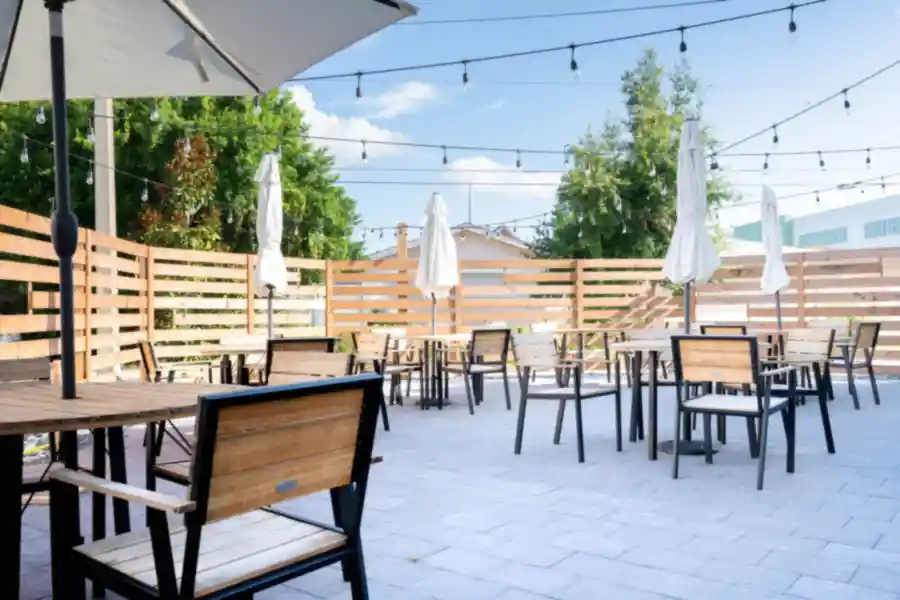
First, check the spot and the shade. Stand where the table will sit at dinner time, not at noon, and watch where the shade lands. A spot that is shaded at noon and sunny at seven is the wrong spot, and a table placed under a tree that drops leaves into the food is the wrong spot too. Choose the spot where shade will be when guests sit down, because shade is the first comfort and the first thing a photo never shows.
Second, run the tape test. Tape the table footprint on the ground, add 36 inches on every side, pull the chairs out, and walk behind them. Where people walk behind seated diners, the rule rises to 44 inches, and where nobody passes, 32 inches is the floor. If you cannot walk behind a seated diner, the table is too big for the spot, and no cloth or centerpiece can fix that.
Third, run the wind test. Clip a cloth to the table, set two lanterns at the ends, and watch the breeze for ten minutes before guests arrive. If the cloth lifts, add clips or weights before you set a single plate. If the wind advisory calls for sustained winds of 30 mph for one hour or gusts of at least 45 mph, bring everything inside, because no clip holds a table in that wind. The wind test is the check most tables skip, and the one that ruins the most dinners.
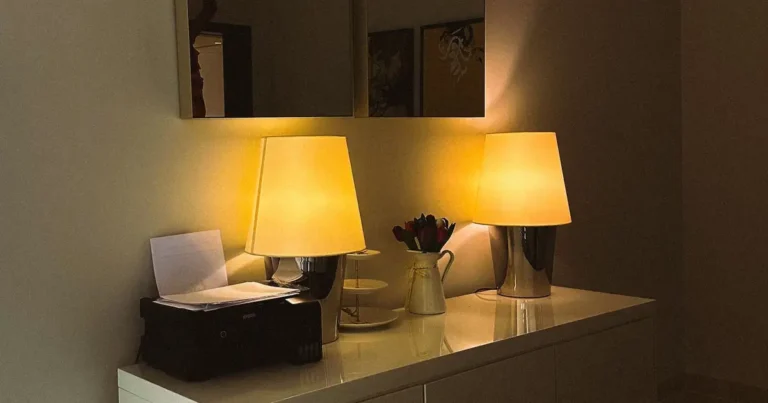
Fourth, run the light test. Hang the string lights, set the lanterns, and look at the table at dusk, not at noon. One bright light in the middle leaves both ends dark, so the table needs two layers: string lights overhead and lanterns at table level. If a place setting sits in shadow, move a lantern before guests arrive, because nobody fixes the light once dinner starts.
Fifth, run the place setting test. Set one full place, fork to glass, with the centerpiece in place, and sit in the chair. Reach for the glass without knocking the centerpiece, pass a bowl across the table, and talk to the person opposite. If the centerpiece blocks the view, lower it, because a centerpiece that stops conversation is decoration that costs the dinner. An al fresco tablescape earns its place by holding the meal, not by filling the frame.
Sixth, run the bug and rain test. Set the citronella at the table ends, never on the plates, cover food when it is not being served, and keep a cover within reach for a sudden shower. Tie cushions or take them inside before the wind rises, and close the umbrella in strong wind.
Seventh, run the ordinary weeknight test. Eat one real dinner at the table before buying the last pieces. A table that works for a Tuesday dinner works for guests, and a table that only works when hosting is a stage, not a dining table. If the weeknight dinner feels easy, the table is done. If it feels like a chore, fix the chairs and the light before you buy another object.
Al fresco dining is the open air meal, and the tablescape is the whole arrangement: cloth, plates, glasses, centerpiece, and light, chosen to work outside. The same order that steadies a room indoors steadies a table outdoors, so the audit above borrows its discipline from elegant dining room ideas, where measure first is the rule that never changes.
Quick Decision Table: By Starting Point
Find your starting point, then move to the next section.
| Starting point | First move |
|---|---|
| Patio with no shade | Umbrella first, then the tape test, then string lights, because shade decides where the table sits |
| Garden with no flat ground | Level the spot or move the table, because a rocking table spills every glass |
| Balcony or terrace | Measure the rail and the door swing first, then choose a table that fits the tape, not the photo |
| Covered porch | Light and bug plan first, because shade is solved and the table needs evening light and a cover |
| Poolside | Melamine and acrylic only, no glass near the pool, and cushions that dry fast |
| Household that eats indoors most nights | One outdoor meal a week as the test, clips and citronella first, furniture last |
| Hosts large groups | Extendable table measured with the leaves in, bench on one side, extra chairs that stack |
| Rental with no drilling and no fixed shade | Freestanding umbrella, plug in string lights, woven placemats, lanterns, nothing fixed to the wall |
The open plan row is the one that needs the most discipline, because an open plan dining area has no walls to do the zoning. The rug, the umbrella, and the light are the three markers, as shown in open plan dining area ideas.
Problem 1: The Table Fights the Wind
The failure is a table set for a calm evening that never arrives, because the first breeze lifts the cloth, tips a glass, and sends a napkin across the garden. Wind is the outdoor problem no indoor article has to solve, and it is the first thing to fix, because every layer after it depends on the table staying still. A table that rocks on uneven ground makes the wind worse, so level the spot before you style it, and test the breeze with an empty table before you set a single plate.
The fix is clips before styling, weights before plates, and hurricane glass before candles. Clip the cloth to the table at each corner and at the middle of each long side, then set a heavy centerpiece low on the table so it anchors the cloth. Use lanterns with glass around the flame, because an open flame blows out and a candle in hurricane glass stays lit.
The table itself has to earn its place outdoors, and a wood top with iron legs holds steady where a light folding table walks across the patio. A 72 by 36 inch table seats six at 18 to 24 inches of table edge per person, and a room of 24 inches of table width per diner keeps elbows off the plates. A modern farmhouse table in the same proportions works the same way indoors, as shown in modern farmhouse dining room ideas, and the outdoor version adds one rule the indoor one never needs: weight beats lightness in wind.

Also solves this: a tablecloth that lifts in the breeze
CUNGLIN Tablecloth Clips: 10 Pack, Stainless Steel
Heavy duty stainless steel clips that hold a cloth through gusts up to 35 mph as printed, and fit table thickness up to 1.58 inches. Not for: tables thicker than 1.58 inches, so measure the table edge before ordering.
Check Price on Amazon → (paid link)
Problem 2: The Light Dies at Dusk
The failure is a table that looks generous at noon and goes dark at seven, because the only light is a single pendant over the middle, or nothing at all. Diners cannot see their plates, faces go into shadow, and the evening ends early, not because the food failed, but because the light did. Light is the second fix after wind, because a table that is lit stays a table, and a table that goes dark becomes a place to leave plates.
The fix is two layers, never one. Hang string lights overhead so the whole table glows, and set lanterns with candles in hurricane glass at table level so each place setting is lit. Test both layers at dusk, before guests arrive, and keep a spare set of batteries or a charged panel nearby. A dark room indoors needs the same two layers, as shown in dark boho bedroom ideas, where one bright source leaves the corners dark and a second low layer finishes the job.
The string lights set the ceiling of the room, and the lanterns set the table. A 50 foot run plus a 6 foot extension covers a long table with room to spare, and 27 bulbs at 2 foot spacing give even light without glare. Warm yellow light flatters food and faces, and IP65 waterproofing means a shower does not end the evening.
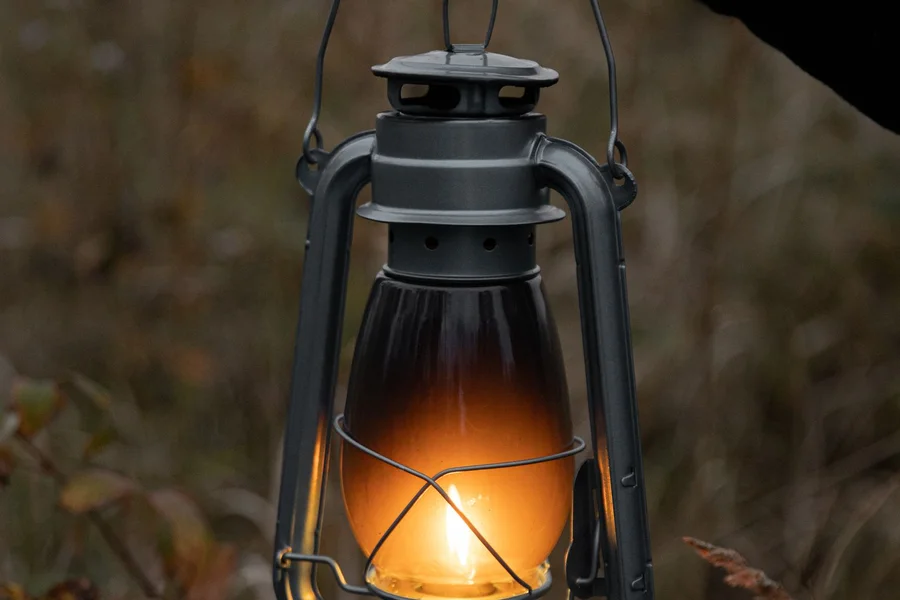
Lanterns do the work the string lights cannot, because they sit at eye level and light the plates, not the sky. Set one lantern at each end of the table and one in the middle of a long table, and keep the flame behind glass so a breeze does not blow it out. A pair in two heights, 11.5 inches and 7 inches, gives the table a stepped look without blocking a single sightline, and metal and glass survive a knock that would break a ceramic holder.
Problem 3: The Table Looks Bare in Daylight
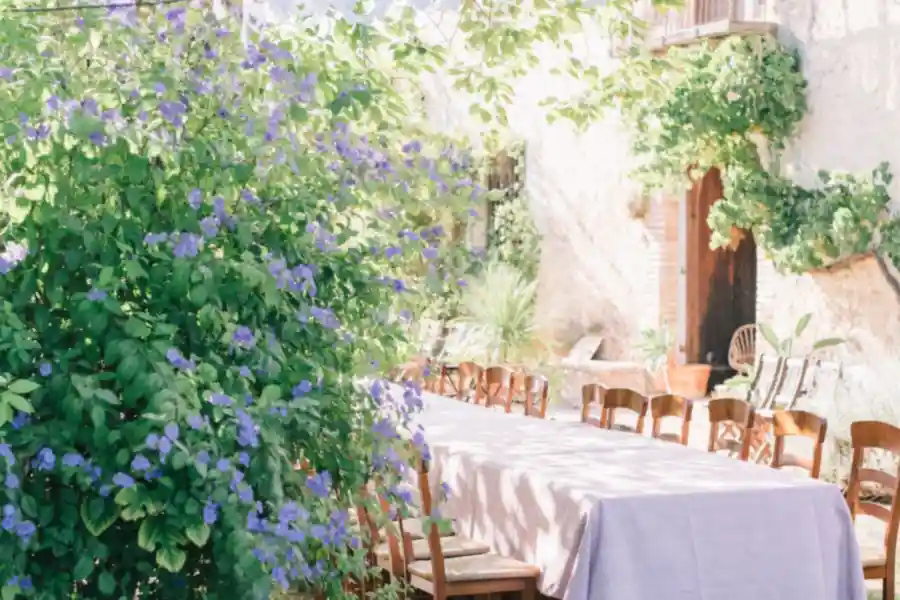
The failure is a bare wood table in bright daylight, where every plate sits on hard wood and the table reads as unfinished, not minimal. Daylight is honest, and a table with no cloth, no placemats, and no low centerpiece shows every scratch and every empty inch. The fix is one cloth, one palette, and one low centerpiece, in that order, because the cloth sets the color, the placemats set the places, and the centerpiece finishes the table without blocking a single view.
The palette fork is the decision that saves the most money, because it stops the table from collecting colors that fight the garden. Coastal blue and white suits a bright patio with pale stone, terracotta and herb garden suits a green garden with wood, citrus and linen suits a table that needs energy, and neutral linen and rattan suits a table that must work every week.
The cloth itself has to survive outdoors, which means waterproof and stain resistant, wrinkle free, and machine washable. A 60 by 84 inch cloth fits a 72 inch table with a drop at each end, and a linen textured polyester blend gives the look of linen with the care of polyester. Real linen wrinkles in the first hour and stains the first time a glass tips, so the blend is the honest choice for a table that eats outside every week.
Also solves this: a bare table in bright daylight
Pureegg Rectangle Linen Tablecloth: 60 x 84 Inch, Cream, Ivory
A waterproof and stain resistant tablecloth, wrinkle free, machine washable, and quick drying as printed, in a linen textured polyester blend. Not for: a reader who wants real linen, the fabric type prints polyester, so this is a linen textured blend, never pure linen.
Check Price on Amazon → (paid link)
Problem 4: Chairs Hurt and Cushions Fly
The failure is a chair that punishes dinner guests, because the seat is too low, the back has no curve, and the cushion blows off the chair before the main course. A chair that hurts after an hour ends the evening early, and a cushion that flies across the patio is a joke the first time and a chore the second. The fix is the chair test from the audit: sit in every chair for two hours with a real meal, and buy the chair that passes, not the chair that photographs best.
The numbers are the same indoors and outdoors: a chair seat at 17 to 19 inches, a table height of 29 to 30 inches, and an armrest that lets a diner push back from the table without standing. A curved back and a supportive armrest matter more outdoors, because guests sit longer when the evening is warm, and a chair with no arms forces every diner to hold themselves upright for two hours. A dining nook indoors faces the same test at a tighter scale, as shown in dining nook ideas, where the chair, not the table, decides whether the spot gets used.
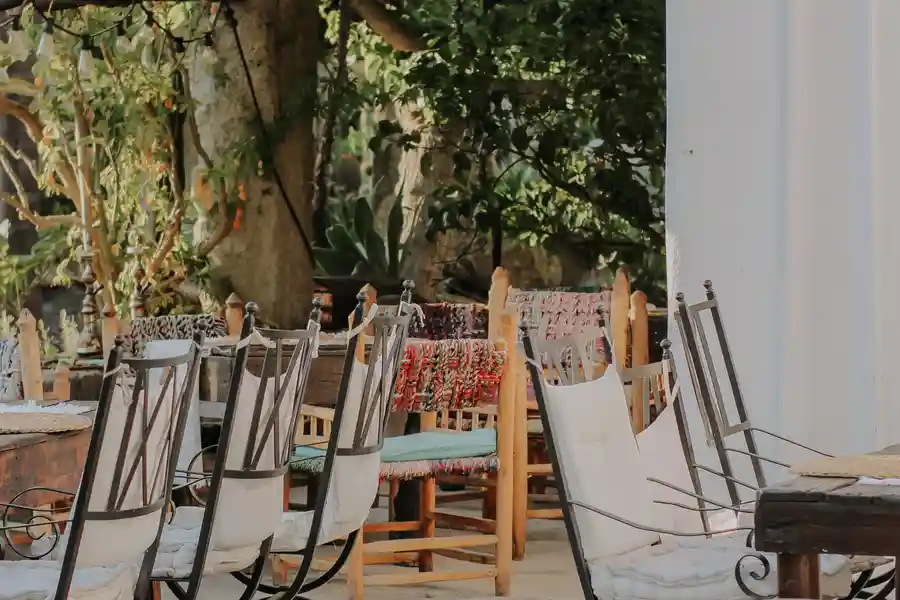
Cushions need a plan, not a hope. Choose cushions with washable covers, tie them to the chair or take them inside before the wind rises, and store them dry after dinner, because a damp cushion mildews and a loose cushion flies. A set of four handwoven rattan armchairs with a sturdy iron frame holds its shape where a light folding chair bends, and UV resistant weave keeps its color after a season in the sun.
Problem 5: Plates Break and Glasses Tip
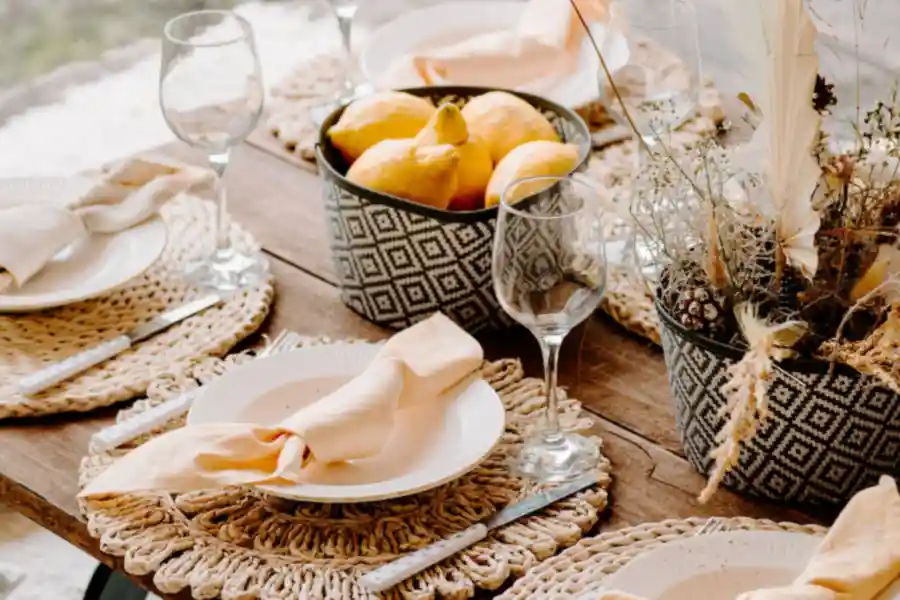
The failure is glass on stone, because one tipped wine glass ends the evening, one dropped plate chips on the patio, and every diner eats carefully instead of relaxing. Outdoor dining needs tableware that survives a drop, and the rule is simple: melamine for plates and bowls, acrylic for wine glasses, and woven placemats under each plate so the setting stays put. Glass belongs in the kitchen, not on a stone patio, and a table that uses unbreakable tableware lets guests eat without guarding their plates.
The layer order matters, because each layer protects the one above it. Cloth or runner first, then a woven placemat at each place, then the melamine dinner plate, then the salad plate, then the bowl, then the glass, then the napkin, with the low centerpiece last. Linen does the same job indoors, as shown in linen curtain ideas, where a soft layer under a hard surface is the detail that makes the room feel finished.
Melamine looks like ceramic and will not break if it drops, which is the whole point outdoors, and a set for four with a dinner plate, a salad plate, and a bowl covers the ordinary meal. Wash it on the top rack of the dishwasher, and never put melamine in the microwave, because melamine must not be heated in a microwave. The floral green pattern suits a garden table, and the 10.75 inch dinner plate, 8.5 inch salad plate, and 7.5 inch soup bowl give the table the same proportions as ceramic, without the breakage.
Also solves this: plates that break on stone
Lechoo Floral Melamine Dinnerware Set: 12 Piece, Service for 4, Green
A 12 piece set for four, with 10.75 inch dinner plates, 8.5 inch salad plates, and 7.5 inch soup bowls, in 100 percent melamine, shatterproof, BPA free, and dishwasher safe as printed. Not for: microwave or oven use, melamine must not be heated in a microwave.
Check Price on Amazon → (paid link)
Also solves this: plates that slide on a damp cloth
Lynnerson Round Woven Placemats: Set of 4, 12 Inch, Boho Farmhouse
A set of four round hand woven placemats, 12 inches across, in water hyacinth, to anchor each place setting. Not for: a reader who wants real rattan, the material printed is water hyacinth, so the draft says water hyacinth and never claims rattan as the material.
Check Price on Amazon → (paid link)
Wine glasses need the same treatment as plates, because a real wine glass on a stone patio is a breakage waiting for a breeze. Acrylic Tritan glasses in muted colors are unbreakable, shatterproof, BPA free, and reusable, and each glass in its own color stops guests from mixing up their drinks. Hand wash only, so the glasses dry on a rack after dinner, and 15 ounces each gives a proper pour without a heavy glass that tips easily.
Also solves this: wine glasses that break on stone
The Wine Savant Stemmed Wine Glasses: Set of 6, Acrylic Tritan, 15oz, Muted Color
Six stemmed glasses in Tritan acrylic, unbreakable, shatterproof, BPA free, and reusable, 15 ounces each and 9 inches tall as printed, each glass in its own muted color. Not for: dishwasher use, hand wash is printed, so the draft says hand wash only.
Check Price on Amazon → (paid link)
Problem 6: The Ground Has No Zone
The failure is a table dropped on bare patio with no rug, no shade plan, and no bug plan, so the chairs scrape, the sun moves across the food, and the evening ends when the bugs arrive. A table needs a zone, and the zone is the rug, the shade, and the light together.
The rug math is the same as indoors: at least 24 inches beyond the table edge on every side, so chairs stay on the rug even when pulled out, and 24 to 30 inches per side is the safer range. Leave 12 inches between the rug and the wall.
A 72 by 36 inch table on an 8 by 10 foot rug leaves 24 inches at each end and 30 inches along the sides, which is the standard fit, and a rug that is too tight catches chair legs every time a diner pulls out. A warm neutral palette that shares tones with the kitchen works the same way indoors, as shown in warm neutral kitchen color ideas, where one palette across the rooms beside each other keeps the house calm.
The umbrella math is simpler: a 9 foot canopy shades a 72 inch table, and the table sits where the shade will be at dinner time, not where it is at noon. A market umbrella with a push button tilt and crank lets you follow the sun, and 8 sturdy ribs hold the canopy steady in a breeze. No base is printed as included for the umbrella in this article, so check the base and use a weighted base, and close the umbrella in strong wind, because an open umbrella in a gust lifts the table with it.

Also solves this: a table with no zone under it
Gertmenian Indoor Outdoor Area Rug: Classic Flatweave, 9×13 Ft Extra Large, Palm Ginger Leaf
A flatweave indoor outdoor rug in polypropylene with UV stabilization, water and stain resistant, washable by garden hose, and quick drying as printed, in sizes from 5×7 foot to 9×13 foot plus a runner. Not for: a reader who wants the 9×13 size as the only size, the draft presents the 8×10 variant as the dining fit, and a reader who wants a machine washable rug, the listing says hose wash.
Check Price on Amazon → (paid link)
Also solves this: sun that moves across the food
Abba Patio Patio Umbrella: 9ft, Push Button Tilt and Crank, 8 Sturdy Ribs, Beige
A 9 foot market umbrella with push button tilt and crank, auto tilt, and 8 sturdy ribs as printed, in beige. Not for: a reader who wants a base included, no base inclusion is printed in the verifying source, so check the base and use a weighted base, and close the umbrella in wind.
Check Price on Amazon → (paid link)
The bug and rain plan is a system, not a sentence. Set one citronella lantern at each end of the table, never on the plates, cover food when it is not being served, and keep a cover within reach for a sudden shower.
A 6.7 ounce lantern with 70 plus hours of burn time is one layer among the light, never the whole bug solution, and no candle guarantees no bites, so the plan also includes covered food and a quick clear away. After dinner, bring the cloth, cushions, and lanterns inside, hose off the rug and let it dry in the sun, and leave the table ready for the next meal with a five minute reset, not a full rebuild.
Also solves this: an evening that ends when the bugs arrive
Coleman Citronella Candle Outdoor Lantern: 70 Plus Hour, 6.7 oz, Red
A citronella candle lantern with 70 plus hours of burn time as printed, 6.7 ounces, with a carry and hang handle, infused with natural citronella oil. Not for: a reader who wants a large table candle, this is 6.7 ounces, so the draft presents it as one lantern among the light layers, never as the whole bug solution.
Check Price on Amazon → (paid link)
Steal This Look: Two Al Fresco Tablescape Palettes, Named
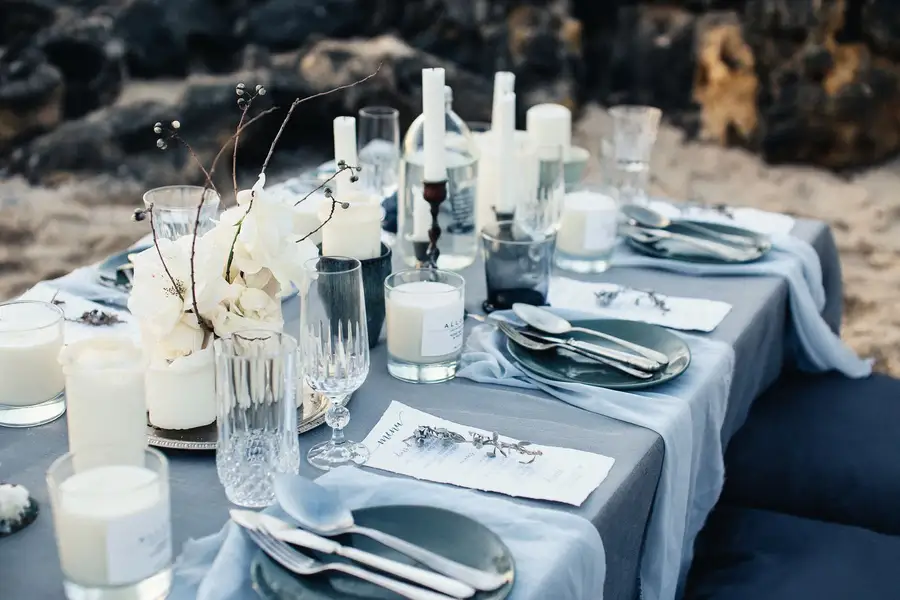
Two palettes cover most gardens, and the choice is the setting, not the trend. Coastal blue and white suits a bright patio with pale stone: pale blue cloth, white melamine, woven placemats, clear acrylic glasses, white flowers, and string lights overhead. Terracotta and herb garden suits a green garden with wood: cream linen textured cloth, terracotta plates, woven placemats, green herbs as centerpiece, and lanterns at table level.
The look steals cleanly because every layer is named, and the buy order is the palette order: cloth first, then placemats, then plates, then glasses, then centerpiece, then light. A palette borrowed from indoors works the same way, as shown in japandi dining room ideas, where one warm palette across the table, the chairs, and the light keeps the room calm without a single extra object. Outdoors, the same rule holds, and the garden does the rest.

6 Al Fresco Dining Tablescape Mistakes
- A tall centerpiece that blocks sightlines across the table.
- Glass plates and real wine glasses on stone, where one tip breaks the evening.
- A tablecloth with no clips, lifted by the first breeze.
- One lantern in the middle of a long table, leaving both ends dark.
- Chairs with no cushions for a two hour dinner.
- A rug too tight for pulled out chairs, so chair legs catch the edge.
Every mistake above is a skipped audit check, and every one is cheap to fix before guests arrive. Run the wind test, the light test, and the place setting test in order, and the mistakes never reach the table, because the audit catches them while the table is still empty.
Budget Plans
The no furniture plan is clips, citronella, woven placemats, one branch in a vase, and nothing else. That set suits a household that eats indoors most nights and wants one outdoor meal a week, because it buys the wind fix and the bug plan before any furniture, and it leaves the table usable on the first evening.
The shade and light plan adds an umbrella, string lights, and lanterns to the no furniture set. That plan suits a patio with no shade, because shade and light are the two fixes that decide whether the table gets used after dusk, and both arrive before the table and chairs.
The full table plan adds a table, chairs, rug, tablecloth, melamine set, and glasses in one palette to the shade and light plan. Buy in the order listed, so a paused budget leaves a finished looking table at every step, and stop when the table works on an ordinary weeknight as well as when guests come.
FAQs
1. What is an al fresco dining tablescape?
Ans: An al fresco dining tablescape is a dining table set outdoors in the open air, with the cloth, plates, glasses, centerpiece, and light chosen to work outside. The word al fresco means in the open air, and the tablescape is the whole arrangement, not one decoration. A good one holds up in wind, shades the food from sun, and lets diners see each other across the table. The test is an ordinary dinner eaten at it, not a photo.
2. How do I keep a tablecloth from blowing away outdoors?
Ans: Clip the cloth to the table before you set anything on it. Use stainless steel clips that fit the table thickness, one at each corner and one at the middle of each long side. A heavy cloth helps, and a runner with weights at the ends holds better than a light cloth with nothing on it. Close the umbrella in strong wind, because an open umbrella catches the wind and lifts the cloth with it. Bring the cloth inside after dinner so it stays dry for the next meal.
3. What plates are best for outdoor dining?
Ans: Melamine plates and bowls are the best choice for most outdoor tables, because they look like ceramic and will not break if they drop on stone or decking. Choose a set with a dinner plate, a salad plate, and a bowl, and wash it on the top rack of the dishwasher. Never put melamine in the microwave. Pair it with acrylic Tritan wine glasses, which are unbreakable and hand wash only, and woven placemats under each plate so the setting stays put.
4. How low should an outdoor centerpiece be?
Ans: Keep the centerpiece at or below 12 inches tall, so diners can see each other across the table. One low arrangement works on a table for four, and a row of low bud vases spaced down the center works better on a long table. Fruit, herbs, and cut greenery make a good centerpiece because they are heavy enough to stay put in a breeze. Never place a tall arrangement in the middle of the table, because it blocks conversation and catches the wind.
5. How do I light an outdoor dining table at night?
Ans: Use two layers of light. Hang string lights overhead so the whole table glows, and set lanterns with candles in hurricane glass at table level so each place setting is lit. Test both layers at dusk, before guests arrive, and keep a spare set of batteries or a charged panel nearby. Avoid one bright light in the middle of the table, because it leaves both ends dark and shines in diners’ eyes.
Bottom Line
Wind first, shade second, light third: run the tape test, clip the cloth, hang the string lights, set the lanterns low, then choose the palette. That order is the whole article in one line, and it is also the order to shop in.
An al fresco dining tablescape earns its place from order, not from expense alone. One low centerpiece, chairs that hold a two hour dinner, a rug that fits the table, plates that survive a drop, and light in two layers do more than any single purchase can. Start with the audit, buy in the tier order, and stop when the table works on an ordinary weeknight as well as when guests come.
Save this al fresco dining tablescape audit for your next outdoor dinner, and run it in order: wind test first, shade second, light third, then buy the plates only when the table fits and the light is warm.
Photos via Pexels. Photo credits: hero and featured, Rachel Claire, Pexels ID 5864503; string lights, Raphael Loquellano, Pexels ID 8893502; table wood, photographer not printed on the Pexels page, Pexels ID 33526976; linen, Leeloo The First, Pexels ID 4622292; chairs, Nati, Pexels ID 12991640; table setting, Katrina Justovica, Pexels ID 7958223; umbrella, Ksu and Eli Studio, Pexels ID 8681388; lantern, Monstera Production, Pexels ID 5635100; evening glow, ArtHouse Studio, Pexels ID 4641201.