
Winter Bedding Ideas: How to Layer a Bed for Cold Nights
Winter Bedding Ideas: How to Layer a Bed for Cold Nights
winter bedding ideas start with the room, not the shopping cart. The bed feels cold at night because the sheet is cold against the skin, the duvet is the wrong weight for the room, and the layers are in the wrong order, so the sleeper wakes up cold at 3 in the morning with no layer left to pull up. One thick blanket will not fix it, and a new duvet cover will not fix it either. The fix is a system with three parts: a warm base layer against the skin, the right tog weight in the middle, and a top layer that can be added or folded back as the night changes.
You get the measurements first, the bedroom temperature that suits most sleepers, the tog bands that match each room temperature, the bed sizes that decide every buy, and the wash cadence that keeps winter bedding fresh, then the twelve researched picks in buy order, from the flannel sheet set to the pillows, mapped to three tiers, Starter, Standard, and Full, so you buy to a tier, not to a guess.
The numbers here come from the guides that publish them, the Sleep Foundation, the Centers for Disease Control and Prevention, the Cleveland Clinic, and the tog guides that agree on the bands, and each figure in the table below names its source. Where the sources disagree, this guide shows both numbers and names the split, because a guide that hides a disagreement asks you to trust it instead of checking it. Measure your room, read the table, and the rest of the bed follows.
How these picks were chosen: each pick was researched from listing and source pages and checked at the publish date. No star rating is claimed for any pick. Check size, color, and contents on the listing before ordering, because listings and variants change. Where a detail cannot be verified, it is left out rather than guessed.
Affiliate disclosure: This article contains affiliate links to products on Amazon. As an Amazon Associate I earn from qualifying purchases. The price you pay stays the same, and the commission helps keep The Decor Root running.

Winter Bedding Ideas: Measure the Room, Pick the Tog, Layer the Bed
Measure the room first in your head, because the room is the number every other choice hangs from. Most adults sleep best in a bedroom near 65 degrees Fahrenheit, per the Sleep Foundation, which puts the comfortable range at 65 to 68 degrees, and the Centers for Disease Control and Prevention gives the same 65 to 68 degree range. A bed in a room at 65 degrees needs a winter-weight duvet, while the same bed in a room at 70 degrees needs a lighter one, so the thermostat reading decides the tog before the catalog does.
| Measure | Figure | Source |
|---|---|---|
| Bedroom temperature for sleep, most adults | 65 to 68F | Sleep Foundation, CDC |
| Bedroom temperature for sleep, wider band | 60 to 67F | Cleveland Clinic |
| Tog, summer weight | 4.5 or below, room above 18C | Havenhart, Cloudpillo, Linen Gazette |
| Tog, year-round weight | 7.5 to 10.5, room 15 to 18C | Havenhart, Cloudpillo, Home Gear Today |
| Tog, winter weight | 12 to 13.5, room below 15C | Havenhart, Cloudpillo, Linen Gazette |
| Tog, extra-warm winter weight | 15, room below 16C | Linen Gazette, Cloudpillo |
| Tog, all-season pair combined | 4.5 plus 9, fastened together, 13.5 total | Home Gear Today |
| Twin bed size | 38 by 75 in | Standard US bed sizes |
| Full bed size | 54 by 75 in | Standard US bed sizes |
| Queen bed size | 60 by 80 in | Standard US bed sizes |
| King bed size | 76 by 80 in | Standard US bed sizes |
| Duvet insert, queen, Utopia | 88 by 88 in | Utopia Bedding |
| Duvet cover, queen, Bedsure waffle | 90 by 90 in, 3 pieces | Bedsure |
| Quilt, queen, Bedsure | 90 by 96 in, 3 pieces | Bedsure |
| Wool blanket, Full and Queen, Pendleton | 90 by 96 in | Pendleton |
| Heated blanket, queen, Sunbeam | 90 by 84 in, 12 heat settings | Sunbeam |
| Heated blanket auto shut-off | 1 to 12 hour selectable auto shut-off | Sunbeam |
| Weighted blanket, 15 lb, YnM | 60 by 80 in, for one person near 140 lb | YnM |
| Fleece throw, Bedsure | 50 by 60 in | Bedsure |
| Mattress topper, queen, Linenspa | 59 by 79 by 3 in | Linenspa |
| Sheets, wash cadence | Once a week, every 3 to 4 days with a pet on the bed | Sleep Foundation |
| Duvet cover, wash cadence | Once every 2 weeks to a month | Sleep Foundation |
| Comforter and blanket, wash cadence | Once every 2 to 3 months | Sleep Foundation |
One number in the table deserves a second look, because the sources do not agree on it. On bedroom temperature for sleep, the Sleep Foundation and the Centers for Disease Control and Prevention both give 65 to 68 degrees Fahrenheit, while the Cleveland Clinic gives a wider band of 60 to 67 degrees, so this guide uses the 65 to 68 degree figure as its rule and names the Cleveland Clinic band, because the 65 degree starting point suits a layered bed, and a sleeper who runs warm can drop toward 60 with the same layers.
A second split sits inside the tog bands, not the table. Tog guides agree on the bands, 4.5 for summer, 7.5 to 10.5 for year-round use, and 12 to 15 for winter, yet the exact cut-offs vary a little from shop to shop, per Havenhart, so read the bands as bands, not walls. A cold sleeper in a room at 17 degrees wants the 10.5 end of the year-round band, and a warm sleeper in the same room wants the 7.5 end, and the layer on top decides the rest.
Layer in order, from the mattress up, because the order is what makes the bed adjustable. The fitted sheet touches the skin, the flat sheet or blanket sits above it, the duvet insert carries the main warmth, and the throw or quilt folds across the foot, so a sleeper who wakes up warm at 2 in the morning folds back one layer instead of waking up fully to rebuild the bed. The layer order below follows that order, and the buy order follows it too.
The winter bedroom thinking behind this section, how a measured room carries a whole plan, lives in winter bedroom ideas.
Measure First: Room, Tog, and Bed Size
Measure the room before you shop, because the room decides the tog, and the catalog decides none of it. Read the bedroom temperature at 6 in the morning on a cold night with a plain thermometer, because the morning reading is the coldest reading, and the duvet that suits the evening will not suit the dawn. Then measure the bed, length and width, and the mattress depth, because a duvet insert at 88 by 88 inches drapes one way on a queen and another way on a king, and a fitted sheet that pops off at 2 in the morning is a sheet bought for the wrong depth.
Read the sleeper too, with honesty, because the tog that suits a cold sleeper suffocates a warm sleeper in the same room. A cold sleeper wants the higher end of the band for the room, a warm sleeper wants the lower end, and two sleepers who disagree want two duvets, not one compromise that leaves both awake. The sheet below is the first buy because it touches the skin all night, and the flannel that feels warm the moment you climb in is the layer that decides whether the rest of the bed even matters.
Cost, idea 1, the flannel sheet set: a mid-cost fix, one set that covers the whole bed, and the layer the skin meets first.
The layered bedding thinking behind this section, how one warm base layer carries the whole bed, lives in layered bedding ideas.
The Main Warmth: The Duvet Insert
The duvet insert carries the main warmth, because the sheet warms the skin and the insert traps the heat. A down alternative insert in a box-stitched shell holds its fill in place through the night, so the warmth stays even across the bed instead of drifting to the edges, and the corner tabs hold the cover in place, so the insert never bunches inside the cover at 3 in the morning. The insert below is a queen at 88 by 88 inches, in siliconized fiberfill, machine washable, per Utopia Bedding, and the 300 GSM fill weight per the roundup puts it in the all-season band, which is the right starting point for a room that stays near 65 degrees.
Pick the insert by the room, not by the loft alone. A lofty insert looks warmer in the photo and sleeps warmer only when the room is cold enough to need it, so a heated room with a winter-weight insert is a room where the sleeper wakes up sweating. Match the insert to the tog band for the morning room temperature, then let the throw on top carry the coldest nights, because a throw folds back in seconds and a duvet swap takes a whole morning.
Size the insert to the bed with drape in mind. A queen insert at 88 by 88 inches drapes modestly on a queen bed, while a 90 by 90 inch cover gives a little more drop on each side, per the roundup, so buy the cover one step larger than the insert when the bed sits high or the mattress runs deep. Wash the insert by the label, and air it on a dry winter morning, because a fresh insert lofts better than one that has slept flat for a season.
Cost, idea 2, the duvet insert: a mid-cost fix, one buy that carries the main warmth, and the pick that decides the tog.
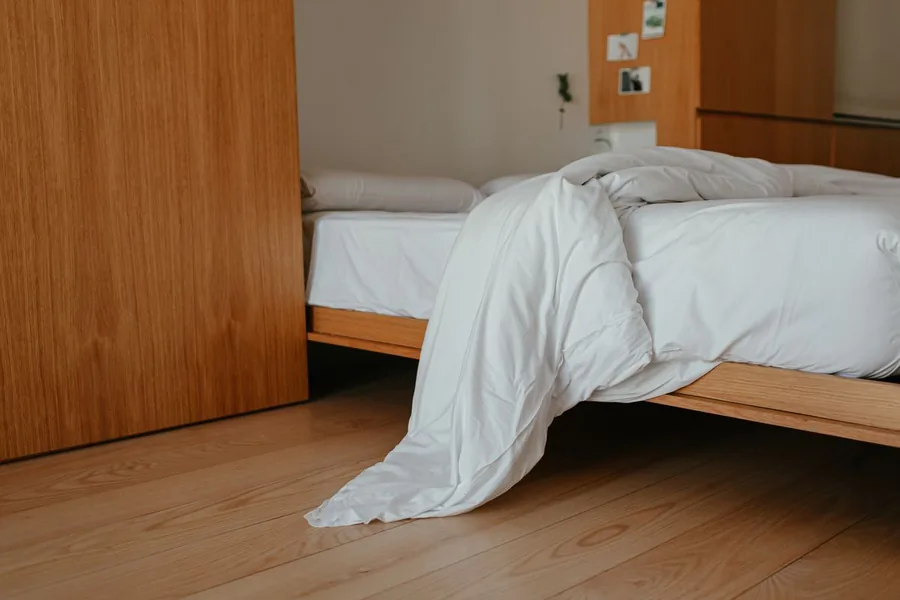
The flannel thinking behind this section, how a warm base layer carries a cold night, lives in flannel and textured bedroom ideas.
Warmth on Demand: The Heated Blanket
Warmth on demand is the fix for the bed that is cold at bedtime and fine by midnight, because a heated blanket warms the bed before you climb in and then steps back. Run it on a low setting for twenty minutes before bed, climb into a warm bed, and turn it down or off, because a bed that starts warm needs less duvet through the night. The blanket below is a queen at 90 by 84 inches, with 12 heat settings and a 1 to 12 hour selectable auto shut-off, per Sunbeam, and the controller remembers the last setting and dims after 10 seconds, so the light never wakes the room.
Choose the heated blanket by the safety features, not by the softness alone. Auto shut-off is the feature that matters, because a blanket left on high all night is a blanket that overheats the sleeper and the bed, and overheat protection is the second feature that matters, because it cuts the heat when the blanket folds or bunches. Never fold a heated blanket while it is on, never tuck it under the mattress while it is on, and never run it under another heavy blanket, because the heat needs somewhere to go.
Wash it by the label, with the controller detached, and check the cord each winter before the first use, because a cord that has spent the summer folded in a closet is a cord that deserves a look before it carries heat again. A heated blanket is the only pick in this guide that uses power, so treat it like an appliance, not like a throw.
Cost, idea 3, the heated blanket: a mid-cost fix, one buy and a plug, used in short runs before bed.
Weight That Warms: The Weighted Blanket
A weighted blanket warms by weight, because the weight holds the blanket against the body and stops the cold air from slipping in at the edges. A 15 pound blanket at 60 by 80 inches suits one person near 140 pounds on a queen bed, per YnM, and the rule behind it is about 10 percent of body weight, so a lighter sleeper wants a lighter blanket and a heavier sleeper wants a heavier one. The weight is the warmth here, not the thickness, and a blanket that is too heavy for the sleeper is a blanket that gets kicked off by midnight.
Choose the weighted blanket by the sleeper, not by the bed. A queen bed shared by two sleepers needs two blankets or one king weight, because one 15 pound blanket covers one sleeper, and the second sleeper gets the edge that never stays tucked. Glass beads in sewn compartments keep the weight even, so check that the listing sews the beads into compartments, because loose beads drift to the foot and leave the chest cold.
Wash it by the label, and dry it flat when the label asks, because a weighted blanket that goes into a dryer on high heat is a blanket that clumps. Use it over the duvet on the coldest nights and under the throw on the milder ones, because the weight works in either spot and the throw folds back when the weight stays.
Cost, idea 4, the weighted blanket: a mid-cost fix, one buy that warms by weight, sized to one sleeper.

Also solves this: the blanket edge that lets cold air in all night, not the duvet that needs a heavier fill
YnM Exclusive Weighted Blanket, 15 lb, 60 by 80 in, Dark Grey, Queen Bed
Weighted blanket, 15 lb, 60 by 80 in, dark grey, glass beads in sewn compartments, for one person near 140 lb on a queen or king bed, as printed. The weight holds the blanket against the body and stops cold air at the edges. Not for: a reader who wants one blanket for two sleepers, since this 15 lb blanket is sized for one person, or a reader who wants a light throw, since this one weighs 15 lb by design.
Check Price on Amazon → (paid link)
The white linen thinking behind this section, how weight holds warmth against the body, lives in white linen bedroom ideas.
The Wool Layer: A Blanket That Breathes
Wool warms and breathes at once, because the fiber traps air for warmth and lets vapor pass, so the sleeper stays warm without waking up damp. A 100 percent wool blanket at 90 by 96 inches covers a Full or Queen bed with drape to spare, per Pendleton, and the Eco-Wise line is machine washable, so the heirloom fiber survives a real laundry routine. Wool is the layer for the sleeper who runs warm under a heavy duvet yet cold under a light one, because wool adjusts through the night in a way that polyester never does.
Choose the wool blanket by the weave and the wash label, not by the pattern alone. A tightly woven wool blanket blocks drafts at the edge, and a washable wool blanket is the one that stays in use, because a blanket that needs dry cleaning ends up folded in the closet by February. Air the wool blanket on a dry winter morning, because wool sheds odors in fresh air and needs less washing than cotton.
Lay the wool blanket over the duvet, not under it, because wool on top traps the heat the duvet holds and blocks the draft at the edge, while wool under the duvet gets compressed and loses the air that makes it warm. Fold it across the foot in the milder weeks and pull it up on the coldest nights, because the wool layer is the adjustable layer that makes the whole bed flexible.
Cost, idea 5, the wool blanket: the highest-cost fix in this guide, one heirloom buy that warms for years.
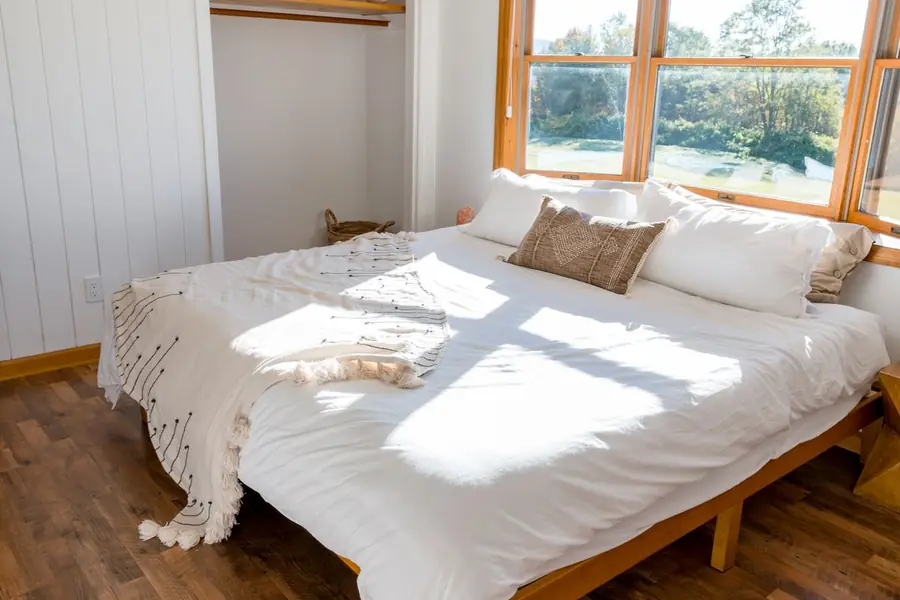
Also solves this: the sleeper who runs warm under a heavy duvet yet cold under a light one, not the sleeper who needs more fill
Pendleton Eco-Wise Easy Care 100 Percent Wool Blanket, Full and Queen, 90 by 96 in, Charcoal, Model ZA17452307
Wool blanket, 100 percent wool, Full and Queen, 90 by 96 in, charcoal, whipstitch binding, machine washable, all-season weight, model ZA17452307, as printed. The wool layer that warms and breathes through the night. Not for: a reader who wants a light throw, since this blanket covers the whole bed at 90 by 96 in, or a reader with a wool allergy, since this blanket is 100 percent wool. Confirm the buy box live at publish, because the Amazon price was blank at research time and third-party offers were the ones listed.
Check Price on Amazon → (paid link)
The winter lighting thinking behind this section, how one warm layer carries a cold night, lives in winter lighting ideas.
The Foot-of-Bed Throw: The Fleece Layer
The throw at the foot of the bed is the layer that adjusts the fastest, because it folds back in one motion and pulls up in one motion, with no duvet swap and no blanket hunt. A fleece throw at 50 by 60 inches covers the feet and the lower legs, which is where the cold creeps in first, and the throw that lives folded at the foot is the throw that gets used, while the throw that lives in the closet never does. The throw below is a Bedsure soft fleece at 50 by 60 inches in grey, per the listing, light enough to fold back and warm enough to matter.
Choose the throw by the weight and the wash label, not by the color alone. A throw that washes and dries in one cycle is the throw that stays fresh through the winter, because the foot-of-bed layer collects more wear than any other layer on the bed. Keep a second throw in rotation while the first one is in the wash, because a throw that is always in the laundry is a throw that is never on the bed.
Drape the throw across the foot with the fold toward the head, so the sleeper pulls it up by the fold and the whole layer comes up in one motion. Ruffle the throw on each side before draping it, per the Macy’s guide, because a throw that lies flat looks like a blanket and a throw that drapes looks styled. The throw is the cheapest warmth in this guide, and the fastest to use.
Cost, idea 6, the fleece throw: the lowest-cost fix in this guide, one throw that adjusts the whole bed in one motion.

Also solves this: the feet that go cold first, not the whole bed that needs a heavier duvet
Bedsure Soft Fleece Throw Bed Blanket for Couch, Grey, 50 by 60 in
Soft fleece throw, grey, 50 by 60 in, lightweight, fuzzy, cozy, machine washable, as printed. The foot-of-bed layer that folds back in one motion and pulls up in one motion. Not for: a reader who wants a throw that covers the whole bed, since this one is 50 by 60 in and covers the feet and lower legs, or a reader who wants a heavy wool layer, since this one is light fleece by design.
Check Price on Amazon → (paid link)
The winter rug thinking behind this section, how one warm layer at the foot carries the whole night, lives in winter rug ideas.
The Cover That Adds Warmth: The Duvet Cover
The duvet cover adds warmth of its own, because a flannel or waffle cotton cover over the insert traps one more thin layer of air, and the cover is the layer that washes weekly while the insert washes rarely. A 100 percent cotton waffle weave cover at 90 by 90 inches, with two shams, per Bedsure, gives the bed texture without a print, and the waffle face with a smooth percale reverse puts the soft side against the skin. The cover below is the Bedsure cotton waffle set in olive green, 3 pieces, machine washable, per the listing.
Pick the cover by the closure and the ties, not by the color alone. Eight interior corner ties hold the insert in place, per the roundup, and a hidden button closure keeps the insert from escaping at the foot, so the cover that ties is the cover that stays put. A cover without ties is a cover that bunches by Thursday, and a bunched insert is a cold spot that no throw can fix.
Wash the cover every two weeks to a month, per the Sleep Foundation, and wash it weekly when no flat sheet sits between the skin and the cover, because the cover then carries the skin contact all night. Buy the cover one step larger than the insert when the bed sits high, because a cover that drapes covers the mattress edge and a cover that barely reaches leaves the edge cold.
Cost, idea 7, the duvet cover: a mid-cost fix, one set that adds warmth and washes weekly.
Warmth From Below: Topper and Protector
Warmth from below is the layer most winter guides skip, because the cold rises from the mattress as surely as it falls from the window. A 3 inch gel memory foam topper at 59 by 79 inches, per Linenspa, adds a soft layer between the sleeper and the cold mattress, and the gel infusion keeps the foam from holding heat the way plain foam does. The topper below is CertiPUR-US certified, in a 3 inch plush profile, model LS30QQ30GT, per the listing, and the 2 inch and 4 inch profiles exist for sleepers who want less or more.
The protector is the layer that guards the topper and the mattress, because a topper that absorbs a spill is a topper that smells by spring. A waterproof terry protector at 200 GSM, with deep pockets that stretch to fit the mattress plus the topper, per Utopia Bedding, keeps the bed dry without the crinkle of a plastic sheet, and the fitted style stays put through the night. Measure the mattress depth with the topper on it before ordering, because a protector bought for the mattress alone will not stretch over the topper.
Air the topper for a day before the first sleep, because memory foam arrives compressed and needs a day to reach its full loft, and the first night on a flat topper is the night the topper gets blamed for the cold. Wash the protector by the label, and the topper never goes in the washer, because foam that soaks through never dries the same again.
Cost, idea 8, the topper: a mid-cost fix, one layer that warms the bed from below.
Cost, idea 11, the protector: a low-cost fix, one buy that guards the topper and the mattress.

Also solves this: the cold that rises from the mattress, not the cold that falls from the window
LINENSPA 3 Inch Gel Swirl Memory Foam Mattress Topper, Cooling Gel Infused, CertiPUR Certified, Queen, Model LS30QQ30GT
Gel memory foam topper, 3 in, queen, 59 by 79 by 3 in, gel infused, pressure relieving, CertiPUR-US certified, model LS30QQ30GT, as printed. The soft layer between the sleeper and the cold mattress. Not for: a reader who wants a firm bed, since this topper is plush and softens the mattress, or a reader who wants a topper that goes in the washer, since foam never goes in the washer.
Check Price on Amazon → (paid link)
Also solves this: the topper that needs guarding from spills, not the mattress that needs a new cover
Utopia Bedding Queen Size Mattress Protector, Waterproof, Premium 200 GSM Terry, Deep Pockets, White
Waterproof mattress protector, queen, premium 200 GSM terry, fitted sheet style, stretchable deep pockets, soft and breathable, as printed. The guard that keeps the topper and the mattress dry without a plastic crinkle. Not for: a reader who measures the mattress without the topper on it, since the pockets must fit the mattress plus the topper, or a reader who wants a zippered encasement, since this one is a fitted protector.
Check Price on Amazon → (paid link)
The Christmas bedding thinking behind this section, how warmth from below carries a cold night, lives in christmas bedding and linen ideas.
The Adjustable Layer: Quilt and the Hot Sleeper Sheets
The quilt is the adjustable layer, because it sits between the duvet and the throw, and it folds back when the duvet alone is enough. A queen quilt at 90 by 96 inches, with two shams, in an 85 GSM brushed shell, per Bedsure, adds warmth without the weight of a second duvet, and the basket weave pattern gives the bed texture that a plain duvet never does. The quilt below is the Bedsure lightweight set in navy, 3 pieces, machine washable, per the listing, and the same quilt works as a bedspread in the milder weeks.
The hot sleeper needs a different sheet, because flannel that warms a cold sleeper overheats a warm one, and the warm sleeper in a winter bed wants a sheet that breathes. A microfiber sheet set in a 4 piece queen, per Mellanni, stays cool against the skin while the duvet above carries the warmth, so the warm sleeper gets the winter bed without the winter sweat. The set below is the Mellanni Iconic 4 piece set in ivory, wrinkle, fade, and stain resistant, per the listing, and the fitted sheet fits a deep pocket mattress.
Buy the quilt for the bed you have, not the bed you wish for, because a quilt at 90 by 96 inches drapes a queen with room to spare and hangs short on a king. Wash the quilt every 2 to 3 months, per the Sleep Foundation blanket cadence, and wash the sheets weekly, per the same source, because the sheet carries the skin contact and the quilt carries only the warmth.
Cost, idea 9, the quilt: a mid-cost fix, one set that adjusts the bed between the duvet and the throw.
Cost, idea 10, the hot sleeper sheets: a low-cost fix, one set that keeps the warm sleeper cool under a winter duvet.
Also solves this: the night that is too warm for the duvet yet too cold for the sheet alone, not the night that needs a heavier insert
Bedsure Quilts Queen Size, Lightweight Comforter Set, Navy Bedspread, 90 by 96 in, 3 Pieces
Lightweight quilt set, queen, 90 by 96 in, navy, basket weave, 85 GSM brushed shell, 3 pieces with two shams, machine washable, as printed. The layer between the duvet and the throw that folds back when the duvet alone is enough. Not for: a reader who wants a heavy winter quilt, since this one is lightweight by design, or a reader with a king bed, since this set is sized for a queen.
Check Price on Amazon → (paid link)
Also solves this: the warm sleeper who overheats under flannel, not the cold sleeper who needs more warmth
Mellanni Queen Sheets Set, 4 Piece Iconic Collection Bedding, Hotel Luxury, Ivory
Queen sheet set, 4 piece, Iconic Collection, ivory, microfiber, wrinkle, fade, and stain resistant, deep pocket fitted sheet, as printed. The cool sheet for the warm sleeper under a winter duvet. Not for: a reader who wants flannel warmth against the skin, since this set is microfiber and breathes, or a reader who wants cotton, since this set is microfiber by design.
Check Price on Amazon → (paid link)
The cozy fall bedroom thinking behind this section, how one adjustable layer carries the whole winter, lives in cozy fall bedroom ideas.
Warm Pillows, Then Buy in Order
Pillows are the last layer, because the head end of the bed decides whether the sleeper falls asleep warm or cold, and a flat pillow leaves the neck cold no matter how warm the duvet is. A shredded memory foam pillow in a 2 pack, with adjustable fill and a zippered machine-washable cover, per Beckham Hotel Collection, lets each sleeper set the loft, so the side sleeper takes more fill and the back sleeper takes less. The pillows below are the Beckham shredded memory foam 2 pack in queen, per the listing, and the adjustable fill is the feature that matters, because a pillow that cannot adjust is a pillow that suits one sleeper and fails the other.
Buy in order, because the order is what keeps the bed finished at every step, and a wool blanket bought before the room is measured is a blanket bought for the wrong tog. First, measure the room at 6 in the morning and the bed, and buy the flannel sheet set if you do not own one. Second, carry the main warmth, with a duvet insert matched to the tog band for the room, because the Starter tier, flannel sheets, fleece throw, quilt, protector, and hot sleeper sheets, changes the night without changing the bed.
Third, add the weight and the warmth, with a weighted blanket, a wool blanket, and a heated blanket for the coldest nights, and the Standard tier, Starter plus duvet insert, duvet cover, weighted blanket, and pillows, is the bed done for the winter.
Fourth, warm the bed from below, with a topper under the sheets and a protector over the mattress, and the Full tier, Standard plus heated blanket, wool blanket, and topper, is the bed finished.

Also solves this: the pillow that goes flat by midnight, not the duvet that needs more fill
Beckham Hotel Collection Shredded Memory Foam Pillow, 2 Pack, Queen, Adjustable Fill, Cooling
Shredded memory foam pillows, 2 pack, queen, adjustable fill, cooling, zippered machine-washable cover, as printed. The pillows that let each sleeper set the loft. Not for: a reader who wants a fixed loft pillow, since these pillows adjust by adding or removing fill, or a reader who wants down alternative, since these pillows are shredded memory foam by design.
Check Price on Amazon → (paid link)
Cost, idea 12, the pillows: a low-cost fix, one pair that lets each sleeper set the loft.
Pick the tier that matches the room, not the tier that matches the catalog. The Starter tier suits a bed where the sheet and the throw are the problem and no power is wanted. The Standard tier suits a bed that stays cold through the night, where a duvet insert and a weighted blanket fix the night in two buys.
The Full tier suits a bed that needs the base, the middle, the top, and the bottom fixed together, where the heated blanket, the wool blanket, and the topper are the difference between a bed that warms and a bed that stays cold. Whichever tier you pick, measure first, pick the tog, layer the bed, and buy in order, because the order is the method and the method is what keeps the bed finished.
Frequently Asked Questions
1. What tog duvet do I need for winter?
Ans: Match the tog to the morning room temperature, not to the calendar. A room above 18 degrees suits 4.5 tog, a room at 15 to 18 degrees suits 7.5 to 10.5 tog, and a room below 15 degrees suits 12 to 13.5 tog, per the tog guides. A room below 16 degrees suits 15 tog, per the Linen Gazette, and an all-season pair fastened together gives 13.5 tog, per Home Gear Today. Cold sleepers take the higher end of the band, warm sleepers take the lower end, and the throw on top covers the coldest nights.
2. How do I layer a bed for cold nights?
Ans: Layer from the mattress up, in this order: protector, topper, fitted sheet, flat sheet or blanket, duvet insert, quilt, then throw across the foot. The flannel sheet warms the skin, the duvet insert carries the main warmth, and the throw folds back when the night warms up. A sleeper who wakes up warm folds back one layer instead of waking up fully to rebuild the bed.
3. Are flannel sheets warmer than cotton sheets?
Ans: Yes, for the first minutes in bed and through a cold night. Flannel is cotton brushed on the face, so it traps air and feels warm the moment you climb in, while plain cotton feels cold until body heat warms it. The Eddie Bauer set in this guide is 100 percent cotton flannel, brushed three times, per the listing. A warm sleeper should skip flannel and use a breathable microfiber set instead, because flannel holds heat and a warm sleeper will overheat under it.
4. Is a heated blanket safe to sleep under all night?
Ans: Use it to preheat the bed, not to heat the sleeper all night. Run it on a low setting for twenty minutes before bed, climb into a warm bed, and turn it down or off, with the auto shut-off set every night. The Sunbeam blanket in this guide carries a 1 to 12 hour selectable auto shut-off and overheat protection, per the listing. Never fold a heated blanket while it is on, never tuck it under the mattress while it is on, and check the cord each winter before the first use.
5. How often should I wash winter bedding?
Ans: Wash sheets once a week, and every 3 to 4 days when a pet sleeps on the bed, per the Sleep Foundation. Wash the duvet cover once every 2 weeks to a month, and wash comforters and blankets once every 2 to 3 months, per the same source. A cover washes weekly when no flat sheet sits between the skin and the cover, because the cover then carries the skin contact all night. Always follow the care label on each piece, because the label overrules any general cadence.
Quick Check Before You Order: Measure the Room, Pick the Tog, Layer the Bed
winter bedding ideas come down to this: measure the room at 6 in the morning, pick the tog for that temperature, lay the bed from the mattress up with flannel at the skin and a throw at the foot, preheat with the heated blanket and set the auto shut-off, wash the sheets weekly, and buy in order, measure, tog, layers, then the pillows. One room number, one tog band, one layer order, and one buy order are the whole bed, and the rest is a matter of giving every night the same warm start.
Save these winter bedding ideas to your Pinterest board, so your winter bedding plan is ready when you are!
Photos via Pexels.