Earthy Boho Bedroom Ideas – Warm Layers That Let You Sleep
Earthy boho bedroom ideas fail in two opposite ways. Some rooms go flat, everything one beige, no depth, no reason to look twice. Others go busy, every surface shouting with a different texture, and the room feels like a shop display you are supposed to sleep in. The system in this article fixes both failures at once: a 60-30-10 palette with real paint names, one texture repeated twice so the room feels curated instead of collected, and a calm zone around the bed that styling never invades. Competitors style the room. This article protects sleep first, and that filter changes every choice below.
If you buy one thing from this article, buy the thing that serves the layer your room is actually missing. A new duvet set will not fix a room with no deep anchor tone. A pendant light will not fix a rug two sizes too small. Start with the palette, find your missing layer, then spend only there.
This article is research based curation, not a hands on test report. Every product below was chosen by comparing review sources, roundups, and listing specifications, then verified to a real product page on Amazon before it was included. Where a claim could not be verified, it is not in this article. Where a product’s marketing language overstates what it can do, the honest version is stated next to it. Prices change, so check the listing before you buy, and buy only the exact variant named in each box.
Affiliate Disclosure: This article contains affiliate links to products on Amazon. As an Amazon Associate I earn from qualifying purchases. The price you pay stays the same, and the commission helps keep The Decor Root running.
The Earthy Palette System
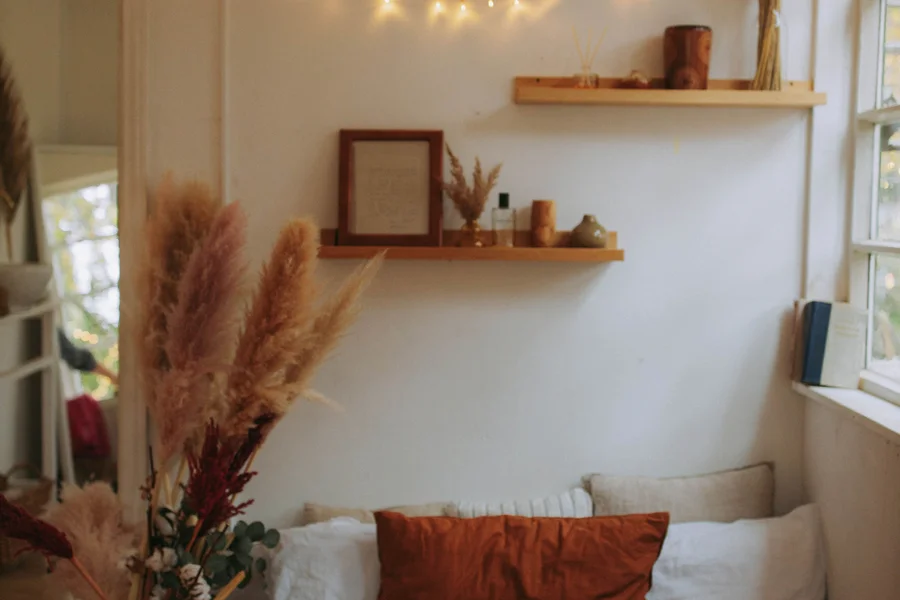
An earthy palette is a ratio, not a mood. The ratio that works is 60-30-10: 60 percent warm white base, 30 percent clay or terracotta middle, 10 percent deep umber or olive anchor. The base is the walls, the bedding foundation, and the big calm surfaces. The middle is the duvet, the curtains, and the largest textile in view. The anchor is the one deep tone per view: a bench, a throw, a dark wood frame, a single deep cushion. When the anchor shows up in three or four places at once, the room stops feeling earthy and starts feeling themed, so count your anchors before you buy another one.
The test that keeps the ratio honest is the two shades of separation rule. Each layer must sit at least two shades apart from the layer next to it, or the room goes flat. A warm white wall, a pale beige duvet, and a light sand throw are not three layers, they are one layer photographed three times. Push the middle tone darker or the anchor deeper until you can see the step between them from the doorway. That doorway test is the whole rule in practice: stand in the doorway, and if you cannot tell the layers apart, neither can anyone else.
Name the colours before you shop, because names stop drift. The warm white base can be Benjamin Moore Adobe Dust 2174-40 or Farrow and Ball London Stone 6, both warm whites that stay warm in daylight instead of turning grey. The clay middle can be Behr Wheat Bread PPU7-13 or a terracotta in that family, warm enough to read as clay and not orange.
The deep anchor can be Farrow and Ball India Yellow 66 for a golden depth, or a deep umber if yellow feels too loud for a sleep room. These are starting points to test on your own wall, not orders, because light changes every paint. Buy the sample, paint a large swatch, and live with it for a day before you commit.
Two warnings protect the cocoon. First, cool greys and stark whites break it. A greige throw or a bright white sheet set next to warm clay reads as a mistake, not a contrast, because the temperature of the colour fights the temperature of the room. Keep every white warm and every grey out. Second, the palette must survive the evening. A room that looks earthy at noon and muddy at night has an anchor problem, and the dark boho evening version later in this article solves it without repainting anything.
The same palette language runs through our boho rooms, so this bedroom sits naturally beside our boho bathroom ideas and boho kitchen ideas, warm whites and terracotta throughout, one home instead of three separate looks.

Quick Decision Table: Start With Your Starting Point
If you rent a white box, your first layer is textiles, not paint. A terracotta duvet set, graduated pillows, and a warm throw change the whole ratio without touching a wall, and everything leaves with you. Your budget goes to the bed first, because the bed is the biggest surface in the room. Reversible, fully, because nothing here needs a drill or a landlord conversation except one ceiling hook for the pendant, and even that has a plug in alternative in the texture section.
If you already own wood furniture, your first layer is the anchor check. Count the wood tones in view. One deep wood tone is an anchor, three competing wood tones are clutter, and the fix is not new furniture, it is one bench or one frame that sets the tone the others follow. Your budget goes to the deep anchor piece, and the thrift order in the budget section tells you where to look before buying new.
If your room is dark, your first layer is warmth, not more colour. Dark rooms swallow middle tones, so go one shade warmer on every layer: a warmer white, a deeper terracotta, an anchor with golden rather than grey undertones. Your budget goes to lighting first, because warm light through amber glass does more for a dark room than another textile.
If you are colour shy, your first layer is the 60, not the 30. Keep the warm white base, add one clay pillow set, and live with it for two weeks before adding the duvet. Your budget stays small on purpose, because a palette you grow into lasts longer than a palette you buy in one cart. Reversible, fully, because every step here is a textile you can fold away.
Problem 1: Flat Beige (Warmth Without Depth)
Flat beige is not a colour problem, it is a depth problem. The room has warmth but no steps, so the eye slides off every surface. The fix is the depth stack: one deep anchor per view, graduated pillow tones that step from light to dark, and wood tones mixed honestly instead of matched perfectly.
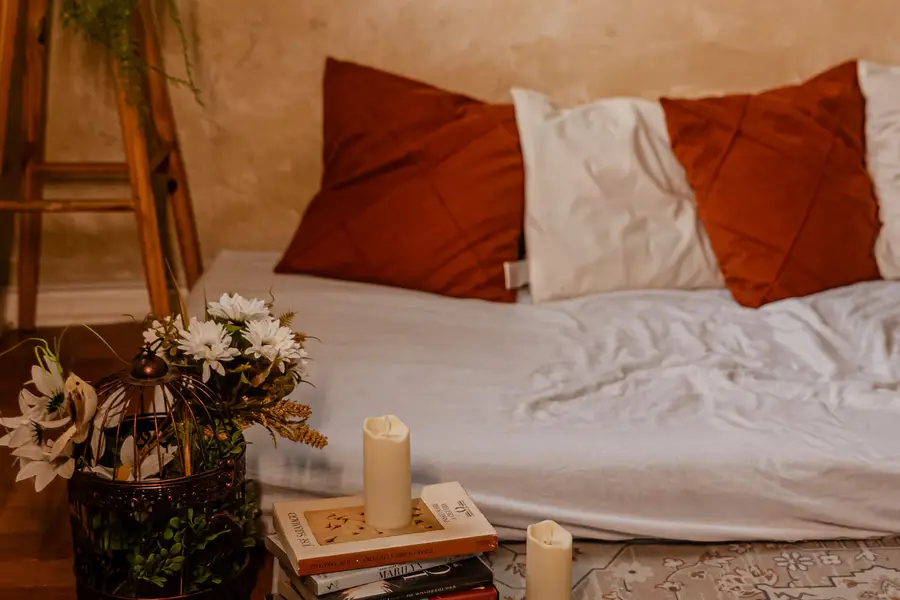
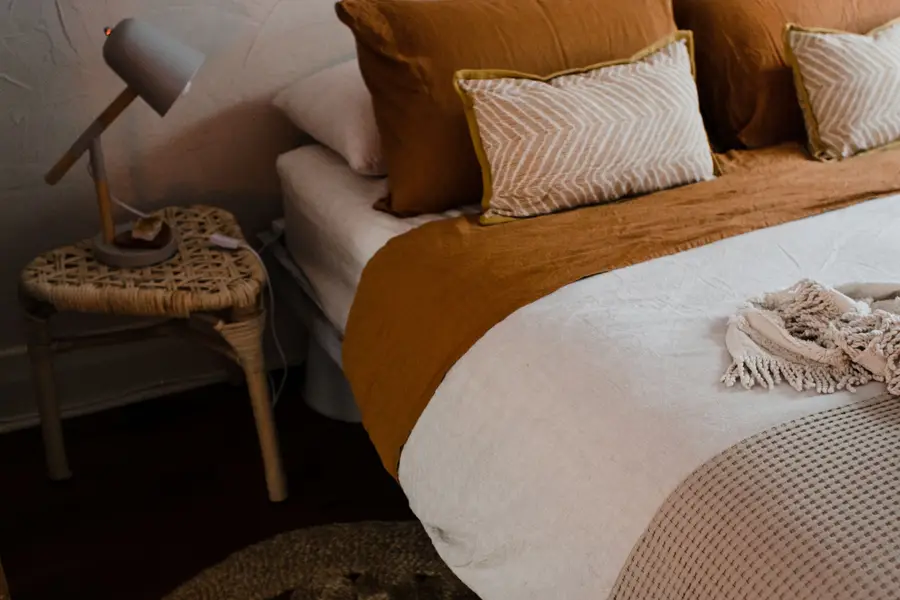
Start with the anchor. One deep wood tone at the foot of the bed gives the whole view a bottom edge, and everything lighter sits on top of it. Without that edge, the bed floats in beige. Then build the pillow stack in three tones, not one: a light beige, a mid brown, a deep coffee, each at least a shade apart, so the stack reads as a gradient instead of a pile. The stack is the competitor’s trick and it works, but only when the tones actually graduate. Four pillows in four near identical beiges are not a stack, they are a laundry pile.
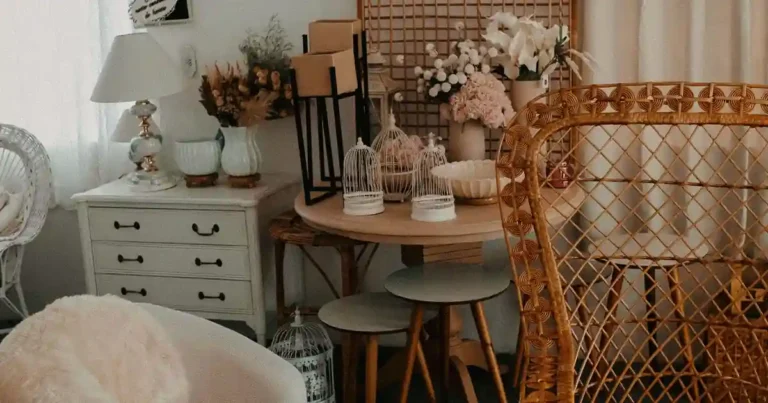
Wood tone mixing has one honest rule: mix warm woods, never warm against cool. A weathered natural bench, a warm oak frame, and a rattan nightstand belong together because they share warm undertones. A grey washed frame next to them does not, and no amount of styling will reconcile it. Reclaimed wood makes this easier, not harder, because its variation is the point, but variation still needs a range: weathered natural to medium warm, never weathered natural to ash grey.
The biggest surface in the room carries the middle tone, and that surface is the bed. A terracotta duvet set is the 30 in the 60-30-10 ratio, and it earns that job by being the largest single colour block in view. Choose it after the wall colour, not before, because the duvet must sit two shades away from the wall or the depth stack collapses back into flat beige.
Also solves this: the graduated pillow stack
Cozoomy Corduroy Throw Pillow Covers, Set of 4, Beige Brown Coffee, 18 x 18 Inches
The four covers carry the graduated tones, so buy inserts separately in the same 18 inch size. Arrange them lightest at the back and darkest at the front, and the gradient does the depth work for you. Not for: Covers ONLY, inserts are NOT included.
Check Price on Amazon → (paid link)
Also solves this: the deep wood anchor at the foot of the bed
Artissance Handmade Wooden Entryway Bench, Reclaimed Wood, Weathered Natural Finish, 50 x 5.5 x 20 Inches
It suits the foot of the bed as an anchor and a perch, not as a full bench seat for two. Reclaimed wood means every piece varies in size, colour, and texture, so expect variation and treat it as the character, not a flaw. Not for: This is a SLIM bench at only 5.5 inches deep, a noodle bench profile, not a wide seat.
Check Price on Amazon → (paid link)
Problem 2: Texture Chaos (The Repeat-It-Twice Rule)
Texture chaos is what happens when every beautiful material gets bought once. Rattan, jute, seagrass, boucle, macrame, linen, wool, cane, and velvet in one room do not read as boho, they read as a warehouse. The rule that fixes it is simple: pick ONE woven material, repeat it in exactly two places, add one soft material and one fibre textile, then stop.
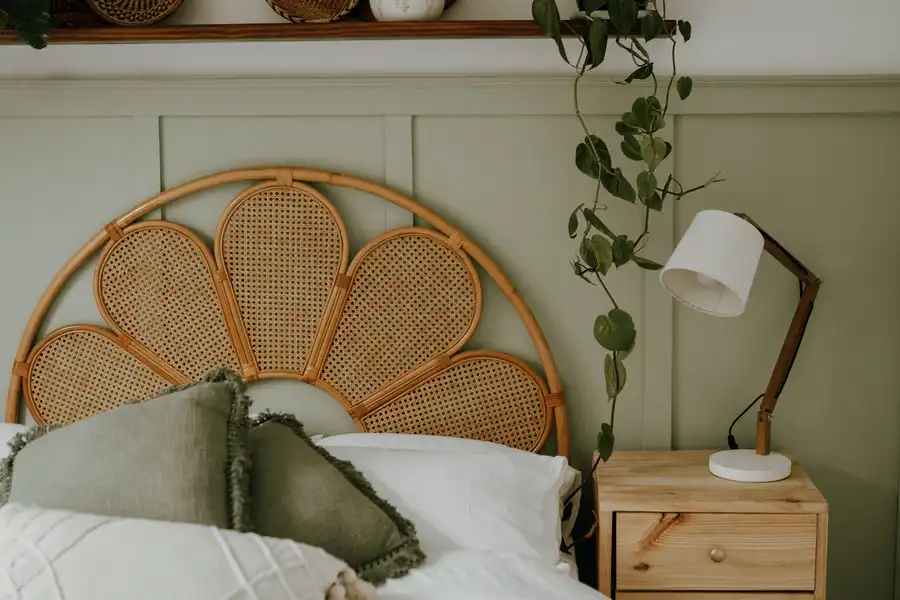
The woven is the star, and rattan is the easiest star to cast. A rattan pendant over the room and a rattan nightstand at the bedside are the same material twice, and that repetition is what makes the room feel curated. The eye registers the echo and relaxes, because the room has a system instead of a shopping list. A cane shelf instead of the nightstand works the same way, but the count stays at two. A third rattan piece tips the room from curated into themed, so resist it.
The soft material is the counterweight. Wool or boucle, one piece, usually the throw or a single cushion, gives the hand something different to find. The fibre textile is the workhorse: linen textured cotton or plain cotton in the curtains and the bedding, breathing and washable, doing the quiet work while the woven pieces get the attention. Three material families, each with a job, and nothing else earns a place.
Rug sizing is math, not taste, and it is the most common texture mistake in boho bedrooms. The rug goes under the bed with a generous border to step onto, never as a small island beside it. For a queen bed, 8 x 10 feet is the guidance, with the border math checked before ordering: the rug should extend well past the sides and the foot of the bed, so bare feet land on rug, not cold floor, on every side you use. A rug two sizes too small makes the whole room look like it shrank, whatever else you bought.
The natural fibre thread continues in our cooling bedroom ideas guide, where linen, cotton, and bamboo viscose are graded for breathability instead of looks alone.
Also solves this: the rattan echo at the bedside
JOONEE Rattan Nightstand, Farmhouse Bedside Table with 2 Storage Drawers and Open Wood Shelf, Solid Wood Legs, White
The frame is engineered wood with solid wood legs, not solid wood throughout. The open shelf plus two drawers is the storage story: display on the shelf, clutter in the drawers, and the rattan echo stays visible. Not for: A SINGLE unit, not a pair, so order two only if both sides of the bed need one.
Check Price on Amazon → (paid link)
Also solves this: under bed rug sizing
REDEARTH Jute Cotton Area Rug, Handwoven, Reversible, 8 x 10 Feet, Neutral Tones
Handwoven jute blended with cotton, reversible, so wear can be shared across both sides by flipping it. Jute is a firm natural fibre underfoot, not a plush pile, so do not buy it expecting softness; buy it for texture and durability, and layer a smaller soft rug on top only if the firmness bothers bare feet. Not for: A rug pad is NOT stated on the source and is not claimed as included.
Check Price on Amazon → (paid link)
Problem 3: Boho That Wrecks Sleep (The Calm-Zone Rules)
Boho bedrooms break sleep in three quiet ways, and none of them look like a problem in a photo. The bed wall is busy, so the last thing the eye sees at night is visual noise. Dust heavy textiles sit beside the pillow, so the sleeper breathes what the styling sheds. Fragrance layers stack, so the room smells like a shop instead of a bedroom. The calm-zone rules fix all three, and they are non negotiable in a sleep room.
Rule one: the wall behind the bed’s sightline stays plain. The bed wall itself can carry a headboard, but the wall you face while falling asleep, and the wall beside the pillow, stay free of hanging textiles, drying grasses, and gallery clutter. Visual calm at the bed wall is the cheapest sleep upgrade in this article, because it costs nothing and it works the first night.
Rule two: dust heavy textiles live away from the pillow. Dried pampas and macrame shed fibres and hold dust, which is exactly why they belong on the dresser and the non bed wall, never beside the pillow. The cleaning cadence is part of the product, not an afterthought: shake dried grasses outdoors weekly, and shake or vacuum macrame with a brush attachment every few weeks, so the dust load never builds up. Allergy note, stated plainly: if anyone in the room has dust allergies, dried grasses and heavy macrame near the bed are the first things to move, not the last.
Rule three: scent restraint. One scent in a sleep room, at most, and none layered on top of another. A candle, a diffuser, and scented bedding together are not ambience, they are a headache waiting for bedtime. Pick one, keep it light, and let the room smell like clean textile the rest of the time.
Curtains are the calm zone’s quiet worker. Soft light by day, a blackout layer behind them by night, and nothing that fights sleep in either direction. The pairing matters more than any single curtain, because a light filtering curtain alone cannot darken a room, and a blackout curtain alone cannot soften daylight.

Also solves this: dresser pampas placement
ANPROOR Natural Dried Pampas Grass Decor, 100 Pieces, 17 Inches Tall, White Bunny Tails, Reed Grass, White and Natural Pampas
Dried grasses shed and carry dust, which is exactly why they belong on the dresser and never beside the pillow. Cleaning cadence: shake outdoors weekly and keep them out of the sleep breathing zone. Care tip from the listing: sun fluffing for 2 to 3 hours refreshes the plumes. Not for: Vase is NOT included, so buy or reuse one separately.
Check Price on Amazon → (paid link)
Also solves this: macrame on the non bed wall
Achart Macrame Wall Hanging, Large, Boho Wall Decor, 43 Inches Wide x 32 Inches High, 100 Percent Cotton Cords, Wooden Rod, Ivory, Wooden Bead Detail
Macrame holds dust near a bed, so the cleaning cadence matters: shake outdoors or vacuum with a brush attachment every few weeks. Handmade pieces vary slightly, so expect small differences from the listing photo and treat them as the handmade character. Not for: Hangs on the NON bed wall only, per the calm zone rules, never over or beside the pillow.
Check Price on Amazon → (paid link)
The Dark Boho Evening Version
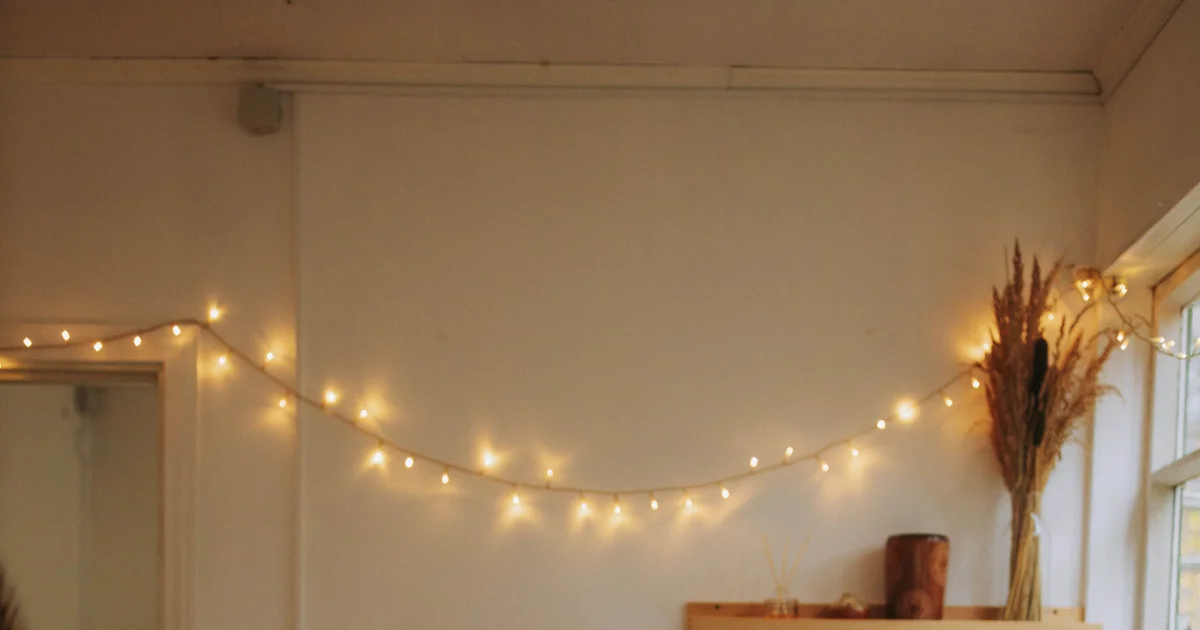
The same room after dark is a different room, and that is a feature, not a failure. The dark boho evening version is a fork, not a repaint: the deep anchor becomes the wall tone in feeling, even though the walls stay the same, because the lighting drops and the warm metals come forward. What changes is light, layer, and metal, and all three changes are removable by morning.
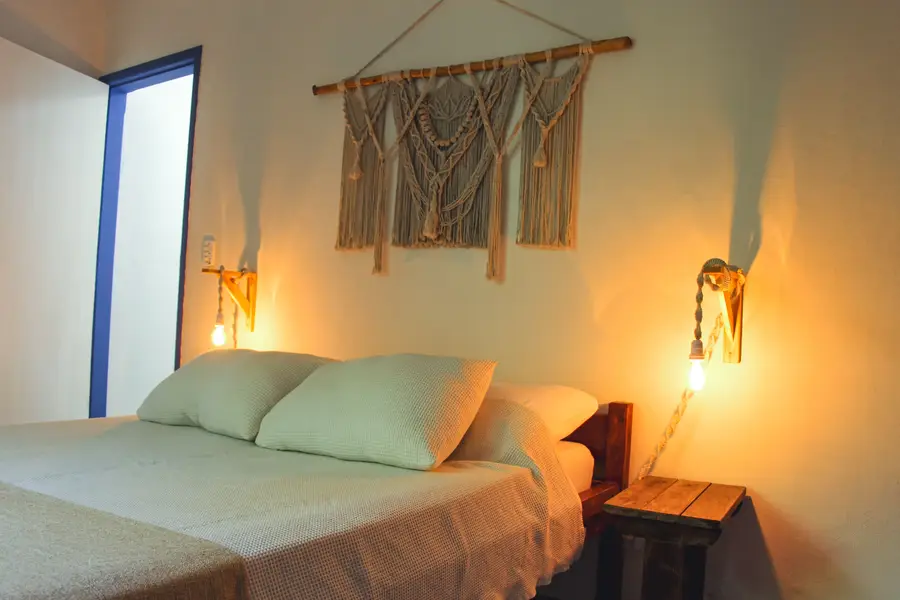
First, lighting drops. The bright daytime pendant steps back, and warm light through amber glass takes over at the bedsides, one lamp per side, so the room glows instead of glaring. No colour temperature number is claimed for these lamps, because none was verified; the warmth comes from amber glass itself, and that is enough to say.
Second, the evening layer goes on: a deep rust throw across the foot of the bed, large enough to matter, removable by day so the daytime palette stays light. Third, metals warm up: brass, bronze, and warm wood tones replace any cool metal in view, and the storage layer goes dark fibre, so the foot of the bed reads as order, not clutter, even in low light.
This fork serves the dark boho searcher inside this post instead of sending them to a separate thin post, and it keeps the daytime room intact for everyone else. If your taste runs darker all day, start from the evening version and keep the throw on, but keep the calm zone rules either way, because a dark room still needs a plain wall at the bed and dust heavy textiles away from the pillow.
Also solves this: warm evening bedside light
RORIA Farmhouse Table Lamps, Set of 2, Amber Frosted Glass Nightlight, 4 Bulbs Included, Red Bronze Metal
Amber frosted glass nightlight plus main lamp, 4 bulbs included, and 2 USB charging ports for bedside charging. Not for: Bulb colour temperature was NOT stated on the source and is NEVER invented as a Kelvin figure here; the warmth is described as warm light through amber glass, not a number.
Check Price on Amazon → (paid link)
Also solves this: foot of bed seagrass storage
Household Essentials Seagrass Storage Baskets, Set of 3, Brown, with Removable Liners
Natural seagrass, shades vary slightly from piece to piece. Sizes: 1 large basket 6 inches high x 16 inches wide x 14.5 inches deep, and 2 small baskets 5.5 inches high x 12 inches wide x 6.5 inches deep each. Not for: The liners are washable and removable, but the weave itself is NOT machine washable, so clean the weave by wiping and brushing, and wash only the liners.
Check Price on Amazon → (paid link)
6 Earthy Boho Mistakes
- Matching the wall and the bedding so closely that the room goes flat by design, with no two shades of separation anywhere.
- Buying the whole look in one synthetic cart, so every texture is plastic pretending to be natural and the room smells like a warehouse.
- Letting cool grey sneak in through greige, a throw, a frame, a rug edge, until the warm cocoon has a cold leak.
- Buying a rug two sizes too small, so the bed floats on a small island and the whole room looks like it shrank.
- Choosing plants that need a greenhouse schedule, then watching them die slowly on the dresser while the room loses its living layer.
- Using texture in nine materials instead of three repeated, so the room reads as a collection of samples instead of a system.

Budget Plans
The $55 textile layer is where everyone should start: a graduated pillow set and a warm throw, both reversible, both leaving with you if you rent. Do this first and live with it for two weeks, because it tells you whether your room needs depth, texture, or calm before you spend more.
The $190 palette plus texture anchors tier adds the middle tone duvet set and the two woven anchors, pendant and nightstand, so the 60-30-10 ratio and the repeat-it-twice rule are both in place. This is the tier where the room starts to read as a system instead of a collection, and it is the tier most readers should aim for.
The $450 full earthy reset covers all three layers at once: textiles, palette anchors, rug, curtains, and the evening version, with the free calm zone rules running underneath. Thrift order for wood pieces, stated plainly: check thrift and secondhand first for the bench and any wood frame, because reclaimed and vintage wood is cheaper secondhand and already carries the variation this palette wants. Buy new only what thrift cannot supply in the right size, and spend the saving on the rug, where size matters more than provenance.

FAQs
Can earthy boho work in a small bedroom?
Ans: Yes, and it works better small than large, because the rules scale down cleanly. Keep the 60-30-10 ratio, repeat one woven twice, and protect the calm zone, but choose smaller anchors: a slim bench instead of a wide one, one macrame piece on the non bed wall instead of two, and a rug that fits the border math for your bed size. Small rooms punish texture chaos fastest, so the stop rule matters most here.
How do I use an earthy palette in a north-facing room?
Ans: Go one shade warmer on every layer. North light is cool, so a warm white that looks warm in a south room can read grey here. Choose a warmer white base, a deeper terracotta middle, and an anchor with golden rather than grey undertones, and add warm light through amber glass in the evening. Test paint swatches in the room’s own light before committing.
My partner thinks boho means clutter, how do I convince them?
Ans: Show them the calm zone, not the shopping list. A plain wall at the bed, dust heavy textiles kept away from the pillow, one scent at most, and storage that hides clutter in baskets are rules a clutter skeptic can agree with. Build the calm zone first, then add one woven anchor, and let the room prove itself for a week before adding anything else.
Are natural fibres durable enough for kids and pets?
Ans: Some are, and the honest answer depends on the fibre. Cotton waffle and jute cotton rugs handle daily use well and wash or flip cleanly. Linen textured blends and dried grasses do not: they snag, shed, and stain faster, so keep them above pet height and away from play zones. Choose washable layers for the zones kids and pets actually touch, and reserve the delicate pieces for the walls.
Earthy boho vs dark boho, which one is mine?
Ans: Earthy boho is the daytime room: warm whites, clay middle, deep anchor in small doses, and light that stays soft. Dark boho is the evening version of the same room: lighting dropped, warm metals forward, deep rust layers on, and the anchor tone dominating. If you love the evening version enough to keep it all day, yours is dark boho, and this article’s evening fork is your starting point.
Bottom Line
An earthy boho bedroom is a system, not a shopping list: a 60-30-10 palette with named paints and two shades of separation, one woven texture repeated twice, a calm zone that protects sleep, and an evening version that lets the same room go dark without repainting. Do the palette first, add the anchors second, protect the calm zone always, and spend only on the layer your room is actually missing. The master bedroom ideas hub pulls the bedroom layers together, and this room sits in it as the warm, calm anchor of the cluster.
Save this earthy boho bedroom guide before your next decor buy: warm layers, named paints, and a calm zone that lets you actually sleep in the room you styled.
Photo credits: Photos via Pexels.